Sorex ornatus relictus
Buena Vista Lake ornate shrew
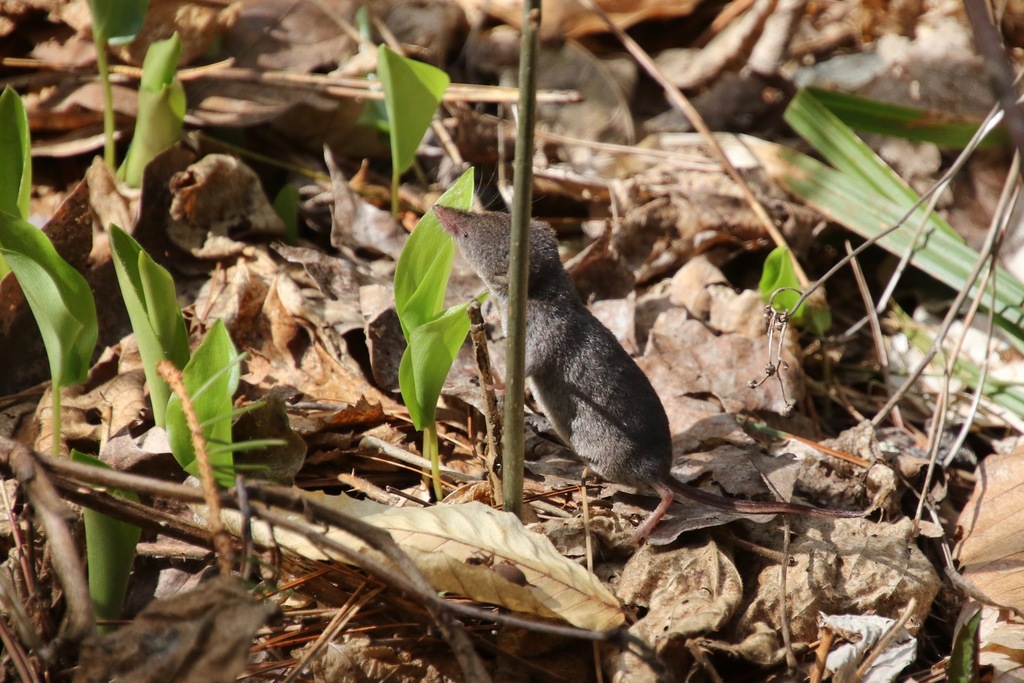
(c) er-birds, some rights reserved (CC BY) · licence
Family: Soricidae · Class: Mammalia · Order: Eulipotyphla
Conservation status: Endangered · G5T1 S1
Sorex ornatus relictus (Buena Vista Lake ornate shrew) is a California animal in the Soricidae family.
The Buena Vista Lake ornate shrew (Sorex ornatus relictus) is a small, mouse-sized mammal measuring approximately 9-11 centimeters (3.5-4.3 inches) in total length, including the tail. This subspecies belongs to the red-toothed shrew subfamily (Soricinae), characterized by reddish, iron-based pigment in their tooth enamel that strengthens the teeth and gives them a distinctive red coloration. The species has dense, soft fur and a pointed snout typical of shrews, with small eyes and ears adapted to their ground-dwelling lifestyle. Historically, this subspecies was found within the moist habitat surrounding the wetlands of Kern, Buena Vista, Goose, and Tulare lakes on the San Joaquin Valley floor in California. The shrew's range was restricted to the Tulare Basin below elevations of 350 feet (107 meters). Currently, the species persists in extremely limited areas, with confirmed populations at Kern National Wildlife Refuge and potentially other remnant wetland areas in Kern County. The Buena Vista Lake ornate shrew requires dense groundcover for protection from predators and moist soil conditions that support abundant invertebrate prey. The species inhabits areas with native vegetation, particularly where moisture levels remain adequate to sustain the invertebrate communities upon which it depends. Much of the original wetland habitat has been drained and converted to agricultural land, with remaining areas often degraded by changes in vegetation patterns and invasion by non-native plant species. This subspecies is primarily insectivorous, feeding on various invertebrates found in leaf litter and soil. Recent camera trap studies at Kern National Wildlife Refuge have revealed new insights into the species' behavior, including evidence that individuals may forage nearly a mile away from the closest water source, contrary to previous assumptions that they remained close to water (USFWS 2024). The species appears to be active throughout different seasons, utilizing various plant communities within their habitat range. Specific reproductive behavior and breeding cycles remain poorly documented due to the species' elusive nature and limited population size. The Buena Vista Lake ornate shrew was federally listed as endangered in March 2002 due to severe habitat loss and degradation. The species faces continuing threats from agricultural conversion, urban development, altered hydrology, and invasion of non-native plant species that degrade habitat quality. Current population estimates are extremely low, with the subspecies considered critically imperiled. The U.S. Fish and Wildlife Service continues monitoring efforts through camera trap studies and habitat assessments to better understand the species' ecology and distribution. Recovery efforts focus on habitat protection and restoration within the remaining suitable areas of the Tulare Basin, though the species' long-term survival remains uncertain given the extensive loss of historical wetland habitat throughout the San Joaquin Valley.
Classification
Class: Mammalia · Order: Eulipotyphla · Family: Soricidae
Conservation status
Endangered · G5T1 S1
Frequently asked questions
How is Sorex ornatus relictus classified?
Sorex ornatus relictus belongs to class Mammalia, order Eulipotyphla, family Soricidae.
What family does Sorex ornatus relictus belong to?
Sorex ornatus relictus is in the Soricidae family.
Is Sorex ornatus relictus protected or of conservation concern?
Sorex ornatus relictus carries the following status: Endangered · G5T1 S1.
What is Sorex ornatus relictus?
The Buena Vista Lake ornate shrew (Sorex ornatus relictus) is a small, mouse-sized mammal measuring approximately 9-11 centimeters (3.5-4.3 inches) in total length, including the tail.
Is Sorex ornatus relictus found in California?
Yes. Sorex ornatus relictus is recorded in California in The California Species Project's catalogue.
Related species
Other California species in the same genus, family, or bioregion.
Data from The California Species Project — 14,000+ California species with verified data from CNPS, CDFW, USFWS, and more.