Sorex ornatus salicornicus
Southern California Saltmarsh Shrew
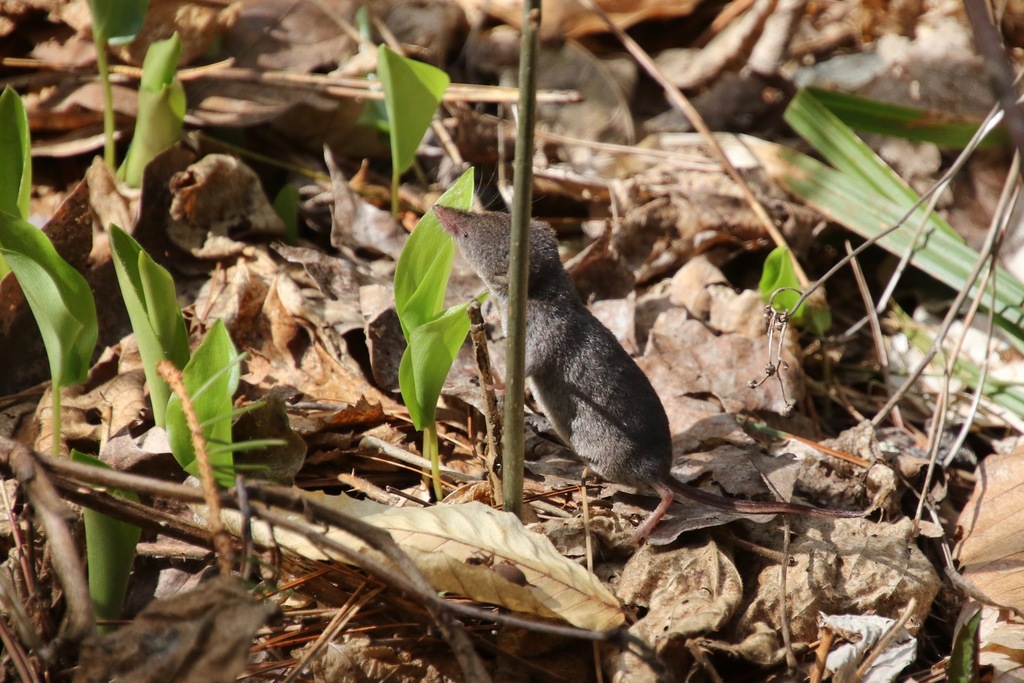
(c) er-birds, some rights reserved (CC BY) · licence
Family: Soricidae · Class: Mammalia · Order: Eulipotyphla
Conservation status: G5T1? S1
Sorex ornatus salicornicus (Southern California Saltmarsh Shrew) is a California animal in the Soricidae family.
The Southern California saltmarsh shrew is a small, semi-aquatic mammal subspecies of the ornate shrew (Sorex ornatus). Adults measure approximately 80-100 mm in total length, including a tail of 30-40 mm, and weigh 3-5 grams. The species exhibits a dark brown to grayish-brown dorsal pelage with lighter underparts, typical of the ornate shrew complex. Its small size, pointed snout, and tiny eyes are adaptations for its fossorial and semi-aquatic lifestyle in dense marsh vegetation. Historically, the Southern California saltmarsh shrew ranged throughout coastal salt marshes from the San Francisco Bay area south to Baja California. The current distribution is severely restricted to isolated populations in remnant salt marsh habitats along the southern California coast, primarily in Los Angeles, Orange, and San Diego counties. Key locations include the Ballona Wetlands, Upper Newport Bay, Tijuana River Estuary, and scattered marsh fragments throughout the region. The subspecies has experienced dramatic range reduction due to extensive coastal development and wetland loss. The species inhabits the middle salt marsh zone, typically occurring near mean higher high water elevations in areas dominated by pickleweed (Salicornia pacifica) and saltgrass (Distichlis spicata). Physical habitat structure appears more critical than specific plant composition, with shrews preferring areas with dense vegetation cover that provides protection from predators and tidal inundation. The upper portion of the middle marsh zone, which floods only during higher high tides, provides optimal conditions. Occasionally, the species may utilize adjacent brackish marsh habitats. Southern California saltmarsh shrews are insectivorous, feeding primarily on small invertebrates found within the marsh substrate and vegetation, including dipteran larvae, amphipods, and other arthropods. The species exhibits semi-fossorial behavior, creating tunnel systems within the marsh substrate and vegetation mats. Reproduction typically occurs from spring through early fall, with females producing multiple litters per year containing 2-6 young. The species maintains high metabolic rates typical of shrews, requiring frequent feeding throughout both day and night periods. The Southern California saltmarsh shrew is designated as a California Department of Fish and Wildlife Species of Special Concern, reflecting its precarious conservation status. The subspecies carries a global rank of G5T1?, indicating it is critically imperiled as a subspecies of an otherwise secure species. Primary threats include continued wetland habitat loss, degradation of remaining marsh areas, sea level rise, altered hydrology from development, and potential genetic isolation of small populations. Urban encroachment, pollution, and invasive species further compromise habitat quality. Climate change poses additional risks through altered precipitation patterns and accelerated sea level rise that may eliminate critical high marsh refugia during extreme tides. Conservation efforts focus on habitat restoration, protection of remaining wetland areas, and maintaining connectivity between isolated populations to prevent further genetic isolation.
Classification
Class: Mammalia · Order: Eulipotyphla · Family: Soricidae
Conservation status
G5T1? S1
Frequently asked questions
How is Sorex ornatus salicornicus classified?
Sorex ornatus salicornicus belongs to class Mammalia, order Eulipotyphla, family Soricidae.
What family does Sorex ornatus salicornicus belong to?
Sorex ornatus salicornicus is in the Soricidae family.
Is Sorex ornatus salicornicus protected or of conservation concern?
Sorex ornatus salicornicus carries the following status: G5T1? S1.
What is Sorex ornatus salicornicus?
The Southern California saltmarsh shrew is a small, semi-aquatic mammal subspecies of the ornate shrew (Sorex ornatus).
Is Sorex ornatus salicornicus found in California?
Yes. Sorex ornatus salicornicus is recorded in California in The California Species Project's catalogue.
Related species
Other California species in the same genus, family, or bioregion.
Data from The California Species Project — 14,000+ California species with verified data from CNPS, CDFW, USFWS, and more.