Sorex ornatus sinuosus
Suisun Shrew
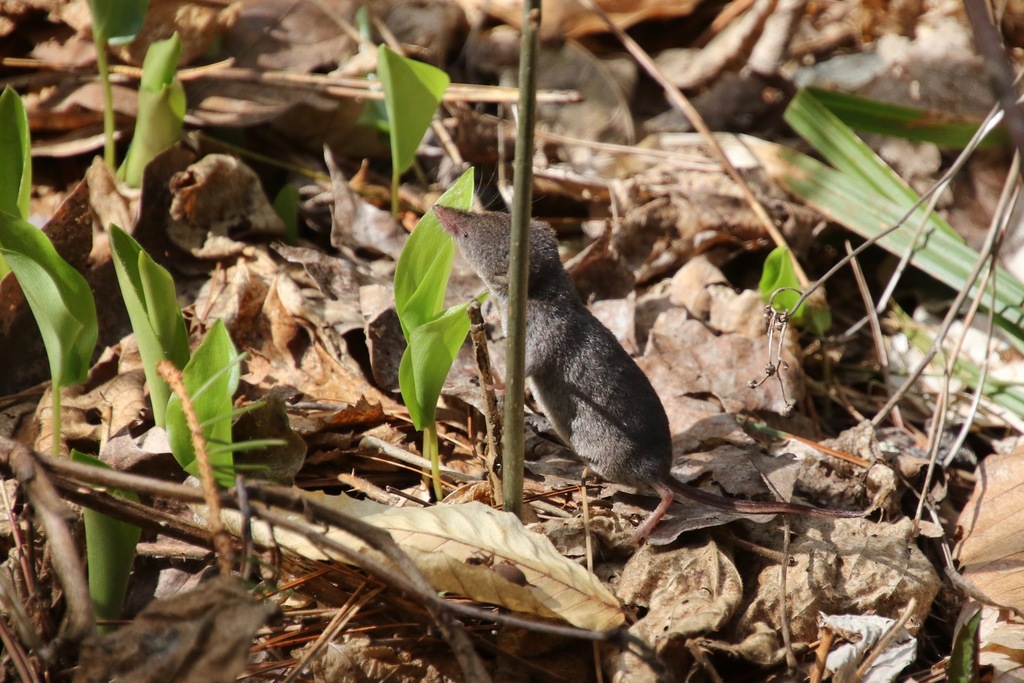
(c) er-birds, some rights reserved (CC BY) · licence
Family: Soricidae · Class: Mammalia · Order: Eulipotyphla
Conservation status: G5T1T2Q S1S2
Sorex ornatus sinuosus (Suisun Shrew) is a California animal in the Soricidae family.
The Suisun shrew (Sorex ornatus sinuosus) is a small mammal endemic to the tidal marshes of the San Francisco Bay Estuary. This subspecies belongs to the Soricidae family and exhibits the typical characteristics of ornate shrews, including a small body size, pointed snout, and dense fur adapted for semi-aquatic environments. Adults measure approximately 60-70 mm (2.4-2.8 inches) in body length with a tail length of 40-50 mm (1.6-2.0 inches). The species displays brownish-gray dorsal coloration with lighter underparts, providing camouflage within marsh vegetation. The Suisun shrew occurs exclusively in marshes bordering Suisun Bay, including Grizzly Island, and northern San Pablo Bay in west-central California (NatureServe 2025). According to USFWS recovery documents, this subspecies has one of the most restricted ranges of any North American mammal, with an estimated total range of only 160 square kilometers. The species is found primarily in Solano County, with smaller populations extending into adjacent Sonoma and Napa counties. This subspecies inhabits salt and brackish tidal marsh ecosystems, showing a strong preference for areas with dense pickleweed (Salicornia) and cordgrass (Spartina) vegetation. The species occurs from mean sea level to approximately 3 meters (10 feet) elevation, requiring areas that experience regular tidal influence but provide sufficient cover during high tide events. Suisun shrews utilize the complex root systems and debris accumulations found in mature marsh vegetation for shelter and foraging. Suisun shrews are insectivorous, feeding primarily on small invertebrates including amphipods, beetles, spiders, and fly larvae found within the marsh substrate and vegetation. Recent genetic research indicates that S. o. sinuosus is more closely related to and derived from S. vagrans rather than other S. ornatus subspecies (USFWS Recovery Plan 2025). The species exhibits typical shrew metabolism, requiring frequent feeding due to high energy demands. Reproduction likely occurs during spring and early summer months, with females producing multiple litters annually, though specific breeding biology remains poorly documented. The Suisun shrew carries a Global/State Rank of G5T1T2Q S1S2, indicating extreme rarity and conservation concern. Primary threats include habitat loss from development, altered hydrology from water diversions, sea level rise, and invasion by non-native plant species that degrade marsh structure. The species benefits from protection within the San Pablo Bay National Wildlife Refuge, which provides year-round habitat for this and other sensitive tidal marsh species (USFWS 2025). Climate change poses additional threats through altered precipitation patterns and accelerated sea level rise that may eliminate suitable habitat. Conservation efforts focus on tidal marsh restoration and protection of existing high-quality habitat within the subspecies' limited range.
Classification
Class: Mammalia · Order: Eulipotyphla · Family: Soricidae
Conservation status
G5T1T2Q S1S2
Frequently asked questions
How is Sorex ornatus sinuosus classified?
Sorex ornatus sinuosus belongs to class Mammalia, order Eulipotyphla, family Soricidae.
What family does Sorex ornatus sinuosus belong to?
Sorex ornatus sinuosus is in the Soricidae family.
Is Sorex ornatus sinuosus protected or of conservation concern?
Sorex ornatus sinuosus carries the following status: G5T1T2Q S1S2.
What is Sorex ornatus sinuosus?
The Suisun shrew (Sorex ornatus sinuosus) is a small mammal endemic to the tidal marshes of the San Francisco Bay Estuary.
Is Sorex ornatus sinuosus found in California?
Yes. Sorex ornatus sinuosus is recorded in California in The California Species Project's catalogue.
Related species
Other California species in the same genus, family, or bioregion.
Data from The California Species Project — 14,000+ California species with verified data from CNPS, CDFW, USFWS, and more.