Sorex ornatus willetti
Santa Catalina Shrew
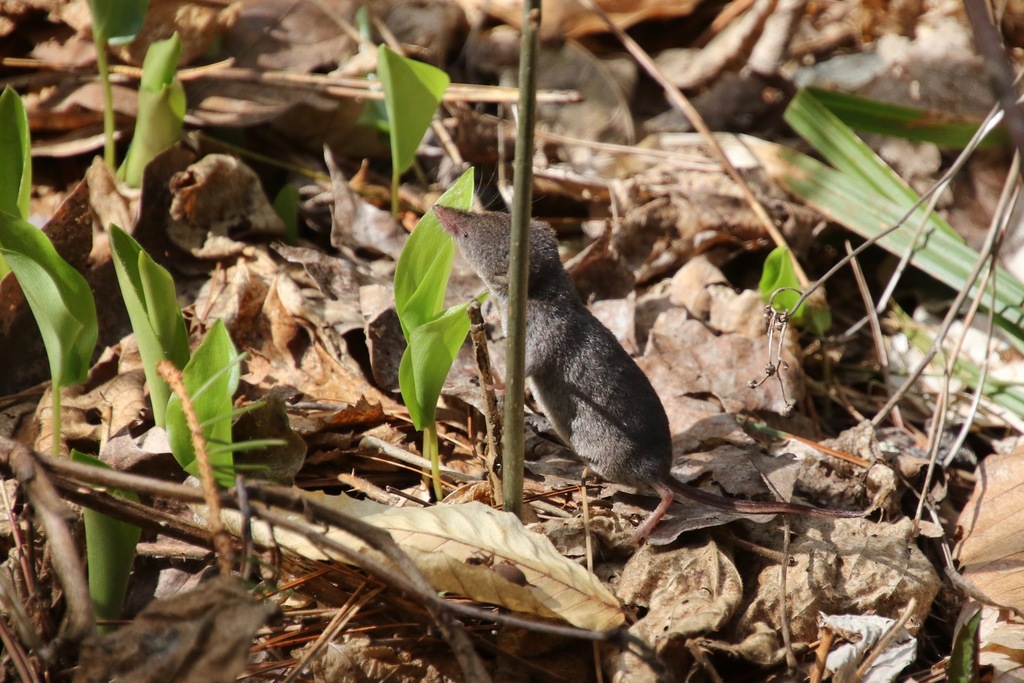
(c) er-birds, some rights reserved (CC BY) · licence
Family: Soricidae · Class: Mammalia · Order: Eulipotyphla
Conservation status: G5T1 S1
Sorex ornatus willetti (Santa Catalina Shrew) is a California animal in the Soricidae family.
The Santa Catalina ornate shrew (Sorex ornatus willetti) is a small subspecies of the ornate shrew endemic to Santa Catalina Island, California. This tiny mammal measures approximately 70-100 mm (2.8-3.9 inches) in total length, with a tail comprising about half of this measurement. The body is covered in dark brown to grayish-brown fur, with slightly paler underparts. Like other shrews, it possesses a long, pointed snout, small eyes, and distinctive red-tipped teeth that aid in prey capture. The subspecies is restricted entirely to Santa Catalina Island, located approximately 35 kilometers (22 miles) southwest of the California mainland in the Pacific Ocean. This represents one of the most limited distributions of any North American mammal, with the entire range encompassing roughly 194 square kilometers (75 square miles) of island habitat. Historical records suggest the shrew once occurred more widely across the island but may have experienced range contraction due to habitat modification and introduced species. Santa Catalina ornate shrews inhabit dense shrubland and chaparral communities, particularly areas with thick leaf litter and understory vegetation that provide cover and foraging opportunities. They show preference for areas with native plant communities including coastal sage scrub and oak woodlands, typically avoiding heavily disturbed or developed areas. The species requires continuous ground cover for protection from predators and to maintain the humid microclimate necessary for survival. As an insectivore, this shrew maintains an extremely high metabolic rate and must consume food equivalent to 80-90% of its body weight daily. The diet consists primarily of small invertebrates including beetles, spiders, centipedes, and other arthropods found in leaf litter and soil. Reproduction occurs year-round on the island's mild climate, with females producing multiple litters annually of 2-6 young after a gestation period of approximately 20 days. Individuals have short lifespans, typically surviving 12-18 months in the wild. The Santa Catalina ornate shrew carries a global rank of G5T1, indicating the species as a whole is secure but this particular subspecies is critically imperiled. While not currently federally listed, it appears on the U.S. Fish and Wildlife Service's Species of Concern list as of December 2025. Primary threats include habitat degradation from introduced plant species, predation by feral cats and other non-native predators, and the inherent vulnerability associated with its extremely restricted range. Climate change poses additional concerns, as rising temperatures and altered precipitation patterns could affect the island's vegetation communities and the invertebrate prey base upon which the shrew depends. Conservation efforts focus on invasive species control and habitat restoration to maintain suitable conditions for this endemic subspecies.
Classification
Class: Mammalia · Order: Eulipotyphla · Family: Soricidae
Conservation status
G5T1 S1
Frequently asked questions
How is Sorex ornatus willetti classified?
Sorex ornatus willetti belongs to class Mammalia, order Eulipotyphla, family Soricidae.
What family does Sorex ornatus willetti belong to?
Sorex ornatus willetti is in the Soricidae family.
Is Sorex ornatus willetti protected or of conservation concern?
Sorex ornatus willetti carries the following status: G5T1 S1.
What is Sorex ornatus willetti?
The Santa Catalina ornate shrew (Sorex ornatus willetti) is a small subspecies of the ornate shrew endemic to Santa Catalina Island, California.
Is Sorex ornatus willetti found in California?
Yes. Sorex ornatus willetti is recorded in California in The California Species Project's catalogue.
Related species
Other California species in the same genus, family, or bioregion.
Data from The California Species Project — 14,000+ California species with verified data from CNPS, CDFW, USFWS, and more.