Sorex pacificus
Pacific Shrew
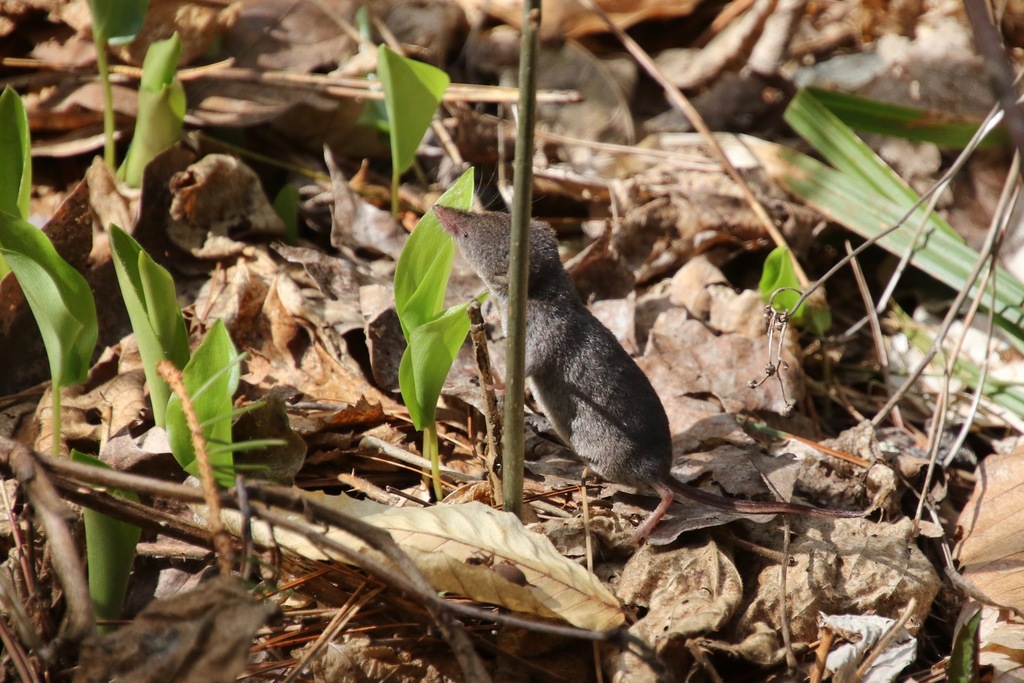
(c) er-birds, some rights reserved (CC BY) · licence
Family: Soricidae · Class: Mammalia · Order: Eulipotyphla
Conservation status: FE, FP · Endangered · G4T2 S2
Sorex pacificus (Pacific Shrew) is a California animal in the Soricidae family.
The Pacific shrew is a small insectivorous mammal endemic to California's coastal regions. Adults measure approximately 90-110 mm (3.5-4.3 inches) in total length, with the tail comprising roughly half this measurement. The species weighs between 5-8 grams and displays the typical elongated snout and small eyes characteristic of shrews. The pelage is dark brown to grayish-brown dorsally, with slightly lighter underparts. Pacific shrews possess distinctive reddish-brown tooth tips, a diagnostic feature of soricid mammals. Historically, Pacific shrews occurred in coastal areas from Sonoma County south to San Luis Obispo County, California. Current populations are severely fragmented and restricted to a handful of locations within this range. The species has experienced dramatic range reductions, with many historical localities no longer supporting viable populations. Contemporary records are primarily from coastal salt marshes and adjacent upland areas in the San Francisco Bay Area and central coast regions. Pacific shrews inhabit coastal salt marshes, brackish marshes, and adjacent grasslands and scrublands. They require dense vegetative cover and are typically found in areas with pickleweed (Salicornia species), sedges, and other marsh plants that provide both shelter and invertebrate prey. The species shows strong associations with tidal marsh edges and transition zones between wetland and upland habitats. Elevation ranges from sea level to approximately 30 meters above sea level. As active predators, Pacific shrews consume a variety of invertebrates including beetles, spiders, amphipods, and other small arthropods found in marsh sediments and vegetation. Their high metabolic rate requires frequent feeding, with individuals consuming food equivalent to their body weight daily. Breeding occurs from March through August, with females producing multiple litters per year. Gestation lasts approximately 20 days, and litter sizes typically range from 2-6 young. Nests are constructed in dense vegetation or under debris, providing protection from predators and environmental extremes. The Pacific shrew is federally listed as endangered under the Endangered Species Act, reflecting its precarious conservation status. The species faces multiple threats including habitat loss and fragmentation from coastal development, sea level rise, invasive plant species, and pollution. Tidal marsh restoration projects have been implemented to benefit this species, though recovery remains challenging due to the highly specialized habitat requirements and limited dispersal capabilities of shrews. Population estimates suggest fewer than 1,000 individuals remain across all known locations. Climate change poses additional threats through altered precipitation patterns and increased storm intensity, which can flood nesting areas and reduce prey availability. Conservation efforts focus on protecting remaining habitat, controlling invasive species, and restoring degraded marsh areas within the species' historical range.
Classification
Class: Mammalia · Order: Eulipotyphla · Family: Soricidae
Conservation status
FE, FP · Endangered · G4T2 S2
Frequently asked questions
How is Sorex pacificus classified?
Sorex pacificus belongs to class Mammalia, order Eulipotyphla, family Soricidae.
What family does Sorex pacificus belong to?
Sorex pacificus is in the Soricidae family.
Is Sorex pacificus protected or of conservation concern?
Sorex pacificus carries the following status: FE, FP · Endangered · G4T2 S2.
What is Sorex pacificus?
The Pacific shrew is a small insectivorous mammal endemic to California's coastal regions.
Is Sorex pacificus found in California?
Yes. Sorex pacificus is recorded in California in The California Species Project's catalogue.
Related species
Other California species in the same genus, family, or bioregion.
Data from The California Species Project — 14,000+ California species with verified data from CNPS, CDFW, USFWS, and more.