Sorex preblei
Preble's Shrew
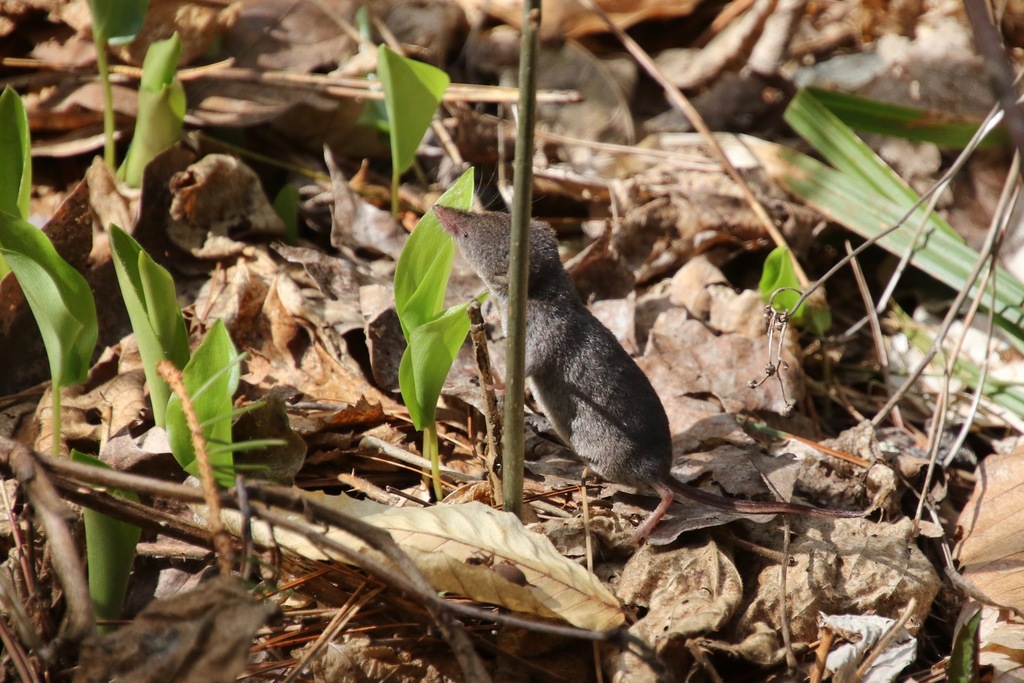
(c) er-birds, some rights reserved (CC BY) · licence
Family: Soricidae · Class: Mammalia · Order: Eulipotyphla
Sorex preblei (Preble's Shrew) is a California animal in the Soricidae family.
Preble's shrew (Sorex preblei) is one of North America's smallest mammals, weighing approximately 2 to 4 grams (0.07 to 0.14 ounces) and measuring 75 to 95 mm (3.0 to 3.7 inches) in total length, with the tail comprising roughly half this measurement. The dorsal pelage is dark grayish-brown, transitioning to lighter gray on the ventral surface. The species exhibits the characteristic pointed snout and small eyes typical of shrews, with a relatively short tail compared to other Sorex species. The skull measures 16 to 17 mm in length, with distinctive dental features including unicuspid teeth that aid in species identification. Preble's shrew has a highly restricted distribution in the western United States, with populations documented in Oregon, Washington, and potentially northern California. The species' range extends from the Cascade Range westward to coastal areas, primarily in the Pacific Northwest. Historical records suggest the species may have occurred in extreme northern California, though recent confirmed populations are concentrated in Oregon and Washington. The distribution appears fragmented, with isolated populations separated by unsuitable habitat. The species inhabits coniferous and mixed forests, typically at elevations ranging from sea level to approximately 1,500 meters (4,900 feet). Preble's shrew shows a strong association with moist microhabitats, including areas near streams, seeps, and other water sources. The species requires dense ground cover, utilizing fallen logs, dense shrub understory, and thick leaf litter for foraging and protection. Douglas fir, western hemlock, and Sitka spruce forests provide optimal habitat conditions, particularly where the canopy maintains cool, humid microclimates. As an insectivore, Preble's shrew feeds primarily on small invertebrates including beetles, fly larvae, spiders, and other arthropods found in leaf litter and soil. The species exhibits the high metabolic rate characteristic of shrews, requiring frequent feeding throughout both day and night. Reproduction occurs from spring through early fall, with females producing multiple litters per year. Gestation lasts approximately 20 days, with litters typically containing 2 to 8 young. Juveniles reach sexual maturity within their first year, though few individuals survive beyond 12 to 18 months due to their rapid metabolism and predation pressure. The conservation status of Preble's shrew remains poorly understood due to limited survey data and taxonomic uncertainty. The species is not currently listed under federal or state endangered species acts, though it is considered a species of conservation concern in some states within its range. Population trends are unknown, but habitat loss from logging, development, and climate change likely pose threats to existing populations. The species' dependence on old-growth and mature forest characteristics makes it vulnerable to forest management practices that alter canopy structure and microclimate conditions. Additional research is needed to clarify the species' taxonomic status, distribution, and population trends to inform conservation planning.
Classification
Class: Mammalia · Order: Eulipotyphla · Family: Soricidae
Frequently asked questions
How is Sorex preblei classified?
Sorex preblei belongs to class Mammalia, order Eulipotyphla, family Soricidae.
What family does Sorex preblei belong to?
Sorex preblei is in the Soricidae family.
What is Sorex preblei?
Preble's shrew (Sorex preblei) is one of North America's smallest mammals, weighing approximately 2 to 4 grams (0.07 to 0.14 ounces) and measuring 75 to 95 mm (3.0 to 3.7 inches) in total length, with the tail comprising roughly half this measurement.
Is Sorex preblei found in California?
Yes. Sorex preblei is recorded in California in The California Species Project's catalogue.
Related species
Other California species in the same genus, family, or bioregion.
Data from The California Species Project — 14,000+ California species with verified data from CNPS, CDFW, USFWS, and more.