Sorex sonomae
Fog shrew
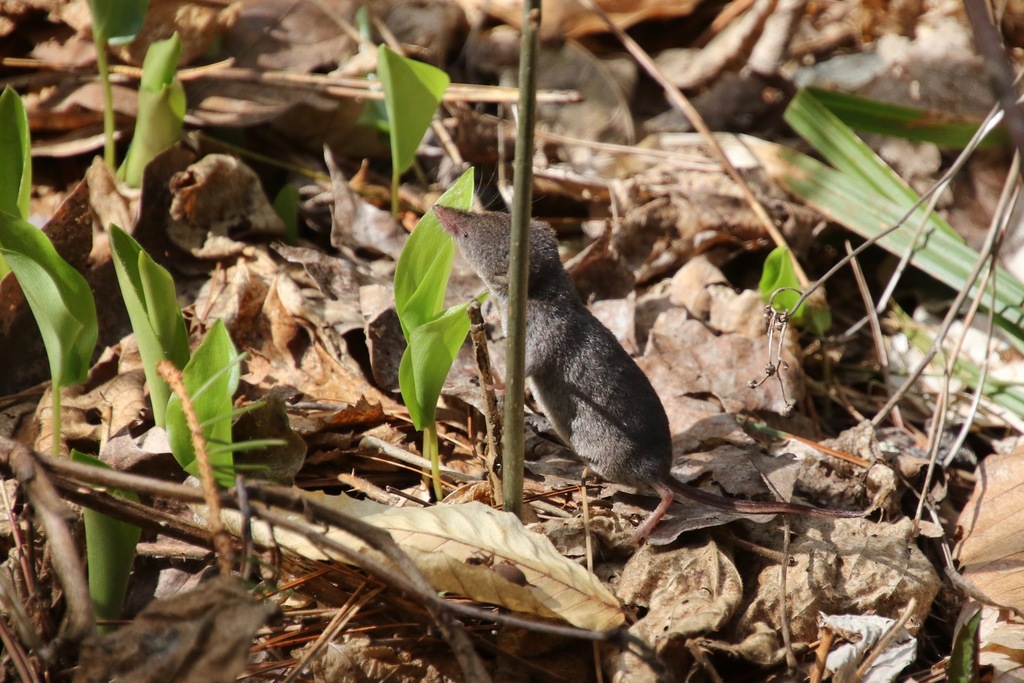
(c) er-birds, some rights reserved (CC BY) · licence
Family: Soricidae · Class: Mammalia · Order: Eulipotyphla
Sorex sonomae (Fog shrew) is a California animal in the Soricidae family.
The fog shrew (Sorex sonomae) is a small insectivorous mammal endemic to coastal northwestern California. This diminutive species measures approximately 95-115 mm (3.7-4.5 inches) in total length, with the tail comprising roughly half of this measurement. Adults typically weigh 3-6 grams (0.1-0.2 ounces). The dorsal pelage is dark grayish-brown, transitioning to lighter gray on the sides and pale gray to buff on the ventral surface. The species exhibits the characteristic pointed snout and small eyes typical of shrews, with a relatively long tail that is distinctly bicolored—dark above and pale below. The fog shrew's range is restricted to a narrow coastal strip extending from extreme southwestern Oregon south through Sonoma, Marin, and San Mateo counties in California. The species occurs primarily within 10 kilometers (6 miles) of the Pacific Ocean, from sea level to elevations of approximately 300 meters (1,000 feet). Historically documented populations include Point Reyes National Seashore, Muir Woods National Monument, and scattered coastal locations in Sonoma County. This species inhabits dense coastal scrub, redwood forests, and riparian woodlands characterized by high humidity and moderate temperatures maintained by marine fog influence. Fog shrews require areas with thick leaf litter, fallen logs, and dense understory vegetation that provide cover and support abundant invertebrate prey. The species shows strong association with coast redwood (Sequoia sempervirens) and Douglas fir (Pseudotsuga menziesii) forests, particularly in areas with year-round moisture from fog drip. Fog shrews are highly active predators with extremely high metabolic rates, requiring them to consume food equivalent to their body weight daily. Their diet consists primarily of small invertebrates including beetles, spiders, centipedes, and insect larvae found in leaf litter and soil. Breeding occurs from late winter through early summer, with females producing 2-6 young per litter. The species constructs small nests in hollow logs, root cavities, or dense vegetation. Fog shrews are largely solitary and territorial, with individual home ranges typically covering 0.1-0.3 hectares. The fog shrew is not federally listed but is considered a species of conservation concern due to its extremely limited range and specific habitat requirements. The species faces significant threats from habitat loss and fragmentation caused by residential and commercial development in coastal areas. Climate change poses an additional threat through potential changes in fog patterns and coastal moisture regimes that are critical to the species' survival. Urban expansion, particularly in Marin and Sonoma counties, continues to reduce available habitat. The species' small population size and restricted distribution make it vulnerable to local extinctions. Conservation efforts focus on protecting remaining coastal forest habitat and maintaining connectivity between fragmented populations through land acquisition and habitat restoration projects.
Classification
Class: Mammalia · Order: Eulipotyphla · Family: Soricidae
Frequently asked questions
How is Sorex sonomae classified?
Sorex sonomae belongs to class Mammalia, order Eulipotyphla, family Soricidae.
What family does Sorex sonomae belong to?
Sorex sonomae is in the Soricidae family.
What is Sorex sonomae?
The fog shrew (Sorex sonomae) is a small insectivorous mammal endemic to coastal northwestern California.
Is Sorex sonomae found in California?
Yes. Sorex sonomae is recorded in California in The California Species Project's catalogue.
Related species
Other California species in the same genus, family, or bioregion.
Data from The California Species Project — 14,000+ California species with verified data from CNPS, CDFW, USFWS, and more.