Sorex tennelus
Inyo Shrew
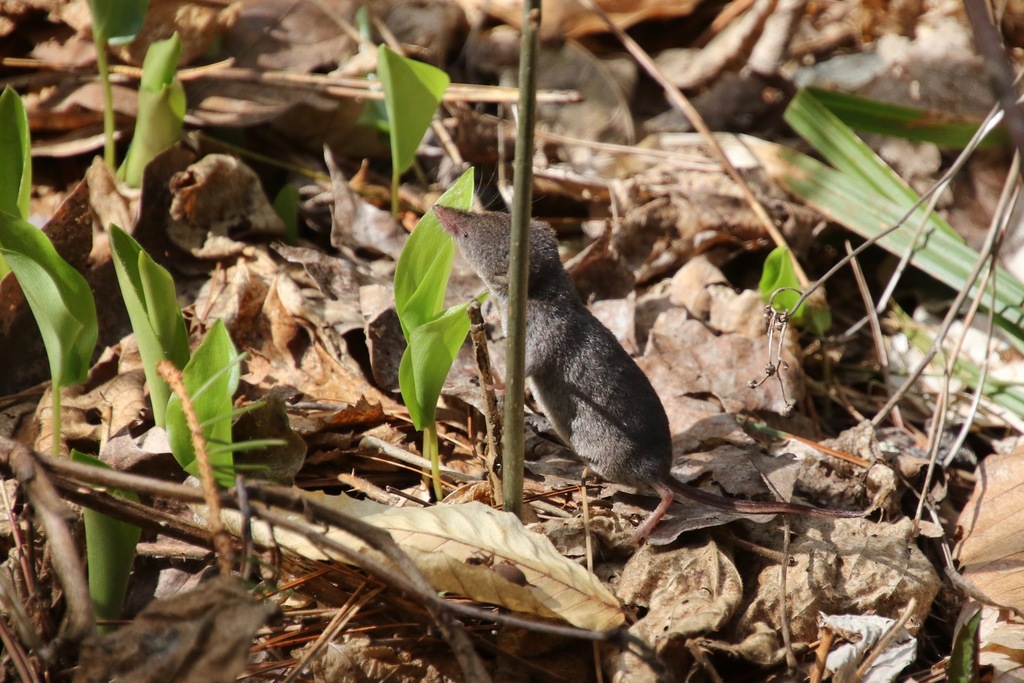
(c) er-birds, some rights reserved (CC BY) · licence
Family: Soricidae · Class: Mammalia · Order: Eulipotyphla
Sorex tennelus (Inyo Shrew) is a California animal in the Soricidae family.
The Inyo shrew (Sorex tenellus) is a small insectivorous mammal belonging to the family Soricidae. This diminutive species measures approximately 80 to 100 mm (3.1 to 3.9 inches) in total length, with the tail comprising roughly half of this measurement. The body is covered in dense, velvety fur that ranges from dark brown to grayish-brown dorsally, with slightly paler underparts. Like other shrews, it possesses a pointed snout, small eyes, and tiny ears that are largely concealed within the fur. The species exhibits the high metabolic rate characteristic of shrews, requiring frequent feeding to maintain body temperature and energy levels. The Inyo shrew occurs in the western United States, with its range extending across portions of California and Nevada. In California, the species is found primarily in the eastern Sierra Nevada region, including areas around the Inyo Mountains from which it derives its common name. According to NatureServe, the range in California and Nevada has been much expanded by recent sampling efforts, suggesting the species may be more widely distributed than previously documented. The species typically inhabits montane and subalpine environments within this geographic range. This shrew occupies diverse habitat types within its mountainous range, including coniferous forests, mixed woodlands, and areas with dense understory vegetation. The species shows preference for moist microhabitats such as areas near streams, springs, or other water sources where prey abundance is typically higher. Rocky areas with adequate cover and leaf litter also provide suitable habitat. Elevation ranges for this species extend from mid-elevation zones into subalpine areas, though specific elevation parameters vary across its geographic range. The Inyo shrew is primarily insectivorous, feeding on a variety of small invertebrates including beetles, fly larvae, spiders, and other arthropods found in leaf litter and soil. Like other shrews, it must consume food equivalent to several times its body weight daily due to its extremely high metabolic rate. The species is active year-round and exhibits both diurnal and nocturnal foraging behavior. Breeding typically occurs during spring and early summer months, with females producing one to two litters annually. Litter sizes range from three to eight young, which are born after a gestation period of approximately three weeks. According to the International Union for Conservation of Nature, the Inyo shrew is classified as Least Concern (IUCN 3.1). NatureServe indicates that while the species' status is poorly known, it probably is not facing immediate conservation threats. The expanded understanding of its range through recent sampling efforts suggests the species may be more stable than previously thought. However, like many small mammals in montane environments, potential threats include habitat fragmentation from development, climate change impacts on high-elevation ecosystems, and alterations to water sources that support the moist microhabitats this species requires.
Classification
Class: Mammalia · Order: Eulipotyphla · Family: Soricidae
Frequently asked questions
How is Sorex tennelus classified?
Sorex tennelus belongs to class Mammalia, order Eulipotyphla, family Soricidae.
What family does Sorex tennelus belong to?
Sorex tennelus is in the Soricidae family.
What is Sorex tennelus?
The Inyo shrew (Sorex tenellus) is a small insectivorous mammal belonging to the family Soricidae.
Is Sorex tennelus found in California?
Yes. Sorex tennelus is recorded in California in The California Species Project's catalogue.
Related species
Other California species in the same genus, family, or bioregion.
Data from The California Species Project — 14,000+ California species with verified data from CNPS, CDFW, USFWS, and more.