Sorex vagrans paludivagus
Monterey Vagrant Shrew
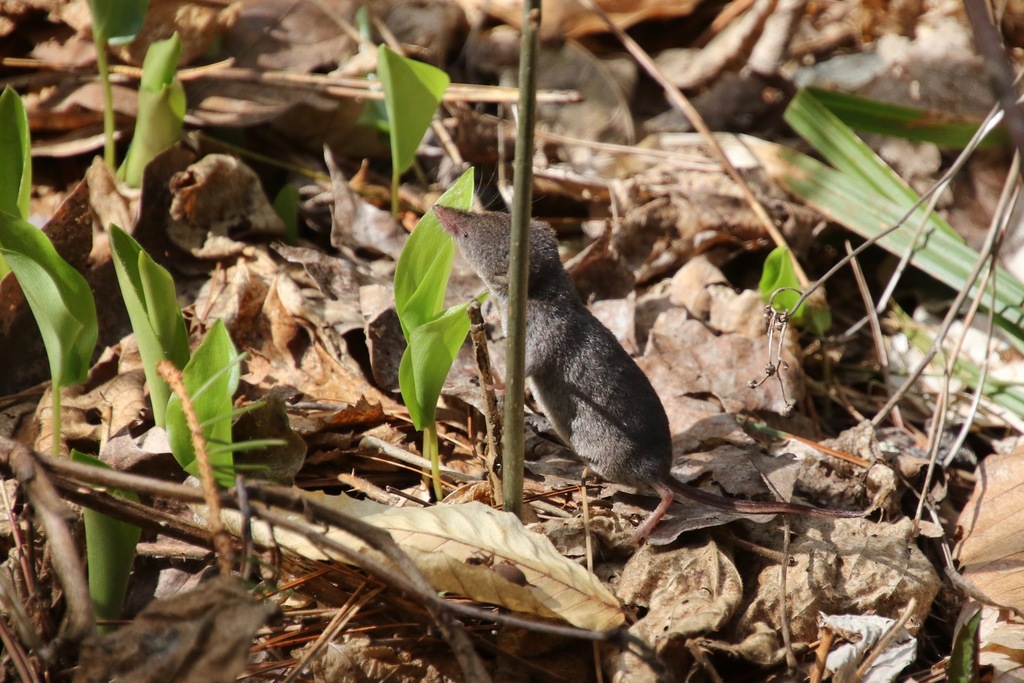
(c) er-birds, some rights reserved (CC BY) · licence
Family: Soricidae · Class: Mammalia · Order: Eulipotyphla
Conservation status: G5T1 S2
Sorex vagrans paludivagus (Monterey Vagrant Shrew) is a California animal in the Soricidae family.
The Monterey vagrant shrew (Sorex vagrans paludivagus) is a small, mouse-like insectivore endemic to the tidal marshes of San Francisco Bay. This subspecies of the vagrant shrew measures 95 to 105 millimeters (3.7 to 4.1 inches) in total length, with a tail length of 37 to 41 millimeters (1.4 to 1.6 inches). Adult weight ranges from 3.9 to 9.2 grams (0.14 to 0.32 ounces). The species exhibits dark brown or gray coloration and possesses characteristic canine-like upper incisors with distinctive red pigment at the tips. It has a long, pointed nose, small eyes, and small ears typical of shrews. Historically, the Monterey vagrant shrew was distributed throughout the tidal marshes of San Francisco Bay, principally in Central and South Bay areas. The species once inhabited the large expanses of salt marsh plains that were common along the shorelines of the bay system. Current distribution is significantly reduced from historical ranges, though specific population locations remain poorly documented due to limited survey data and challenges in species identification. This subspecies is restricted to tidal marsh habitats within the San Francisco Bay estuary system. The Monterey vagrant shrew occupies the specialized ecosystem of salt marshes, where it navigates the unique challenges of fluctuating salinity levels and tidal inundation. These marshes provide the specific microhabitat conditions required by this endemic subspecies, distinguishing its habitat preferences from other vagrant shrew populations found in different environments throughout California. As an insectivore, the Monterey vagrant shrew feeds on small invertebrates found within its marsh environment. Like other shrews, it maintains an extremely high metabolic rate, requiring frequent feeding to sustain its energy needs. The species may coexist in tidal marshes with the more widespread California subspecies of the ornate shrew (Sorex ornatus californicus). Detailed behavioral studies and ecological research on this subspecies remain limited, contributing to knowledge gaps about its specific life history characteristics, reproductive patterns, and prey preferences. The Monterey vagrant shrew carries a Global/State Rank of G5T1 S2, indicating it is a critically imperiled subspecies. The G5T1 designation reflects that while the vagrant shrew species overall is secure globally, this particular subspecies is critically imperiled with typically five or fewer occurrences. The S2 ranking indicates the subspecies is imperiled in California. The dramatic reduction of tidal marsh habitat in San Francisco Bay represents the primary conservation threat. Historical salt marsh habitat has been extensively altered through urban development, diking, and filling activities. Knowledge of current distribution and abundance remains limited, with most records derived from museum specimens and prior salt marsh trapping data. The species faces ongoing challenges from habitat fragmentation, water quality changes, and sea level rise. Conservation efforts focus on tidal marsh restoration and protection within the San Francisco Bay system, though specific recovery actions for this subspecies have not been well documented.
Classification
Class: Mammalia · Order: Eulipotyphla · Family: Soricidae
Conservation status
G5T1 S2
Frequently asked questions
How is Sorex vagrans paludivagus classified?
Sorex vagrans paludivagus belongs to class Mammalia, order Eulipotyphla, family Soricidae.
What family does Sorex vagrans paludivagus belong to?
Sorex vagrans paludivagus is in the Soricidae family.
Is Sorex vagrans paludivagus protected or of conservation concern?
Sorex vagrans paludivagus carries the following status: G5T1 S2.
What is Sorex vagrans paludivagus?
The Monterey vagrant shrew (Sorex vagrans paludivagus) is a small, mouse-like insectivore endemic to the tidal marshes of San Francisco Bay.
Is Sorex vagrans paludivagus found in California?
Yes. Sorex vagrans paludivagus is recorded in California in The California Species Project's catalogue.
Related species
Other California species in the same genus, family, or bioregion.
Data from The California Species Project — 14,000+ California species with verified data from CNPS, CDFW, USFWS, and more.