Sorhagenia nimbosus
Coffeeberry Midrib Gall Moth
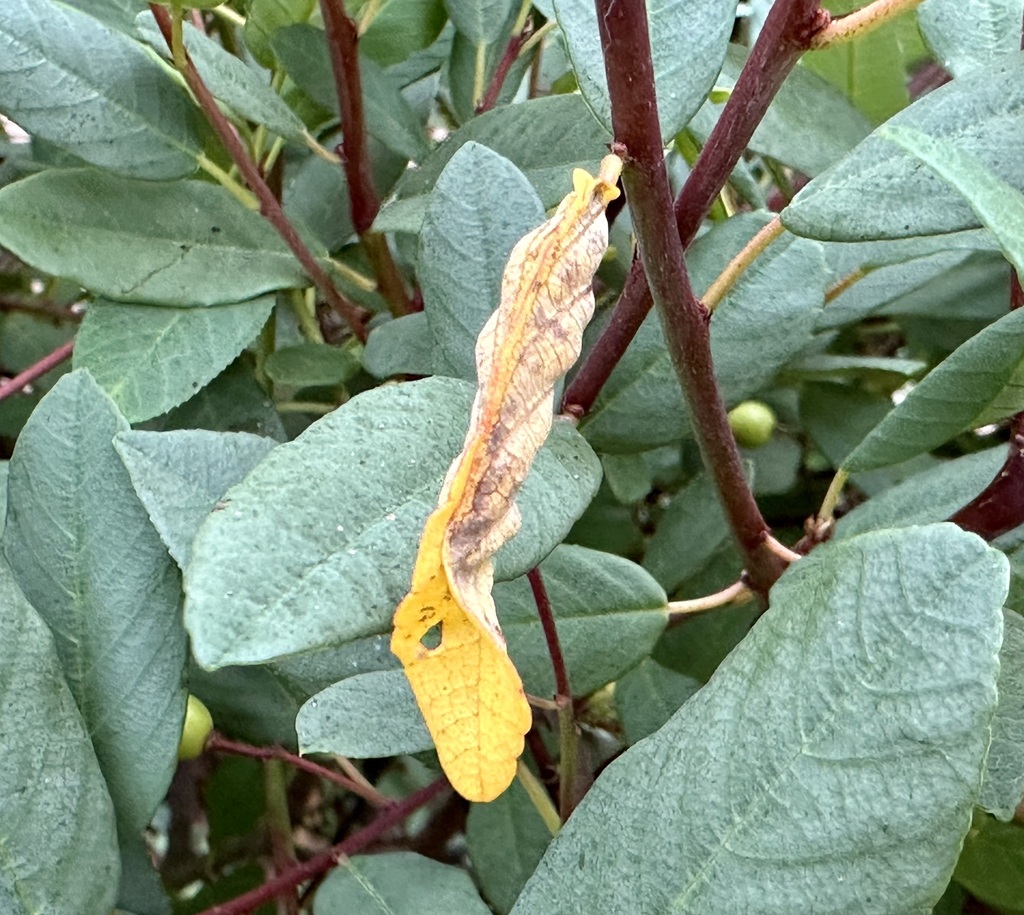
(c) Henrik Kibak, some rights reserved (CC BY) · licence
Family: Cosmopterigidae · Class: Insecta · Order: Lepidoptera
Sorhagenia nimbosus (Coffeeberry Midrib Gall Moth) is a California animal in the Cosmopterigidae family.
The Coffeeberry Midrib Gall Moth is a small cosmopterigid moth with a wingspan of approximately 10 mm (0.4 inches). Adults display muted coloration typical of the family, with forewings that appear grayish-brown in preserved specimens. The species belongs to the subfamily Chrysopeleiinae within the family Cosmopterigidae, commonly known as cosmet moths or twirler moths. Sorhagenia nimbosus occurs along the Pacific coast of North America, with confirmed records from coastal Washington state and presumably extending into California. A specimen was documented from Bay Center in Pacific County, Washington, at the edge of Willapa Bay in August 2013 (BugGuide). The species' full distribution remains poorly documented, as is common for many microlepidoptera. The moth's habitat preferences are closely tied to its host plant requirements. Adults are associated with coastal and riparian areas where their larval host plants occur. The species appears to favor areas with moderate maritime influence, as evidenced by the coastal Washington collection locality. The larval stage exhibits specialized feeding behavior that gives the species its common name. Larvae are leaf tiers that create distinctive gall-like chambers on their host plants (Moth Photographers Group). According to current taxonomic understanding, the species utilizes plants from two families: Rhamnaceae, specifically Frangula species (coffeeberry), and Anacardiaceae, including Toxicodendron species (poison oak) (Eiseman 2020). This dual host family usage is notable among microlepidoptera and reflects the species' adaptation to coastal plant communities where both genera commonly co-occur. The larval feeding creates conspicuous midrib galls that serve as both feeding sites and protective chambers during development. Adult flight period appears to include at least August based on collection records, though the full seasonal activity pattern has not been well documented. DNA barcoding studies have confirmed the species identity, with sequences showing high confidence matches in genetic databases (BugGuide). No formal conservation status has been assigned to Sorhagenia nimbosus at federal or state levels. Like many microlepidoptera, the species likely faces habitat pressures from coastal development and changes to native plant communities. The specialized relationship with specific host genera makes the moth potentially vulnerable to habitat modification that affects coffeeberry and poison oak populations. However, both host plant genera remain relatively common in appropriate coastal habitats. The species was originally described by Braun in 1915 under the genus Cystioecetes and later transferred to Sorhagenia. It carries Hodges number 1633 in the standard North American moth classification system. Scientific documentation for this species remains limited, with most biological information derived from taxonomic treatments and community science observations. Additional research on distribution, life history timing, and specific habitat requirements would enhance understanding of this coastal moth species.
Classification
Class: Insecta · Order: Lepidoptera · Family: Cosmopterigidae
Frequently asked questions
How is Sorhagenia nimbosus classified?
Sorhagenia nimbosus belongs to class Insecta, order Lepidoptera, family Cosmopterigidae.
What family does Sorhagenia nimbosus belong to?
Sorhagenia nimbosus is in the Cosmopterigidae family.
What is Sorhagenia nimbosus?
The Coffeeberry Midrib Gall Moth is a small cosmopterigid moth with a wingspan of approximately 10 mm (0.4 inches).
Is Sorhagenia nimbosus found in California?
Yes. Sorhagenia nimbosus is recorded in California in The California Species Project's catalogue.
Related species
Other California species in the same genus, family, or bioregion.
Data from The California Species Project — 14,000+ California species with verified data from CNPS, CDFW, USFWS, and more.