Spargania magnoliata
Double-banded Carpet
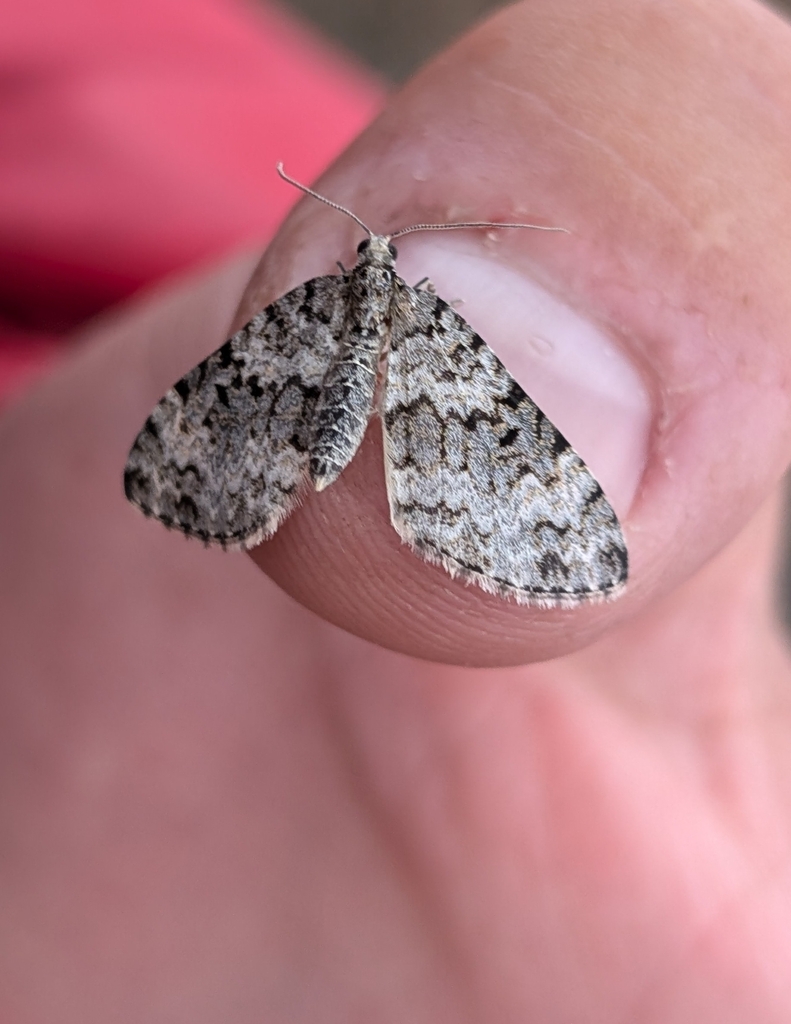
(c) Simone Littledale, some rights reserved (CC BY) · licence
Family: Geometridae · Class: Insecta · Order: Lepidoptera
Spargania magnoliata (Double-banded Carpet) is a California animal in the Geometridae family.
The Double-banded Carpet (Spargania magnoliata) is a moth species in the family Geometridae, commonly known as geometrid moths or inchworms. This species belongs to a large family of moths characterized by their distinctive wing patterns and the looping locomotion of their larvae. Geometridae moths typically have broad, delicately patterned wings that are held horizontally when at rest. As a member of the genus Spargania, this species likely displays the characteristic wing patterns that give carpet moths their common name. Geometrid moths in this group typically have intricate banding or geometric patterns across their forewings and hindwings. The specific epithet 'magnoliata' may reference host plant associations or distinctive markings, though detailed morphological descriptions for this species are limited in available literature. The geographic range and distribution of Spargania magnoliata in California requires further documentation. Many geometrid moths have restricted ranges based on the availability of specific host plants and suitable microhabitats. California's diverse ecosystems, from coastal areas to montane forests, support numerous endemic Geometridae species with varying degrees of habitat specificity. Habitat preferences for this species are not well-documented in current literature. Geometridae moths typically occupy habitats that support their larval host plants, which can range from shrublands and oak woodlands to coniferous forests depending on the species. Adult moths are often found near sources of nectar and may be attracted to lights during their active periods. The life cycle of Spargania magnoliata likely follows the typical geometrid pattern. Female moths deposit eggs on or near host plants, where larvae develop through several instars. Geometridae larvae are characterized by their distinctive looping movement, having fewer prolegs than other moth caterpillars. They often exhibit cryptic coloration and behavior that helps them blend with twigs or leaves. Pupation typically occurs in soil or leaf litter, with adults emerging to mate and continue the cycle. Flight periods and voltinism (number of generations per year) vary among Geometridae species based on climate and host plant phenology. Conservation status information for Spargania magnoliata is not readily available in current databases. The species lacks federal or state listing status, suggesting it may not be considered at immediate risk, though this could also reflect insufficient survey data. Many invertebrate species, particularly moths, remain understudied regarding their population status and conservation needs. Climate change, habitat loss, and pesticide use pose potential threats to many geometrid moths. Light pollution can also affect nocturnal moth species by disrupting natural behavior patterns and navigation. Further research is needed to establish baseline population data, habitat requirements, and host plant associations for this species. Such information would be valuable for assessing conservation status and developing appropriate management strategies if needed.
Classification
Class: Insecta · Order: Lepidoptera · Family: Geometridae
Frequently asked questions
How is Spargania magnoliata classified?
Spargania magnoliata belongs to class Insecta, order Lepidoptera, family Geometridae.
What family does Spargania magnoliata belong to?
Spargania magnoliata is in the Geometridae family.
What is Spargania magnoliata?
The Double-banded Carpet (Spargania magnoliata) is a moth species in the family Geometridae, commonly known as geometrid moths or inchworms.
Is Spargania magnoliata found in California?
Yes. Spargania magnoliata is recorded in California in The California Species Project's catalogue.
Related species
Other California species in the same genus, family, or bioregion.
Data from The California Species Project — 14,000+ California species with verified data from CNPS, CDFW, USFWS, and more.