Spargania viridescens
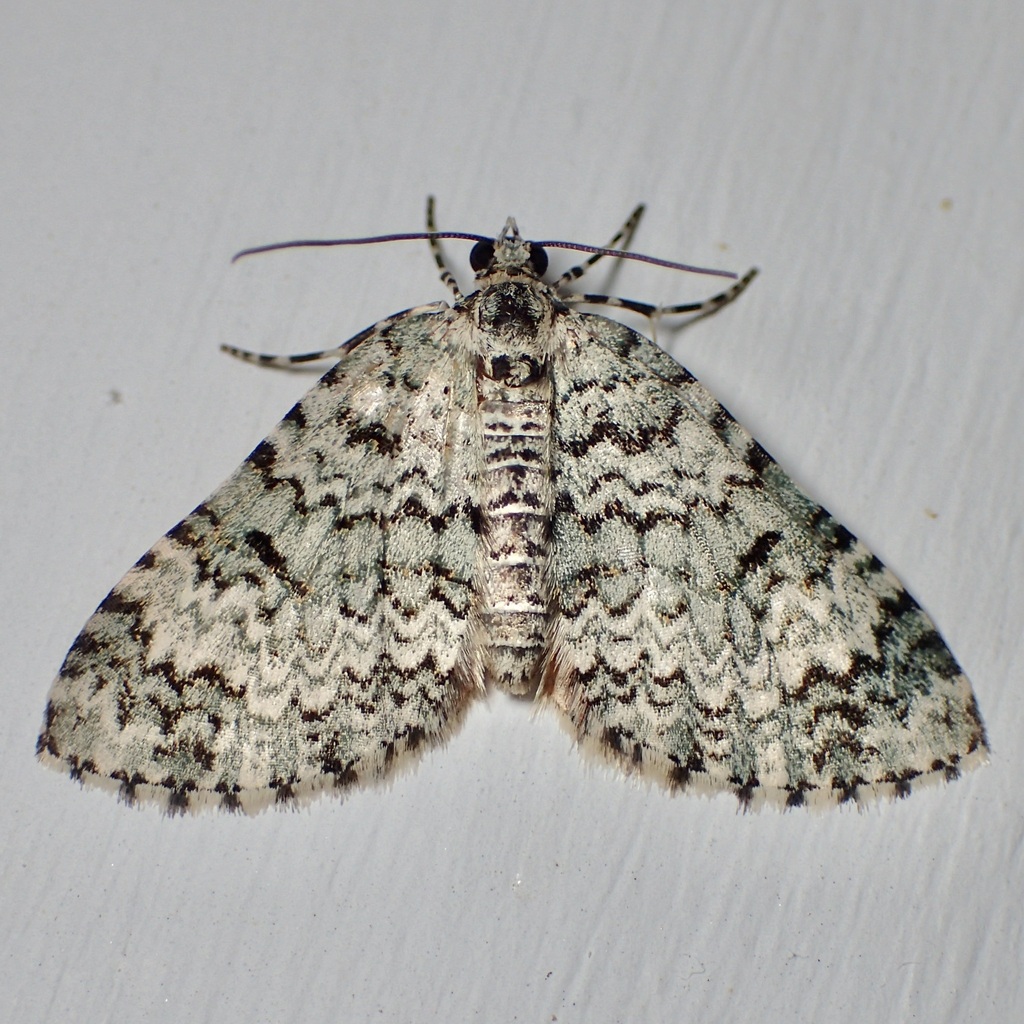
(c) Sue Carnahan, some rights reserved (CC BY) · licence
Family: Geometridae · Class: Insecta · Order: Lepidoptera
Spargania viridescens is a California animal in the Geometridae family.
Spargania viridescens is a geometrid moth species belonging to the family Geometridae, commonly known as inchworms or looper moths. This species represents one of the numerous Geometridae found in North America, a family characterized by larvae that move in a distinctive looping motion due to their reduced number of prolegs. The adult moths of Spargania viridescens display the typical geometrid wing pattern with relatively broad wings held horizontally when at rest. Like other members of the genus Spargania, adults likely exhibit cryptic coloration that provides camouflage against bark and foliage. Geometridae moths generally have slender bodies and delicate wing structures, with wingspans typically ranging from 20 to 40 millimeters across the family, though specific measurements for S. viridescens require verification from taxonomic literature. The range and distribution of Spargania viridescens remains poorly documented in readily available sources. The genus Spargania includes several North American species, suggesting this moth likely occurs somewhere within the continental United States or southern Canada. Many geometrid moths have restricted ranges tied to specific host plant distributions, which may limit the geographic occurrence of this species. Habitat requirements for S. viridescens are not well-documented in accessible literature. Geometridae moths typically inhabit forested areas, woodlands, or shrublands where their larval host plants occur. The larvae, like other geometrids, are likely folivorous, feeding on the leaves of specific plant species during their development. Adult moths are generally nocturnal and may be attracted to artificial lights, making them occasionally observable during nighttime surveys. The life cycle of Spargania viridescens likely follows the typical geometrid pattern of complete metamorphosis. Larvae probably undergo five instars before pupating, with pupation potentially occurring in soil litter or attached to host plant stems. Adult flight periods vary among Geometridae species but often coincide with host plant phenology and favorable weather conditions. Many geometrid species are univoltine, producing one generation per year, though some have multiple broods. The conservation status of Spargania viridescens is not established in major conservation databases as of December 2025. The species does not appear on federal or state endangered species lists, nor is it assessed by the International Union for Conservation of Nature. This lack of conservation assessment may reflect either the species' stable population status or insufficient data for evaluation. Many geometrid moths remain poorly studied, with limited information available about population trends, threats, or habitat requirements. Without comprehensive field studies or recent taxonomic reviews, the current status of S. viridescens populations remains uncertain. Like many specialized lepidopteran species, this moth could be vulnerable to habitat loss, climate change, or pesticide use, but specific threat assessments have not been conducted. Further research is needed to establish basic ecological parameters, distribution patterns, and conservation needs for this geometrid species.
Classification
Class: Insecta · Order: Lepidoptera · Family: Geometridae
Frequently asked questions
How is Spargania viridescens classified?
Spargania viridescens belongs to class Insecta, order Lepidoptera, family Geometridae.
What family does Spargania viridescens belong to?
Spargania viridescens is in the Geometridae family.
What is Spargania viridescens?
Spargania viridescens is a geometrid moth species belonging to the family Geometridae, commonly known as inchworms or looper moths.
Is Spargania viridescens found in California?
Yes. Spargania viridescens is recorded in California in The California Species Project's catalogue.
Related species
Other California species in the same genus, family, or bioregion.
Data from The California Species Project — 14,000+ California species with verified data from CNPS, CDFW, USFWS, and more.