Spatula querquedula
Garganey
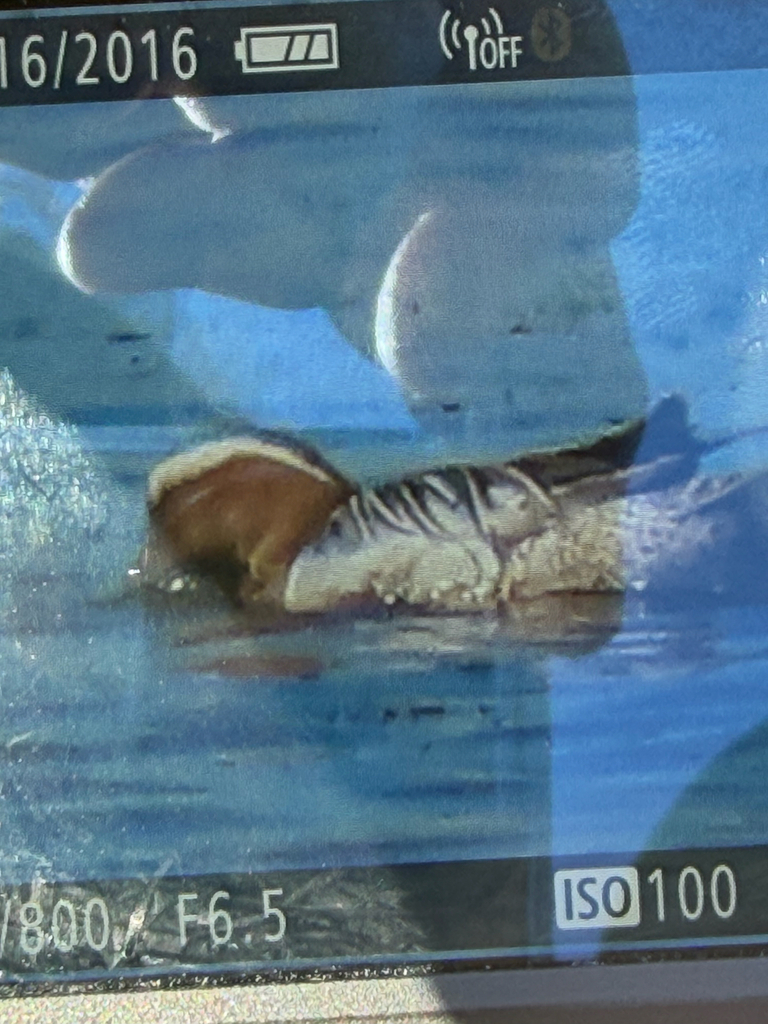
(c) Audrey Whitlock, some rights reserved (CC BY) · licence
Family: Anatidae · Class: Aves · Order: Anseriformes
Spatula querquedula (Garganey) is a California animal in the Anatidae family.
The Garganey is a small dabbling duck with distinctive sexual dimorphism. Males in breeding plumage measure 37-41 cm (14.6-16.1 inches) in length with a wingspan of 60-63 cm (23.6-24.8 inches), weighing 250-500 grams (8.8-17.6 ounces). Breeding males display a dark brown head with a prominent white stripe extending from the eye to the nape, creating a distinctive facial pattern. The breast is brown with dark scaling, while the flanks show elongated black and white scapular feathers. Females and eclipse males are mottled brown with a pale supercilium and dark eye-line, resembling female Blue-winged Teal but distinguished by their pale blue-gray wing coverts and white-bordered green speculum. The Garganey breeds across the Palearctic from Western Europe through Central Asia to the Russian Far East and northern China. In North America, the species is an extremely rare vagrant, with most records occurring along the Atlantic and Pacific coasts. California has documented fewer than ten confirmed records, primarily along the coast and in the Central Valley during spring and fall migration periods. Most North American occurrences are believed to represent natural vagrancy rather than escapes from captivity, given the species' strong migratory tendencies. This species inhabits shallow freshwater wetlands including marshes, flooded grasslands, rice paddies, and seasonal pools. Garganey prefer areas with emergent vegetation and muddy substrates that support abundant invertebrate populations. During migration and winter, they utilize coastal lagoons, estuaries, and brackish marshes. The species typically occurs at elevations below 500 meters (1,640 feet) but may range higher during migration. Garganey are omnivorous, feeding primarily on aquatic invertebrates, seeds, and plant matter. Their diet includes chironomid larvae, water beetles, small crustaceans, and seeds of sedges and grasses. They forage by dabbling at the water surface, filtering mud through specialized lamellae, and occasionally diving in deeper water. Breeding occurs from April through July, with females constructing nests in dense vegetation near water. Clutch size ranges from 8-12 creamy-white eggs, with incubation lasting 21-23 days. Ducklings fledge after 35-42 days. The Garganey is not federally listed in the United States, as it is not a resident species. Globally, the IUCN Red List classifies the species as Least Concern, with stable populations estimated at 2.9-4.2 million individuals worldwide. However, some European populations have experienced declines due to habitat loss from agricultural intensification and wetland drainage. Climate change may affect migration patterns and breeding range boundaries. In California, the species' rarity makes it of significant interest to birders and researchers studying avian vagrancy patterns. The California Bird Records Committee maintains detailed documentation of all state records given the species' exceptional rarity in North America.
Classification
Class: Aves · Order: Anseriformes · Family: Anatidae
Frequently asked questions
How is Spatula querquedula classified?
Spatula querquedula belongs to class Aves, order Anseriformes, family Anatidae.
What family does Spatula querquedula belong to?
Spatula querquedula is in the Anatidae family.
What is Spatula querquedula?
The Garganey is a small dabbling duck with distinctive sexual dimorphism.
Is Spatula querquedula found in California?
Yes. Spatula querquedula is recorded in California in The California Species Project's catalogue.
Related species
Other California species in the same genus, family, or bioregion.
Data from The California Species Project — 14,000+ California species with verified data from CNPS, CDFW, USFWS, and more.