Spea hammondii
Western spadefoot
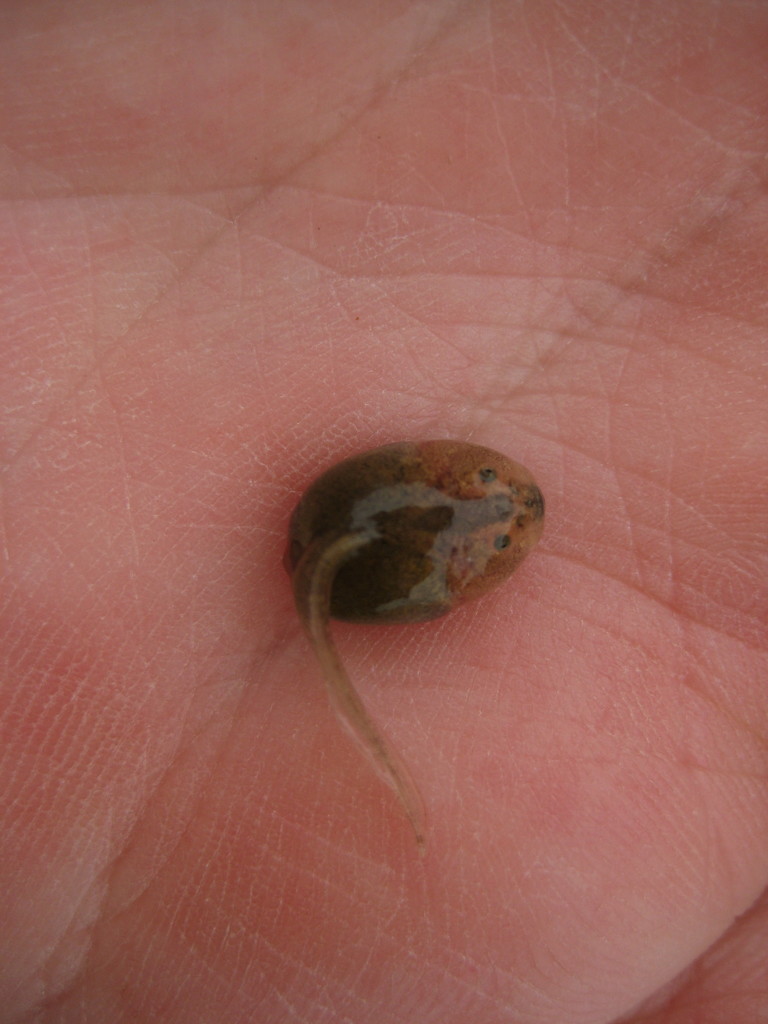
(c) kclarksdnhmorg, some rights reserved (CC BY) · licence
Family: Scaphiopodidae · Class: Amphibia · Order: Anura
Conservation status: Proposed Threatened · G2G3 S3S4
Spea hammondii (Western spadefoot) is a California animal in the Scaphiopodidae family.
The western spadefoot (Spea hammondii) is a medium-sized fossorial toad endemic to California and Baja California. Adults measure 37 to 76 mm (1.5 to 3.0 inches) in snout-vent length, with females typically larger than males. The species is distinguished by a prominent, wedge-shaped black tubercle on each hind foot used for digging, which gives the species its common name. The dorsal surface varies from gray to brown or olive with darker blotches and scattered tubercles. A distinctive pale stripe often extends from the eye to the shoulder. The ventral surface is white to cream colored with minimal patterning. Historically, western spadefoots ranged throughout the Central Valley, Coast Ranges, and parts of Southern California below 1,400 meters (4,600 feet) elevation. Current populations are severely fragmented, with confirmed breeding populations documented in fewer than 40 locations statewide. The species has been extirpated from much of its historical range in the Central Valley and coastal regions due to habitat conversion. Remaining populations occur primarily in Riverside, San Diego, Orange, Ventura, Santa Barbara, and Monterey counties, with scattered occurrences in the Sierra Nevada foothills. Western spadefoots inhabit grasslands, oak woodlands, chaparral, and agricultural areas with loose, sandy soils suitable for burrowing. Adults spend most of their lives underground, emerging primarily during warm rains between January and May. Breeding occurs in temporary pools, stock ponds, and flooded agricultural fields that retain water for at least 4 to 12 weeks. Water temperatures between 16 to 24°C (61 to 75°F) are optimal for larval development. Vegetation around breeding sites typically includes annual grasses and forbes. Adults are nocturnal predators that consume beetles, moths, ants, termites, and other arthropods. Breeding is explosive and synchronized with rainfall events, typically occurring between February and May. Males call from shallow water with a distinctive rolling trill lasting 0.75 seconds and repeated every 1 to 2 seconds. Females deposit 300 to 500 eggs in irregular masses attached to submerged vegetation. Tadpoles are omnivorous and can complete metamorphosis in as little as 4 weeks under optimal conditions, though development typically requires 6 to 10 weeks. This rapid development is crucial for survival in ephemeral breeding habitats. The U.S. Fish and Wildlife Service proposed the western spadefoot for federal threatened status in 2023, citing population declines exceeding 90% since 1900. Primary threats include habitat loss from urban development and agricultural conversion, water diversions that eliminate breeding sites, invasive species including bullfrogs and fish that prey on larvae, and climate change effects on precipitation patterns. Disease, particularly chytrid fungus, poses an emerging threat. Conservation efforts focus on habitat protection, restoration of seasonal wetlands, and management of existing breeding sites. Several populations occur on protected lands including national forests and preserves.
Classification
Class: Amphibia · Order: Anura · Family: Scaphiopodidae
Conservation status
Proposed Threatened · G2G3 S3S4
Frequently asked questions
How is Spea hammondii classified?
Spea hammondii belongs to class Amphibia, order Anura, family Scaphiopodidae.
What family does Spea hammondii belong to?
Spea hammondii is in the Scaphiopodidae family.
Is Spea hammondii protected or of conservation concern?
Spea hammondii carries the following status: Proposed Threatened · G2G3 S3S4.
What is Spea hammondii?
The western spadefoot (Spea hammondii) is a medium-sized fossorial toad endemic to California and Baja California.
Is Spea hammondii found in California?
Yes. Spea hammondii is recorded in California in The California Species Project's catalogue.
Related species
Other California species in the same genus, family, or bioregion.
Data from The California Species Project — 14,000+ California species with verified data from CNPS, CDFW, USFWS, and more.