Speranza extemporata
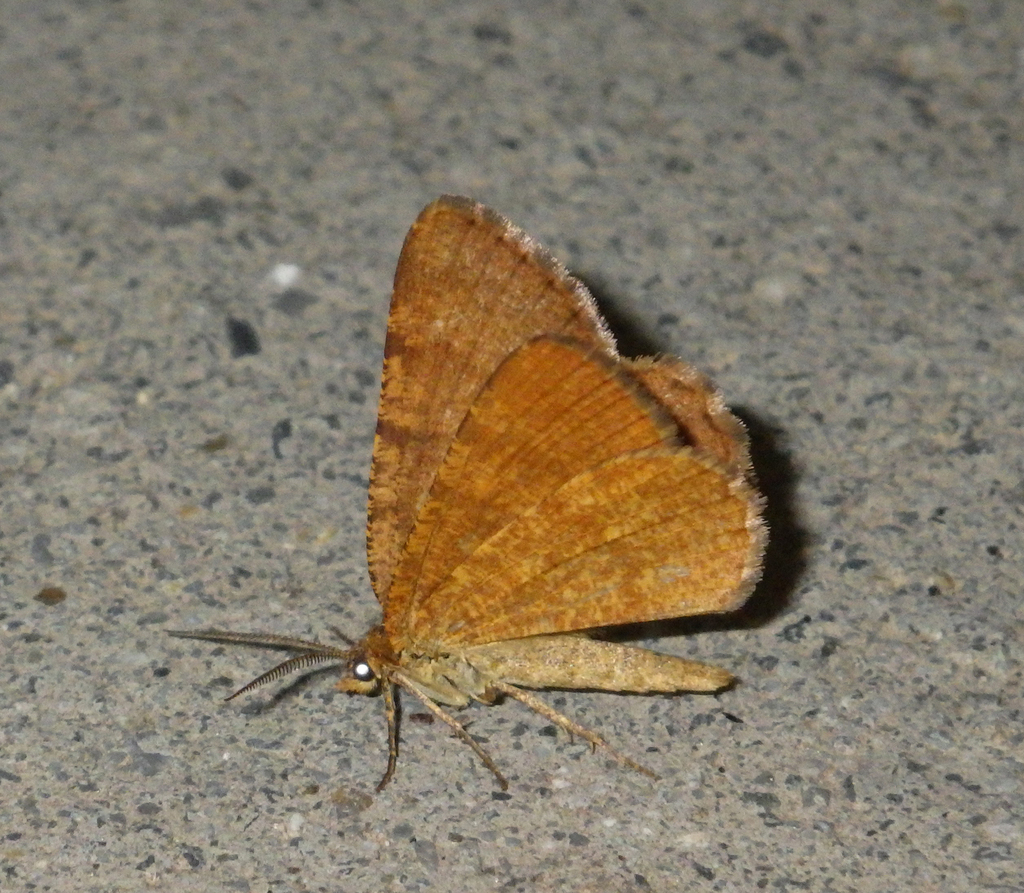
no rights reserved · CC0
Family: Geometridae · Class: Insecta · Order: Lepidoptera
Speranza extemporata is a California animal in the Geometridae family.
Speranza extemporata is a geometrid moth in the family Geometridae, commonly known as a looper moth or inchworm moth. Adults are small to medium-sized moths with forewings measuring approximately 12-15 mm in length. The forewings display a mottled pattern of gray and brown coloration with subtle darker crosslines typical of many geometrid species. The hindwings are paler, often whitish-gray with reduced markings. Like other members of the genus Speranza, this species exhibits sexual dimorphism, with males having more feathery or pectinate antennae compared to the thread-like antennae of females. The geographic range and distribution of Speranza extemporata remains poorly documented in the scientific literature. Limited collection records suggest the species occurs in western North America, though specific locality data and the extent of its California distribution require further research and verification through systematic surveys. Habitat preferences for this species are not well-established due to limited ecological studies. Based on the habitat requirements of related Speranza species, S. extemporata likely inhabits mixed coniferous and deciduous forest environments, possibly including oak woodlands, chaparral transitions, and montane areas. The elevation range and specific vegetation associations remain undetermined and require field investigations to establish precise habitat parameters. The larval stage, like other geometrids, develops as a characteristic looper caterpillar that moves by bringing its posterior segments forward to meet its anterior segments, creating the distinctive arching motion. Larval host plants for S. extemporata have not been definitively identified, though many Speranza species feed on woody plants including various shrubs and trees. Adults likely emerge during specific seasonal periods, but the exact flight season, number of broods per year, and reproductive behavior patterns require documentation through systematic observation. The conservation status of Speranza extemporata is currently undetermined. The species lacks federal or state listing status, and population trends are unknown due to insufficient survey data. Many geometrid moths face threats from habitat loss, fragmentation of forested areas, pesticide applications, and climate change impacts on host plant phenology. Light pollution may also affect adult behavior and reproduction. The apparent rarity of collection records could indicate either genuine scarcity, restricted habitat requirements, or simply inadequate sampling effort in appropriate habitats and seasons. Further research is needed to establish basic biological and ecological information for this species, including precise distribution mapping, host plant identification, life cycle timing, and population assessment. Such data would be essential for determining appropriate conservation measures if needed and understanding the species' role in California's lepidopteran fauna.
Classification
Class: Insecta · Order: Lepidoptera · Family: Geometridae
Frequently asked questions
How is Speranza extemporata classified?
Speranza extemporata belongs to class Insecta, order Lepidoptera, family Geometridae.
What family does Speranza extemporata belong to?
Speranza extemporata is in the Geometridae family.
What is Speranza extemporata?
Speranza extemporata is a geometrid moth in the family Geometridae, commonly known as a looper moth or inchworm moth.
Is Speranza extemporata found in California?
Yes. Speranza extemporata is recorded in California in The California Species Project's catalogue.
Related species
Other California species in the same genus, family, or bioregion.
Data from The California Species Project — 14,000+ California species with verified data from CNPS, CDFW, USFWS, and more.