Speranza quadrilinearia
no rights reserved · CC0
Family: Geometridae · Class: Insecta · Order: Lepidoptera
Speranza quadrilinearia is a California animal in the Geometridae family.
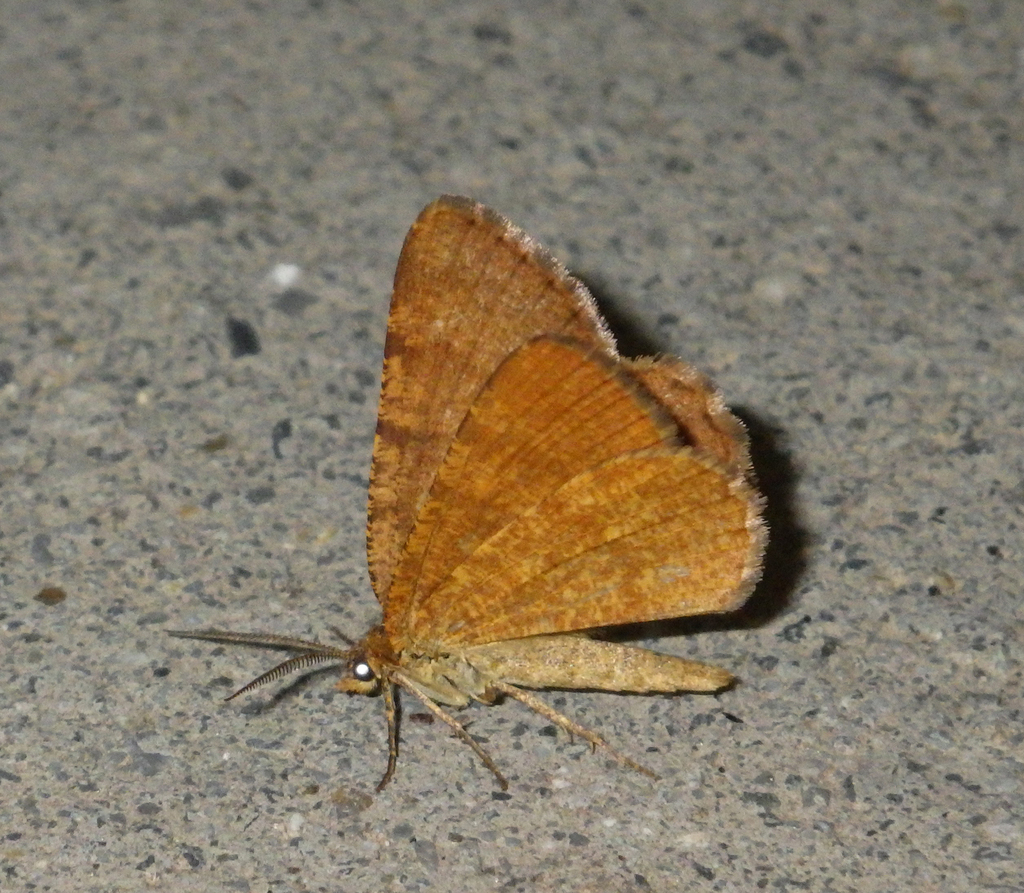
Speranza quadrilinearia, commonly known as the four-lined angle or four-lined geometrid, is a moth species in the family Geometridae. Adults typically measure 20 to 25 mm (0.8 to 1.0 inches) in wingspan. The forewings are pale gray to brownish-gray with four distinct dark lines crossing the wing surface, giving the species its common name. The hindwings are lighter in coloration, often whitish or pale gray, with less prominent markings. The body is slender with thread-like antennae, characteristic of the Geometridae family. This western North American species ranges from British Columbia south to southern California, with populations documented in Idaho, South Dakota, Wyoming, Nevada, Colorado, and New Mexico. Ferguson notes the species is absent from Arizona and Montana, creating distribution gaps in the southwestern United States. In California, the species occurs primarily in foothill and montane regions where suitable host plants are present. Speranza quadrilinearia inhabits areas dominated by chaparral and woodland communities where Ceanothus species, its exclusive host plants, are abundant. These shrublands typically occur at elevations ranging from 300 to 2,400 meters (1,000 to 8,000 feet). The species shows strong fidelity to areas with dense Ceanothus stands, including California lilac, buckbrush, and other members of this diverse shrub genus. Adults are found in oak woodland margins, mixed evergreen forests, and chaparral communities throughout the species' range. Larvae of S. quadrilinearia are specialized feeders on Ceanothus species, consuming leaves during their development. The caterpillars are typical geometrid inchworms, moving in a characteristic looping motion. Like other Geometridae, they often rest by extending their bodies at an angle from branches, resembling twigs. Adult moths are primarily nocturnal and are attracted to artificial lights during their flight period. The species appears to be univoltine in most locations, with adults emerging in late spring to early summer. Mating occurs shortly after emergence, with females depositing eggs on or near host plants. The conservation status of Speranza quadrilinearia has not been formally assessed by federal or state agencies, and it currently holds no special protection status. Population trends are largely undocumented due to limited systematic monitoring of geometrid moths. However, the species' dependence on Ceanothus shrublands may make it vulnerable to habitat loss from development, altered fire regimes, and climate change. Chaparral and woodland communities face increasing pressure from urbanization, particularly in California's foothill regions. Fire suppression can lead to changes in shrubland composition, potentially affecting host plant availability. The species' relatively broad geographic range across multiple states suggests stable populations in suitable habitat, though localized declines may occur in areas experiencing significant land use changes.
Classification
Class: Insecta · Order: Lepidoptera · Family: Geometridae
Frequently asked questions
How is Speranza quadrilinearia classified?
Speranza quadrilinearia belongs to class Insecta, order Lepidoptera, family Geometridae.
What family does Speranza quadrilinearia belong to?
Speranza quadrilinearia is in the Geometridae family.
What is Speranza quadrilinearia?
Speranza quadrilinearia, commonly known as the four-lined angle or four-lined geometrid, is a moth species in the family Geometridae.
Is Speranza quadrilinearia found in California?
Yes. Speranza quadrilinearia is recorded in California in The California Species Project's catalogue.
Related species
Other California species in the same genus, family, or bioregion.
Data from The California Species Project — 14,000+ California species with verified data from CNPS, CDFW, USFWS, and more.