Speyeria zerene
Zerene Fritillary
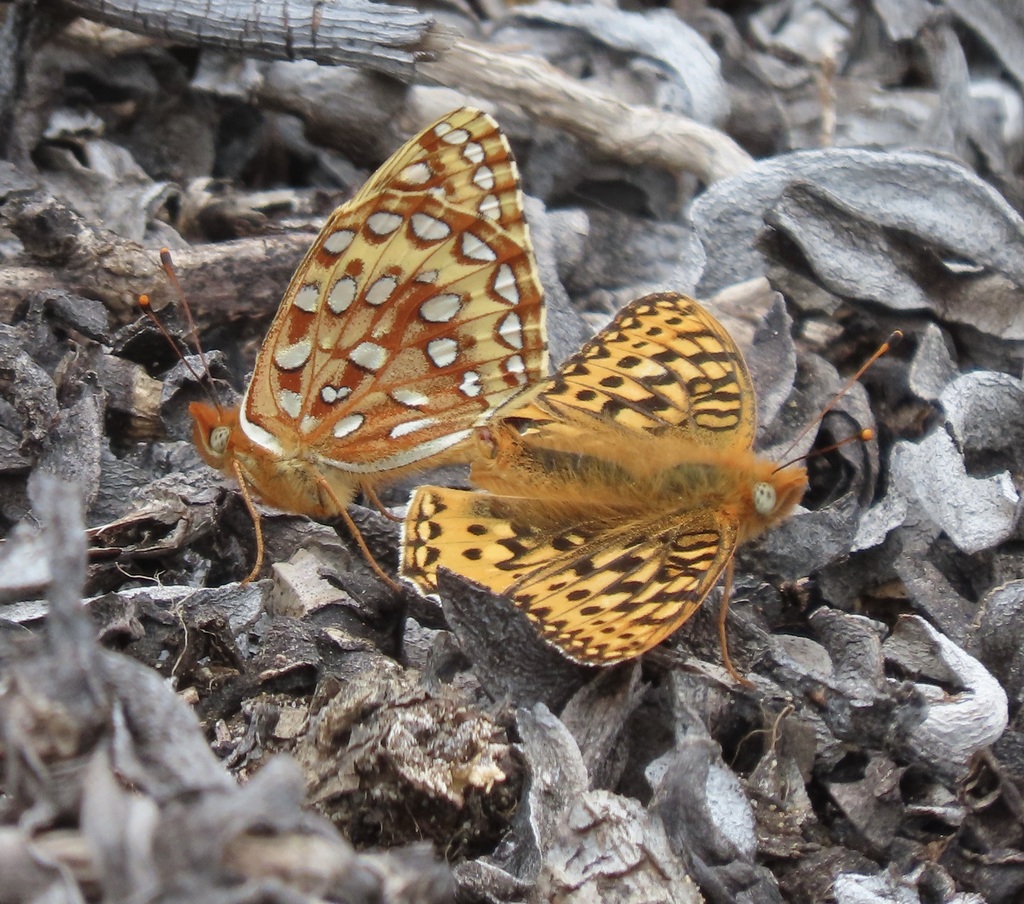
(c) John Hibbard, some rights reserved (CC BY) · licence
Family: Nymphalidae · Class: Insecta · Order: Lepidoptera
Speyeria zerene (Zerene Fritillary) is a California animal in the Nymphalidae family.
The Zerene Fritillary (Speyeria zerene) is a medium-sized butterfly in the family Nymphalidae, with adults exhibiting sexual dimorphism in coloration and size. Males typically display bright orange dorsal wing surfaces with black markings, while females are generally larger and show more muted orange-brown coloration. The wingspan ranges from 50 to 70 mm (2.0 to 2.8 inches). The ventral hindwings feature distinctive silver spots on a tan to reddish-brown background, a characteristic shared with other Speyeria species. The underside pattern includes a series of silver-white spots arranged in irregular rows, which helps distinguish this species from similar fritillaries. The Zerene Fritillary ranges from coastal British Columbia south and east to Montana, extending south to central California, Arizona, and New Mexico. Within California, populations occur primarily in mountainous regions and coastal areas, with documented occurrences in the Sierra Nevada, Cascade Range, and Coast Ranges. The species is found at elevations ranging from sea level to approximately 3,000 meters (9,800 feet), depending on latitude and local climate conditions. This species inhabits diverse environments including mountain meadows, forest clearings, chaparral, coastal prairies, and riparian areas. Adults are commonly observed in areas with abundant nectar sources and proximity to violet host plants. The species shows preference for partially shaded to open habitats where both larval host plants and adult nectar sources are present. Suitable habitat often includes a mosaic of vegetation types with adequate moisture during the larval development period. Zerene Fritillary larvae are specialist feeders on various violet species (Viola spp.), including Viola adunca (hook-leaved violet), V. lobata (pine violet), V. cuneata (wedge-leaved violet), V. nuttallii (Nuttall's violet), and V. purpurea (goosefoot violet). Adults emerge in late spring through summer, typically from May to September depending on elevation and local conditions. Females lay eggs singly near or on violet plants, and newly hatched larvae feed on the host plant before entering diapause as first or second instars. The species completes one generation per year in most locations. Adults feed on nectar from various flowers including thistles, mints, and composites. The Zerene Fritillary currently lacks federal or state conservation listing status and appears to maintain stable populations across much of its range. However, like many butterfly species dependent on specific host plants, local populations may face threats from habitat loss, particularly in areas experiencing urban development or changes in land management practices. Climate change may affect the species through altered precipitation patterns and temperature regimes that impact both host plant availability and butterfly phenology. Fire management practices can influence habitat quality, as some violet species require periodic disturbance to maintain suitable growing conditions.
Classification
Class: Insecta · Order: Lepidoptera · Family: Nymphalidae
Frequently asked questions
How is Speyeria zerene classified?
Speyeria zerene belongs to class Insecta, order Lepidoptera, family Nymphalidae.
What family does Speyeria zerene belong to?
Speyeria zerene is in the Nymphalidae family.
What is Speyeria zerene?
The Zerene Fritillary (Speyeria zerene) is a medium-sized butterfly in the family Nymphalidae, with adults exhibiting sexual dimorphism in coloration and size.
Is Speyeria zerene found in California?
Yes. Speyeria zerene is recorded in California in The California Species Project's catalogue.
Related species
Other California species in the same genus, family, or bioregion.
Data from The California Species Project — 14,000+ California species with verified data from CNPS, CDFW, USFWS, and more.