Speyeria zerene hippolyta
Oregon silverspot butterfly
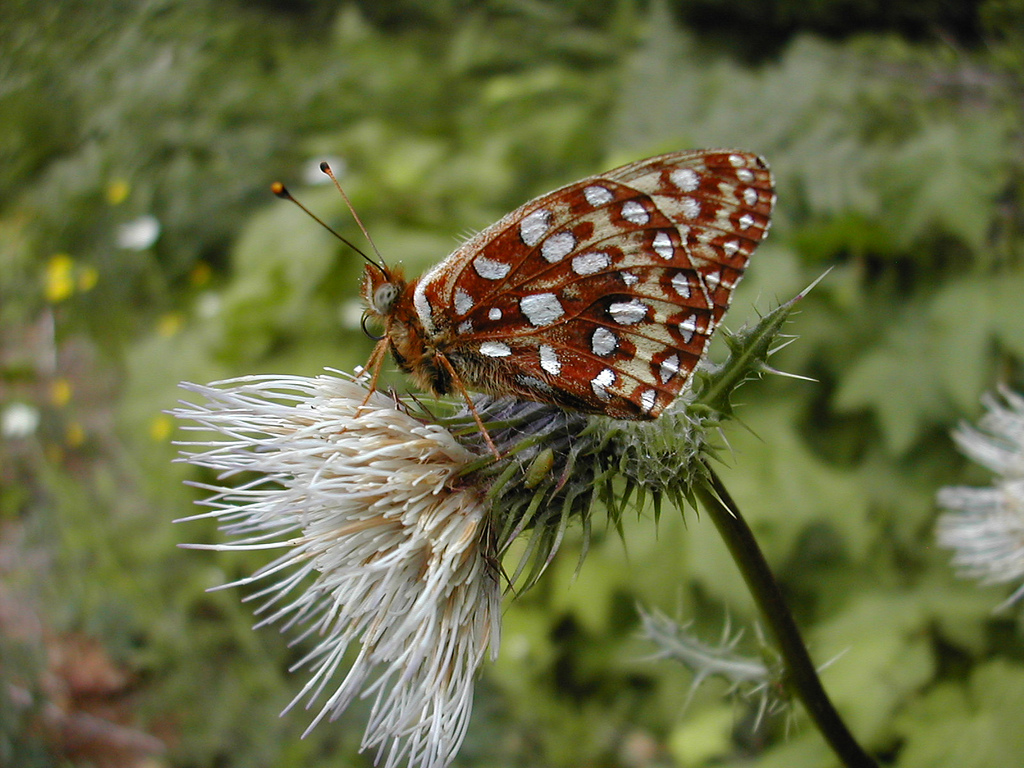
U.S. Fish and Wildlife Service (via Wikimedia Commons) · CC0
Family: Nymphalidae · Class: Insecta · Order: Lepidoptera
Conservation status: Threatened · G5T1 S1
Speyeria zerene hippolyta (Oregon silverspot butterfly) is a California animal in the Nymphalidae family.
The Oregon silverspot butterfly (Speyeria zerene hippolyta) is a medium-sized fritillary with distinctive orange wings marked by black spots and lines. Adults measure 45 to 65 mm (1.8 to 2.6 inches) in wingspan. The dorsal wing surfaces are bright orange-red with a pattern of black spots, chevrons, and marginal borders. The ventral hindwings display characteristic silver spots that give the species its common name, with additional black spotting on a reddish-orange background. Males are typically smaller and more vibrant in coloration than females. The species can be distinguished from similar fritillaries by its specific wing pattern and the arrangement of silver spots on the underside of the hindwings. Historically, the Oregon silverspot butterfly ranged along the Pacific Coast from northern California through Oregon and into Washington. Currently, the species persists in only a few scattered populations along the Oregon and Washington coasts. In Oregon, populations are documented at Rock Creek, Cascade Head, and the Siuslaw National Forest. Washington populations occur at Mount Hebo and in coastal areas of the Olympic Peninsula. The species has been extirpated from its historical range in California and from most of its former Oregon sites. Oregon silverspot butterflies inhabit coastal salt spray meadows, grasslands, and open areas within 3.2 kilometers (2 miles) of the ocean. These habitats are characterized by native grass communities intermixed with wildflowers and maintained by salt spray, wind, and natural disturbance regimes. The species requires open areas with low vegetation height and scattered patches of bare ground. Elevations range from sea level to approximately 150 meters (490 feet). The butterflies depend on early blue violet (Viola adunca) as their primary host plant, though they may also utilize other native violet species. Adult butterflies emerge in late July through September, with peak flight activity typically occurring in August. Males establish territories and patrol for mates, while females seek suitable egg-laying sites on or near violet plants. After mating, females deposit eggs singly on dried grass stems, leaves, and debris near violet patches. The eggs overwinter, hatching the following spring when first-instar larvae must locate violet plants to survive. Larvae feed exclusively on violets through five instars, pupating in early summer. The species completes one generation per year. Adults feed on nectar from various native wildflowers including seaside daisy, pearly everlasting, and goldenrod. The U.S. Fish and Wildlife Service listed the Oregon silverspot butterfly as threatened under the Endangered Species Act in 1980. According to USFWS population monitoring, fewer than 4,000 individuals remain across all sites as of 2023. Primary threats include habitat loss and fragmentation due to coastal development, invasive plant species that alter native plant communities, recreational activities that disturb breeding areas, and fire suppression that eliminates natural disturbance cycles necessary for maintaining open grassland habitat. Climate change poses additional risks through altered precipitation patterns and increased storm intensity. Recovery efforts focus on habitat restoration, invasive species control, population monitoring, and captive breeding programs to support wild populations.
Classification
Class: Insecta · Order: Lepidoptera · Family: Nymphalidae
Conservation status
Threatened · G5T1 S1
Frequently asked questions
How is Speyeria zerene hippolyta classified?
Speyeria zerene hippolyta belongs to class Insecta, order Lepidoptera, family Nymphalidae.
What family does Speyeria zerene hippolyta belong to?
Speyeria zerene hippolyta is in the Nymphalidae family.
Is Speyeria zerene hippolyta protected or of conservation concern?
Speyeria zerene hippolyta carries the following status: Threatened · G5T1 S1.
What is Speyeria zerene hippolyta?
The Oregon silverspot butterfly (Speyeria zerene hippolyta) is a medium-sized fritillary with distinctive orange wings marked by black spots and lines.
Is Speyeria zerene hippolyta found in California?
Yes. Speyeria zerene hippolyta is recorded in California in The California Species Project's catalogue.
Related species
Other California species in the same genus, family, or bioregion.
Data from The California Species Project — 14,000+ California species with verified data from CNPS, CDFW, USFWS, and more.