Sphaeropthalma ecarinata
Glamis Night Mutillid
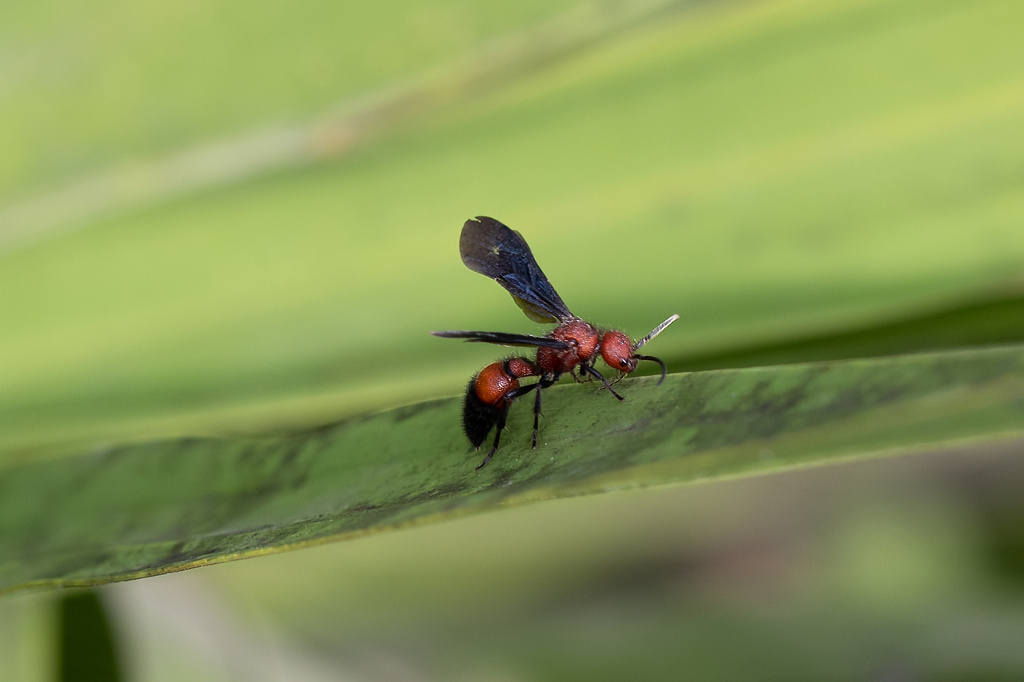
(c) Richard Stovall, some rights reserved (CC BY) · licence
Family: Mutillidae · Class: Insecta · Order: Hymenoptera
Conservation status: G1 S1
Sphaeropthalma ecarinata (Glamis Night Mutillid) is a California animal in the Mutillidae family.
The Glamis Night Mutillid (Sphaeropthalma ecarinata) is a species of velvet ant in the family Mutillidae. Despite their common name, velvet ants are actually wingless female wasps rather than true ants. This species belongs to a group of parasitoid wasps characterized by their dense, velvety pubescence and powerful stings in females. The taxonomic classification and physical characteristics of S. ecarinata remain poorly documented in readily accessible scientific literature. Like other members of the genus Sphaeropthalma, females are likely wingless with a robust, densely pubescent body, while males possess wings and a more slender build. The species exhibits the typical mutillid sexual dimorphism, with females serving as the primary dispersal stage despite their lack of flight capability. Sphaeropthalma ecarinata appears to have an extremely restricted distribution, as indicated by its Global and State conservation ranks of G1 S1, signifying critically imperiled status both globally and within California. The species name references the Glamis area, suggesting occurrence in Imperial County in southeastern California. This region is characterized by Colorado Desert habitat, including sandy washes, desert flats, and areas with scattered desert vegetation. The habitat requirements for this species have not been well documented in available scientific literature. Given its occurrence in the Colorado Desert region and the ecology of related Sphaeropthalma species, it likely inhabits sandy desert areas with sparse vegetation. The Glamis region experiences extreme temperatures and low precipitation typical of the Sonoran Desert ecosystem, with elevations generally below 500 feet. As with other mutillids, S. ecarinata females are likely external parasitoids of ground-nesting bees or wasps. The wingless females search for host nests in soil or sand, penetrate the nest chambers, and oviposit on host larvae or pupae. The mutillid larvae then consume the host, completing development within the host's nest cell. Males emerge first and may be found on flowers seeking mates, while females remain primarily terrestrial. The specific host relationships and seasonal activity patterns for this species remain undocumented. The conservation status of Sphaeropthalma ecarinata reflects extreme rarity, with both global and state ranks of 1 indicating fewer than five populations or occurrences. The species faces potential threats common to desert-endemic insects, including habitat modification from off-road vehicle activity, solar energy development, and climate change impacts on desert ecosystems. The Glamis area experiences intensive recreational vehicle use, which may impact ground-nesting bee and wasp communities that serve as hosts for mutillid species. Without detailed population data or recent surveys, the current status and specific conservation needs remain poorly understood. Scientific documentation for this species remains extremely limited. Enhanced survey efforts and taxonomic research are needed to better understand the distribution, ecology, and conservation requirements of this critically imperiled desert endemic.
Classification
Class: Insecta · Order: Hymenoptera · Family: Mutillidae
Conservation status
G1 S1
Frequently asked questions
How is Sphaeropthalma ecarinata classified?
Sphaeropthalma ecarinata belongs to class Insecta, order Hymenoptera, family Mutillidae.
What family does Sphaeropthalma ecarinata belong to?
Sphaeropthalma ecarinata is in the Mutillidae family.
Is Sphaeropthalma ecarinata protected or of conservation concern?
Sphaeropthalma ecarinata carries the following status: G1 S1.
What is Sphaeropthalma ecarinata?
The Glamis Night Mutillid (Sphaeropthalma ecarinata) is a species of velvet ant in the family Mutillidae.
Is Sphaeropthalma ecarinata found in California?
Yes. Sphaeropthalma ecarinata is recorded in California in The California Species Project's catalogue.
Related species
Other California species in the same genus, family, or bioregion.
Data from The California Species Project — 14,000+ California species with verified data from CNPS, CDFW, USFWS, and more.