Sphex ashmeadi
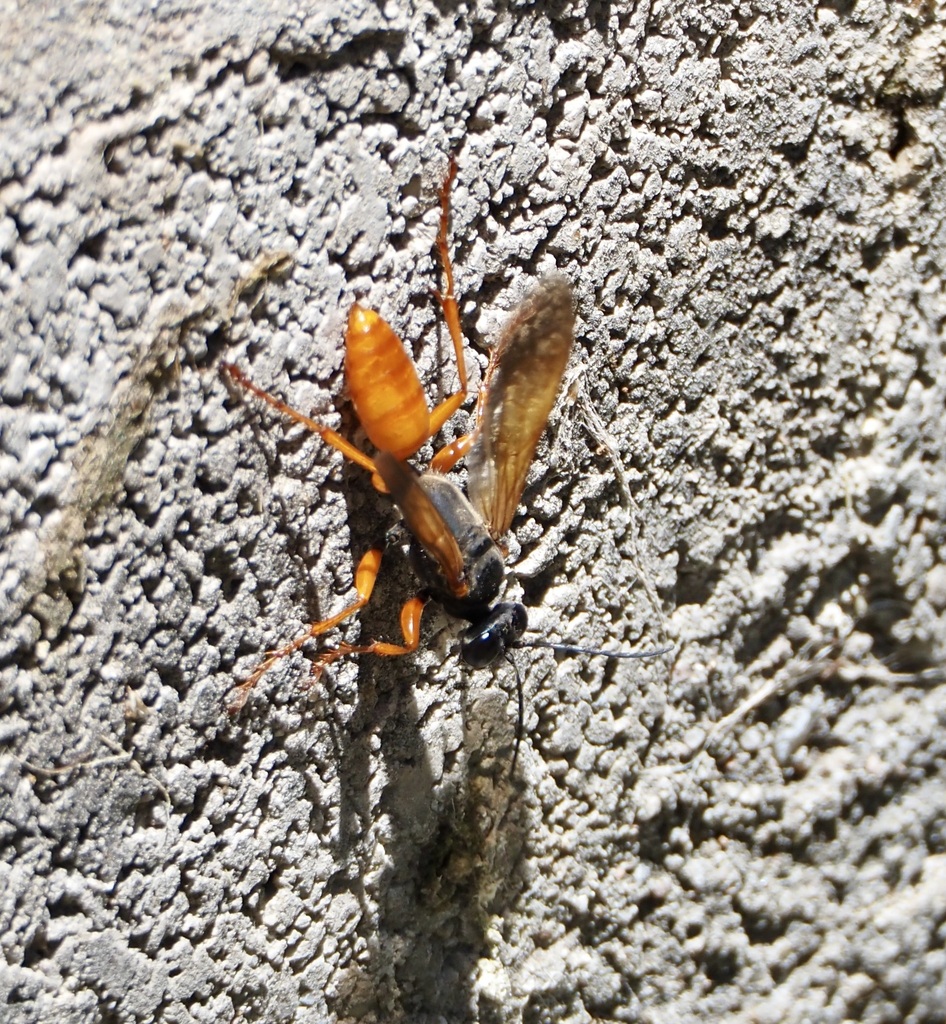
(c) Bob Nieman, some rights reserved (CC BY) · licence
Family: Sphecidae · Class: Insecta · Order: Hymenoptera
Sphex ashmeadi is a California animal in the Sphecidae family.
Sphex ashmeadi, commonly known as Ashmead's Digger Wasp, is a member of the family Sphecidae within the order Hymenoptera. This species belongs to the genus Sphex, which comprises solitary hunting wasps known for their distinctive prey-capturing behaviors. Like other members of its genus, S. ashmeadi likely exhibits the characteristic robust build and strong mandibles typical of digger wasps, though detailed morphological descriptions for this specific species remain limited in the scientific literature. The range and distribution of Sphex ashmeadi within California and North America have not been comprehensively documented in available sources. The species appears in the U.S. Fish and Wildlife Service taxonomic database, indicating its presence within United States territories, but specific geographic boundaries and population centers require further study. Many Sphex species demonstrate localized distributions tied to specific habitat requirements and prey availability. Habitat preferences for S. ashmeadi have not been well characterized in published literature. Members of the genus Sphex typically inhabit areas with suitable soil conditions for nest construction, as these wasps excavate burrows for their offspring. Many species in this genus prefer sandy or loose soil substrates that facilitate digging, often in areas with moderate vegetation cover that supports their prey species. The specific microhabitat requirements and elevation preferences for S. ashmeadi await detailed ecological investigation. The behavioral ecology of Sphex ashmeadi follows patterns typical of solitary hunting wasps in the family Sphecidae. These insects are predatory, with females capturing and paralyzing prey to provision their underground nests. Most Sphex species specialize in hunting orthopteran insects, particularly grasshoppers and crickets, which they sting to induce paralysis before transporting to their burrows. The female constructs individual cells within her excavated nest, deposits a single egg on each paralyzed prey item, and seals the chamber. Larvae develop by consuming the provided prey before pupating and emerging as adults. Flight periods and reproductive timing for S. ashmeadi have not been documented, though related species typically exhibit seasonal activity patterns aligned with prey availability. The conservation status of Sphex ashmeadi remains undetermined, as the species lacks formal assessment under federal or state endangered species legislation. No population estimates, trend data, or threat assessments appear in current conservation databases. The absence of comprehensive ecological studies limits understanding of potential conservation concerns or population stability. Many specialist predatory wasps face pressures from habitat modification, pesticide use, and prey population changes, but the specific vulnerability of S. ashmeadi to these factors requires investigation. Scientific documentation for this species remains extremely limited despite thorough research of available databases and taxonomic resources. The information presented here synthesizes data from the U.S. Fish and Wildlife Service taxonomic system and general knowledge of Sphex genus biology. Additional field studies, taxonomic verification, and ecological research are needed to develop a comprehensive understanding of S. ashmeadi's biology, distribution, and conservation needs.
Classification
Class: Insecta · Order: Hymenoptera · Family: Sphecidae
Frequently asked questions
How is Sphex ashmeadi classified?
Sphex ashmeadi belongs to class Insecta, order Hymenoptera, family Sphecidae.
What family does Sphex ashmeadi belong to?
Sphex ashmeadi is in the Sphecidae family.
What is Sphex ashmeadi?
Sphex ashmeadi, commonly known as Ashmead's Digger Wasp, is a member of the family Sphecidae within the order Hymenoptera.
Is Sphex ashmeadi found in California?
Yes. Sphex ashmeadi is recorded in California in The California Species Project's catalogue.
Related species
Other California species in the same genus, family, or bioregion.
Data from The California Species Project — 14,000+ California species with verified data from CNPS, CDFW, USFWS, and more.