Sphex lucae
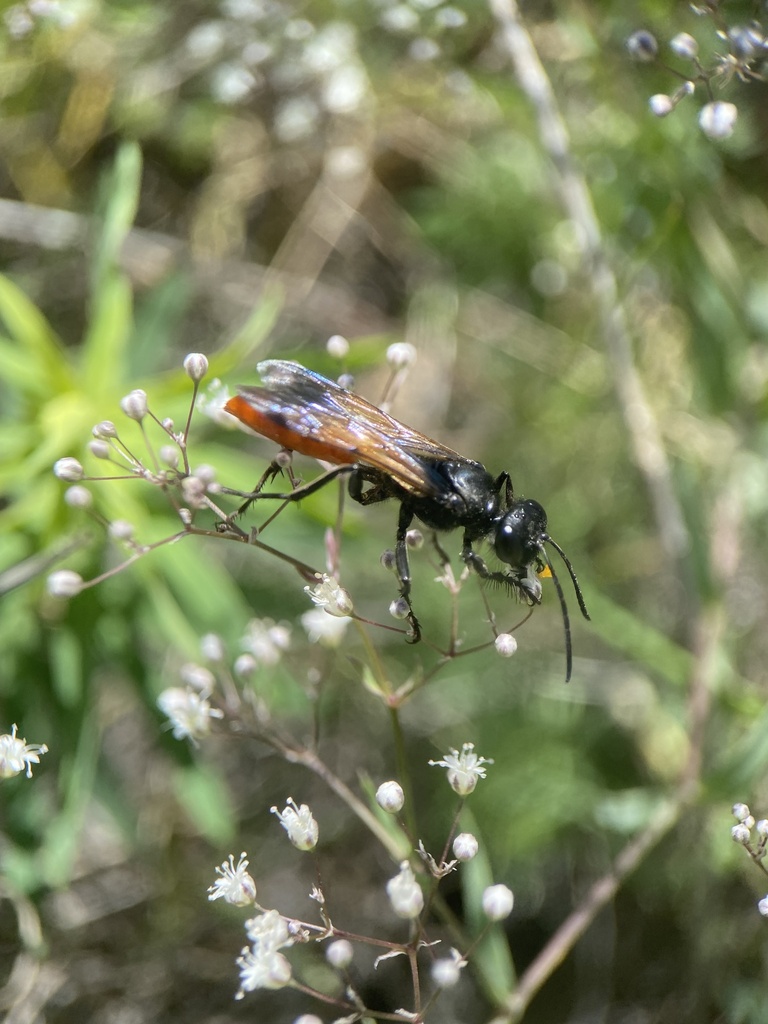
(c) Z, some rights reserved (CC BY) · licence
Family: Sphecidae · Class: Insecta · Order: Hymenoptera
Sphex lucae is a California animal in the Sphecidae family.
Sphex lucae is a thread-waisted wasp in the family Sphecidae, subfamily Sphecinae. This species belongs to the genus Sphex, which comprises solitary wasps known for their distinctive hunting and nesting behaviors. Adult females are characterized by their robust build and thread-like waist typical of sphecid wasps, with a body length ranging from approximately 15 to 25 mm. The species exhibits the typical sphecid coloration pattern with dark integument and potentially lighter markings, though detailed morphological descriptions remain limited in the scientific literature. The range and distribution of Sphex lucae extends across the southwestern United States, with documented occurrences in Arizona and likely portions of California and neighboring states. Observations from Arizona include records from the San Pedro Riparian National Conservation Area in Cochise County, where females have been documented engaging in nesting activities (BugGuide 2014). The species' presence in California requires further documentation, though it likely occurs in similar habitat types along the Colorado River region and southeastern desert areas. Sphex lucae inhabits arid and semi-arid environments typical of the southwestern United States. The species shows preference for sandy soils suitable for excavating nesting burrows, often in riparian areas and desert washes where prey abundance may be higher. Elevational range and specific habitat requirements have not been thoroughly documented, though observations suggest the species occurs in low to moderate elevation desert and riparian zones. Like other members of the genus Sphex, S. lucae is a solitary wasp that provisions its nests with paralyzed prey. Females excavate burrows in sandy soil where they construct brood cells. The species likely provisions its nests with orthopteran insects, particularly grasshoppers and crickets, following the typical hunting pattern of Sphex wasps. Adult activity appears to peak during late summer and early fall months, with September records from Arizona indicating active nesting behavior. Males likely emerge before females and engage in mate-seeking behavior around nesting sites. The complete life cycle and overwintering strategy of this species remain poorly documented. Sphex lucae does not appear on federal or California state endangered species lists, and its conservation status has not been formally assessed. The species' apparent rarity in collections and limited documentation suggest it may have naturally low population densities or restricted habitat requirements. Like many desert-dwelling insects, potential threats could include habitat degradation from development, altered water regimes affecting riparian nesting sites, and climate change impacts on prey availability. The lack of comprehensive distributional data makes it difficult to assess population trends or conservation needs. Detailed ecological studies of this species are lacking. The above information synthesizes available observations from taxonomic databases and citizen science reports. Additional field research is needed to better understand the distribution, habitat requirements, and ecological role of Sphex lucae in southwestern desert ecosystems.
Classification
Class: Insecta · Order: Hymenoptera · Family: Sphecidae
Frequently asked questions
How is Sphex lucae classified?
Sphex lucae belongs to class Insecta, order Hymenoptera, family Sphecidae.
What family does Sphex lucae belong to?
Sphex lucae is in the Sphecidae family.
What is Sphex lucae?
Sphex lucae is a thread-waisted wasp in the family Sphecidae, subfamily Sphecinae.
Is Sphex lucae found in California?
Yes. Sphex lucae is recorded in California in The California Species Project's catalogue.
Related species
Other California species in the same genus, family, or bioregion.
Data from The California Species Project — 14,000+ California species with verified data from CNPS, CDFW, USFWS, and more.