Sphingicampa hubbardi
Hubbard's Small Silkmoth
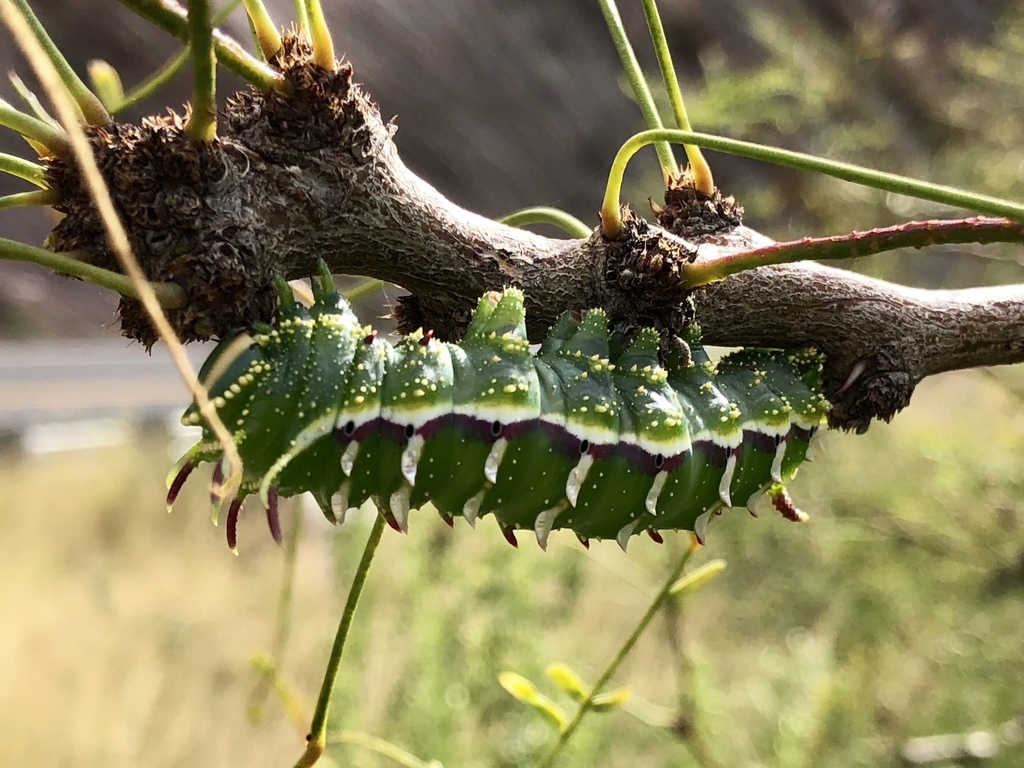
(c) CK2AZ, some rights reserved (CC BY) · licence
Family: Saturniidae · Class: Insecta · Order: Lepidoptera
Sphingicampa hubbardi (Hubbard's Small Silkmoth) is a California animal in the Saturniidae family.
Hubbard's Small Silkmoth is a medium-sized moth in the family Saturniidae, known for its distinctive wing patterns and association with desert acacia plants. Adults have a wingspan of approximately 50-70 mm (2.0-2.8 inches), with forewings that are brownish-gray to reddish-brown. The wings display characteristic eyespots and intricate patterns typical of silkmoths, with males generally having more feathered antennae than females. The body is robust and covered in dense scales, with coloration that blends with the bark of host trees. This species exhibits a patchy distribution from central Texas west through southern New Mexico and Arizona to southeastern California, extending south to Veracruz, Mexico. In California, populations are primarily found in the southeastern desert regions, including areas of the Sonoran Desert where suitable host plants occur. The fragmented distribution pattern reflects the species' dependence on specific host plant communities and suitable desert habitat conditions. Hubbard's Small Silkmoth inhabits arid and semi-arid environments characterized by desert scrub vegetation. The species requires the presence of its primary host plants: Wright's acacia (Acacia wrightii), catclaw acacia (A. greggii), and honey mesquite (Prosopis glandulosa var. juliflora). These habitats typically occur at elevations ranging from sea level to approximately 1,500 meters (4,900 feet), in areas with well-drained soils and sparse to moderate shrub coverage. The moth shows preference for washes, canyon bottoms, and lower slopes where acacias and mesquite naturally concentrate. Larvae feed exclusively on the foliage of the specified host plants, developing through five instars before pupating in the soil. The caterpillars are typically green with spines and can reach lengths of 60-80 mm before maturation. Adults emerge primarily during late spring and early summer, with flight periods varying by geographic location and local climate conditions. Males are attracted to pheromones released by females during nighttime hours. After mating, females deposit eggs singly or in small clusters on host plant foliage. The species likely produces one generation per year in most locations, though this may vary with local conditions. Hubbard's Small Silkmoth does not currently hold federal or state listing status, and comprehensive population data are limited. However, the species faces potential threats common to desert-dwelling insects, including habitat loss from urban development, livestock grazing impacts on host plants, and climate change effects on desert ecosystems. The fragmented nature of suitable habitat makes populations potentially vulnerable to local extirpations. Additionally, drought conditions and altered fire regimes may affect host plant communities. The species' dependence on specific leguminous plants makes it particularly sensitive to changes in desert scrub vegetation composition and structure. Continued monitoring of populations and habitat conditions would be beneficial for assessing long-term conservation needs.
Classification
Class: Insecta · Order: Lepidoptera · Family: Saturniidae
Frequently asked questions
How is Sphingicampa hubbardi classified?
Sphingicampa hubbardi belongs to class Insecta, order Lepidoptera, family Saturniidae.
What family does Sphingicampa hubbardi belong to?
Sphingicampa hubbardi is in the Saturniidae family.
What is Sphingicampa hubbardi?
Hubbard's Small Silkmoth is a medium-sized moth in the family Saturniidae, known for its distinctive wing patterns and association with desert acacia plants.
Is Sphingicampa hubbardi found in California?
Yes. Sphingicampa hubbardi is recorded in California in The California Species Project's catalogue.
Related species
Other California species in the same genus, family, or bioregion.
Data from The California Species Project — 14,000+ California species with verified data from CNPS, CDFW, USFWS, and more.