Sphinx libocedrus
Incense cedar sphinx
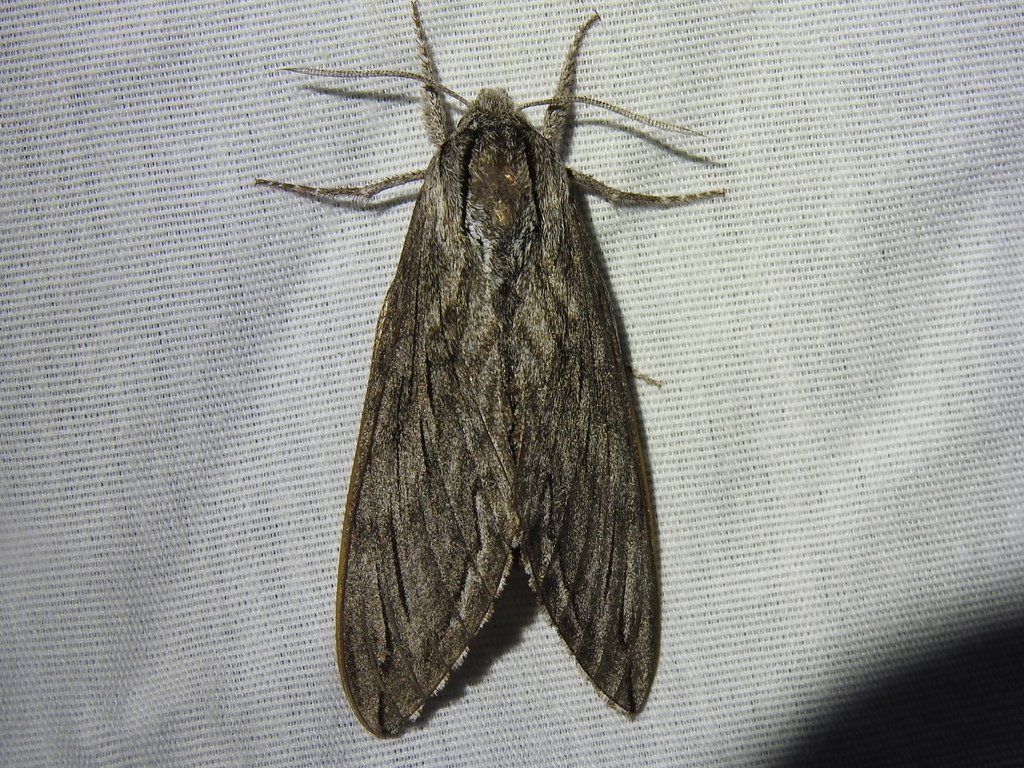
(c) Sam Kieschnick, some rights reserved (CC BY) · licence
Family: Sphingidae · Class: Insecta · Order: Lepidoptera
Sphinx libocedrus (Incense cedar sphinx) is a California animal in the Sphingidae family.
The incense cedar sphinx is a large hawk moth in the family Sphingidae, distinguished by its distinctive abdominal pattern and association with desert and semi-arid habitats. Adults display dark forewings with subtle banding and a robust body typical of sphinx moths. The abdomen features black sides with a row of five prominent white spots that remain concealed beneath the wings when the moth is at rest (BugGuide.Net). The species ranges from western Texas through New Mexico and Arizona to southern California, extending south into Sonora and Baja California Sur, Mexico. Within California, populations occur primarily in the southern regions where suitable host plants are present. This distribution encompasses desert and semi-arid environments across the southwestern United States and northwestern Mexico. Incense cedar sphinx moths inhabit areas where their obligate host plant, New Mexican forestiera (Forestiera neomexicana) in the olive family, occurs naturally. This shrub typically grows in desert washes, canyon bottoms, and rocky slopes in arid and semi-arid regions. The species' habitat requirements are closely tied to the presence of this specific host plant, which limits its distribution to areas supporting healthy forestiera populations. Like other sphinx moths, adults are likely crepuscular or nocturnal, becoming active during evening and nighttime hours. Larvae develop on New Mexican forestiera, feeding on the leaves of this native shrub. The moth's flight period and reproductive biology remain poorly documented in the scientific literature. Adult moths likely nectar on various flowering plants within their habitat range, though specific nectar sources have not been well studied. The conservation status of the incense cedar sphinx has received limited formal assessment. NatureServe rates the species as G3, indicating it is very rare or local throughout its range (Butterflies and Moths of North America). Population status surveys and studies of ecological requirements have been recommended for this species. The moth's dependence on a single host plant species makes it potentially vulnerable to habitat loss or degradation affecting New Mexican forestiera populations. Climate change, urban development, and altered land use patterns in southwestern desert regions may pose threats to both the moth and its host plant. Scientific documentation for this species remains limited compared to more widespread sphinx moths. The information presented here is based on available taxonomic databases and field observations. Research into the species' detailed life history, population dynamics, and specific conservation needs would enhance understanding of this southwestern moth and inform appropriate management strategies.
Classification
Class: Insecta · Order: Lepidoptera · Family: Sphingidae
Frequently asked questions
How is Sphinx libocedrus classified?
Sphinx libocedrus belongs to class Insecta, order Lepidoptera, family Sphingidae.
What family does Sphinx libocedrus belong to?
Sphinx libocedrus is in the Sphingidae family.
What is Sphinx libocedrus?
The incense cedar sphinx is a large hawk moth in the family Sphingidae, distinguished by its distinctive abdominal pattern and association with desert and semi-arid habitats.
Is Sphinx libocedrus found in California?
Yes. Sphinx libocedrus is recorded in California in The California Species Project's catalogue.
Related species
Other California species in the same genus, family, or bioregion.
Data from The California Species Project — 14,000+ California species with verified data from CNPS, CDFW, USFWS, and more.