Sphinx perelegans
Elegant sphinx
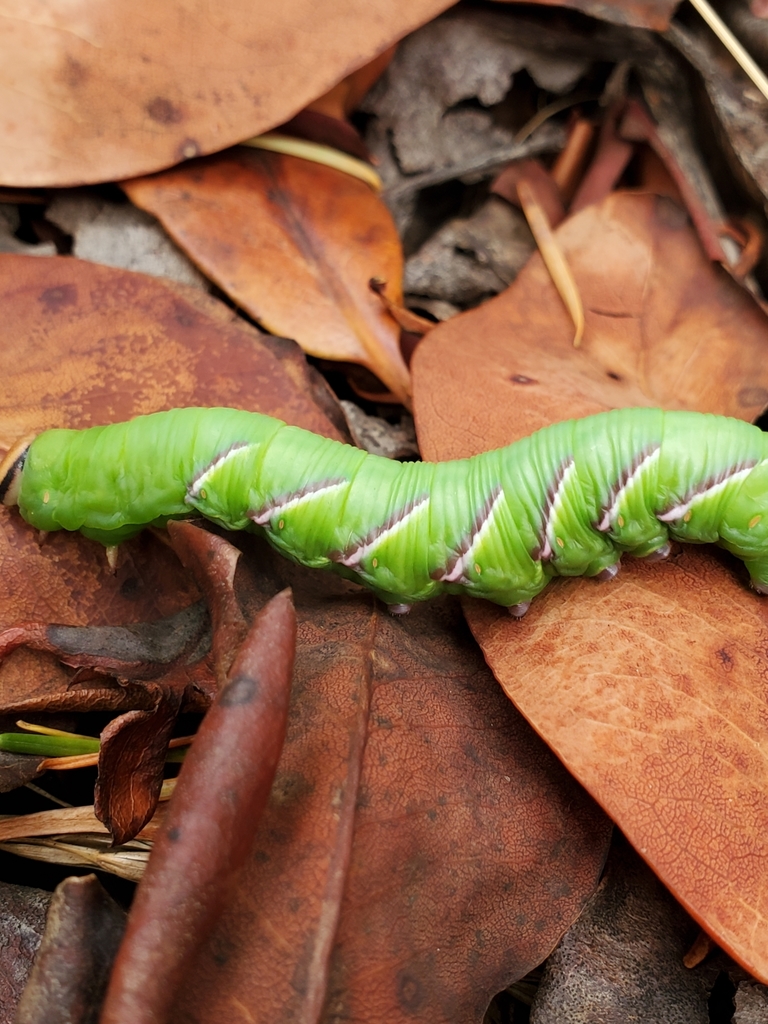
no rights reserved · CC0
Family: Sphingidae · Class: Insecta · Order: Lepidoptera
Sphinx perelegans (Elegant sphinx) is a California animal in the Sphingidae family.
The elegant sphinx (Sphinx perelegans) is a medium-sized hawkmoth in the family Sphingidae. Adults have a wingspan ranging from 80 to 110 mm (3.1 to 4.3 inches). The forewings are grayish-brown with distinctive dark and light banding patterns, while the hindwings display alternating bands of black and white or cream. The thorax is gray-brown with darker stripes, and the abdomen features alternating dark and light segments. The species can be distinguished from similar sphingids by its forewing pattern and the distinctive white patches on the hindwings. The elegant sphinx ranges from British Columbia south to southern California and Baja California Sur, extending eastward to Colorado and New Mexico. In California, the species occurs throughout much of the state, from coastal regions to montane areas. Populations are documented from the Sierra Nevada, Coast Ranges, and Transverse Ranges, with records from elevations ranging from sea level to approximately 2,400 meters (7,900 feet). This species inhabits diverse environments including chaparral, oak woodlands, mixed coniferous forests, and riparian zones where host plants are present. Adults are typically found in areas with abundant flowering plants that provide nectar sources. The moth frequents gardens and natural areas with native shrubs, particularly where snowberries and manzanitas occur. Larvae feed on several plant families, with primary host plants including snowberries (Symphoricarpos), apple and plum species (Prunus), manzanita (Arctostaphylos), and mountain mahogany (Cercocarpus betuloides). The caterpillars are typical sphinx moth larvae, reaching 75 to 90 mm in length when mature, with a prominent horn at the posterior end. They display green coloration with diagonal white stripes along the sides. Adults are crepuscular and nocturnal, active primarily during evening and nighttime hours. Flight period extends from April through September in most locations, with peak activity occurring from May through July. Adults feed on nectar from various flowering plants including lilacs, honeysuckle, and native wildflowers. The species typically produces one generation per year in northern portions of its range and may have two broods in warmer southern areas. The elegant sphinx is not federally or state-listed and appears to maintain stable populations throughout most of its range. However, like many native moths, populations may face localized pressure from habitat loss, pesticide use, and urban development. The species' dependence on native host plants makes it potentially vulnerable to habitat conversion and the removal of native shrublands. Light pollution may also affect adult behavior and reproduction, as artificial lighting can disrupt natural flight patterns and mating behaviors.
Classification
Class: Insecta · Order: Lepidoptera · Family: Sphingidae
Frequently asked questions
How is Sphinx perelegans classified?
Sphinx perelegans belongs to class Insecta, order Lepidoptera, family Sphingidae.
What family does Sphinx perelegans belong to?
Sphinx perelegans is in the Sphingidae family.
What is Sphinx perelegans?
The elegant sphinx (Sphinx perelegans) is a medium-sized hawkmoth in the family Sphingidae.
Is Sphinx perelegans found in California?
Yes. Sphinx perelegans is recorded in California in The California Species Project's catalogue.
Related species
Other California species in the same genus, family, or bioregion.
Data from The California Species Project — 14,000+ California species with verified data from CNPS, CDFW, USFWS, and more.