Sphyrapicus ruber
Red-breasted Sapsucker
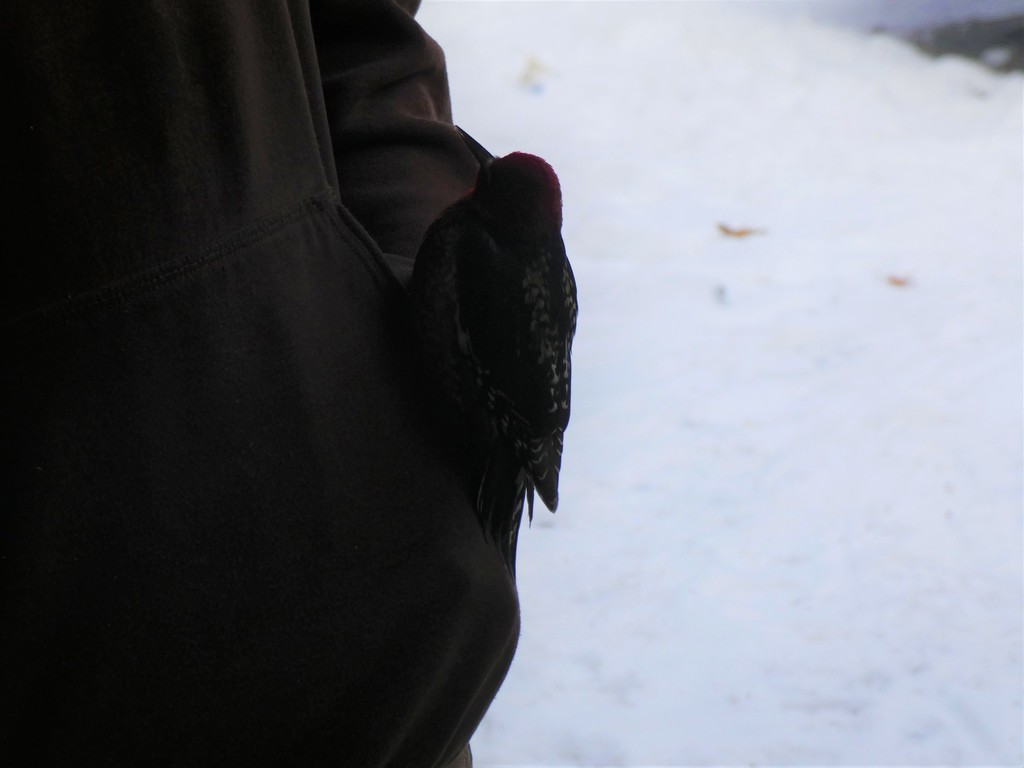
(c) Mara Christensen, some rights reserved (CC BY) · licence
Family: Picidae · Class: Aves · Order: Piciformes
Conservation status: G5 S4
Sphyrapicus ruber (Red-breasted Sapsucker) is a California animal in the Picidae family.
The Red-breasted Sapsucker is a medium-sized woodpecker measuring 20-22 cm (7.9-8.7 inches) in length with a wingspan of 35-40 cm (13.8-15.7 inches). Adults weigh approximately 43-56 grams (1.5-2.0 ounces). The species exhibits distinctive plumage with a bright red head, throat, and breast. The back and wings are black with white barring and spots, while the belly is yellowish-white. Males and females appear nearly identical, though males may show slightly more extensive red coloration on the head. Juveniles display mottled brown and white plumage before acquiring adult colors. The Red-breasted Sapsucker ranges along the Pacific Coast from southeastern Alaska south through British Columbia to Baja California, Mexico. In California, the species occurs primarily in the Sierra Nevada, Cascade Range, Coast Ranges, and mountains of Southern California. The breeding range extends from sea level to approximately 2,440 meters (8,000 feet) elevation, with some populations moving to lower elevations during winter months. Northern populations are migratory, while those in California may be year-round residents or exhibit altitudinal migration. This sapsucker inhabits coniferous and mixed forests, particularly those dominated by Douglas fir, true firs, pines, and hemlocks. The species shows preference for mature forests with a mix of tree species and ages, including dead and dying trees that provide nesting sites and foraging opportunities. During winter, Red-breasted Sapsuckers may occupy deciduous woodlands, riparian forests, and parks with suitable tree species. Elevation preferences vary seasonally, with breeding typically occurring at higher elevations in mountain forests. Red-breasted Sapsuckers create and maintain sap wells by drilling rows of small holes in tree bark, then feeding on the flowing sap and insects attracted to these wells. Their diet consists of tree sap, insects, larvae, fruits, and occasionally nuts. The species plays an ecological role as a "keystone species" by creating sap wells that benefit other wildlife, including hummingbirds, squirrels, and various insects. Breeding occurs from April through July, with pairs excavating nest cavities in dead or dying trees. Females lay 4-7 white eggs, which both parents incubate for 12-13 days. Young fledge after 25-29 days but may remain with parents for several weeks. The Red-breasted Sapsucker has no federal or state listing status and maintains stable populations throughout most of its range. The Global Heritage rank of G5 indicates the species is secure globally, while the California rank of S4 suggests it is apparently secure within the state. However, habitat loss through logging and forest management practices may locally impact populations. Climate change poses potential long-term threats through altered forest composition and elevation shifts in suitable habitat. Forest fires, while part of natural ecosystem processes, can temporarily reduce available habitat. Conservation efforts focus on maintaining mature forest habitats and preserving dead trees essential for nesting.
Classification
Class: Aves · Order: Piciformes · Family: Picidae
Conservation status
G5 S4
Frequently asked questions
How is Sphyrapicus ruber classified?
Sphyrapicus ruber belongs to class Aves, order Piciformes, family Picidae.
What family does Sphyrapicus ruber belong to?
Sphyrapicus ruber is in the Picidae family.
Is Sphyrapicus ruber protected or of conservation concern?
Sphyrapicus ruber carries the following status: G5 S4.
What is Sphyrapicus ruber?
The Red-breasted Sapsucker is a medium-sized woodpecker measuring 20-22 cm (7.9-8.7 inches) in length with a wingspan of 35-40 cm (13.8-15.7 inches).
Is Sphyrapicus ruber found in California?
Yes. Sphyrapicus ruber is recorded in California in The California Species Project's catalogue.
Related species
Other California species in the same genus, family, or bioregion.
Data from The California Species Project — 14,000+ California species with verified data from CNPS, CDFW, USFWS, and more.