Spilogale gracilis amphiala
Channel Islands Spotted Skunk
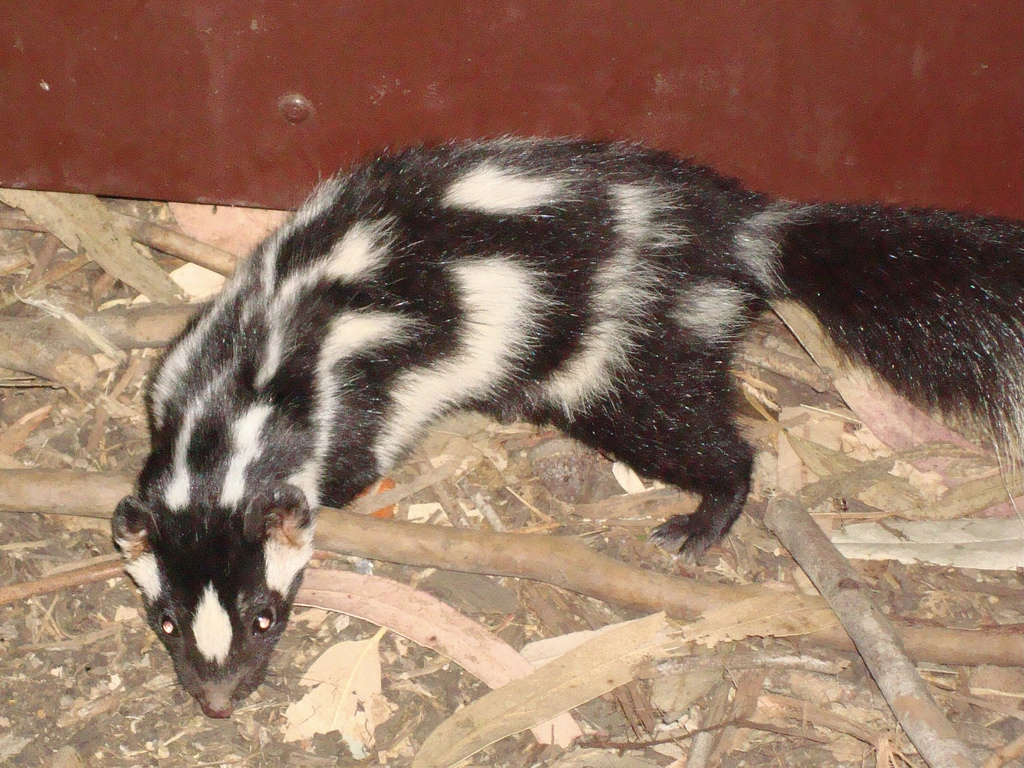
(c) Cricket Raspet, some rights reserved (CC BY) · licence
Family: Mephitidae · Class: Mammalia · Order: Carnivora
Conservation status: G5T3 S3
Spilogale gracilis amphiala (Channel Islands Spotted Skunk) is a California animal in the Mephitidae family.
The Channel Islands spotted skunk (Spilogale gracilis amphiala) is a small carnivore endemic to the California Channel Islands. This subspecies of the western spotted skunk is smaller and more gracile than mainland populations, with adults typically weighing 0.5 to 1.4 kg (1.1 to 3.1 pounds) and measuring 35 to 45 cm (14 to 18 inches) in body length, plus a 15 to 25 cm (6 to 10 inch) tail. The pelage displays the characteristic spotted skunk pattern of black fur with distinctive white stripes and spots, though island populations tend to show more variable markings than their mainland relatives. Historically, the Channel Islands spotted skunk occurred on Santa Cruz, Santa Rosa, San Miguel, and Santa Catalina islands off the California coast. Currently, the subspecies is confirmed present on Santa Cruz and Santa Rosa islands, with its status on San Miguel uncertain and the Santa Catalina population likely extirpated. The species inhabits diverse island ecosystems from coastal scrub and grasslands to oak woodlands and chaparral communities, from sea level to approximately 750 meters (2,460 feet) elevation. Channel Islands spotted skunks occupy varied microhabitats including rocky outcrops, dense shrublands, and areas with fallen logs or root systems that provide denning sites. They utilize both native plant communities and areas with introduced vegetation. The species demonstrates exceptional climbing ability and often establishes dens in tree cavities, rock crevices, or underground burrows. During the day, they shelter in these protected sites, emerging at night to forage. As opportunistic omnivores, Channel Islands spotted skunks consume insects, small mammals, birds, eggs, fruits, and carrion. Their diet varies seasonally based on resource availability. They are known predators of seabird colonies, particularly targeting storm-petrels and their eggs (Federal Register 2008). Breeding occurs primarily in late summer, with delayed implantation resulting in births the following spring after a total gestation of approximately 230 days (CDFW). Litters typically contain 2 to 4 kits. The species is primarily nocturnal and solitary, with individuals maintaining home ranges that may overlap during breeding season. The Channel Islands spotted skunk faces multiple conservation challenges. Habitat modification from introduced ungulates, particularly feral pigs and sheep, has degraded native plant communities on several islands. Competition with introduced species such as feral cats may affect prey availability and denning sites. The small, isolated island populations make the subspecies vulnerable to genetic bottlenecks, disease outbreaks, and environmental catastrophes. Climate change poses additional threats through altered precipitation patterns and potential sea level rise affecting coastal habitats. Current population estimates are not well documented, though the species appears most stable on Santa Cruz Island where habitat restoration efforts have removed feral pigs and sheep. The subspecies receives protection through its occurrence within Channel Islands National Park, though it lacks federal listing status despite its limited range and vulnerable island populations.
Classification
Class: Mammalia · Order: Carnivora · Family: Mephitidae
Conservation status
G5T3 S3
Frequently asked questions
How is Spilogale gracilis amphiala classified?
Spilogale gracilis amphiala belongs to class Mammalia, order Carnivora, family Mephitidae.
What family does Spilogale gracilis amphiala belong to?
Spilogale gracilis amphiala is in the Mephitidae family.
Is Spilogale gracilis amphiala protected or of conservation concern?
Spilogale gracilis amphiala carries the following status: G5T3 S3.
What is Spilogale gracilis amphiala?
The Channel Islands spotted skunk (Spilogale gracilis amphiala) is a small carnivore endemic to the California Channel Islands.
Is Spilogale gracilis amphiala found in California?
Yes. Spilogale gracilis amphiala is recorded in California in The California Species Project's catalogue.
Related species
Other California species in the same genus, family, or bioregion.
Data from The California Species Project — 14,000+ California species with verified data from CNPS, CDFW, USFWS, and more.