Spilosoma pteridis
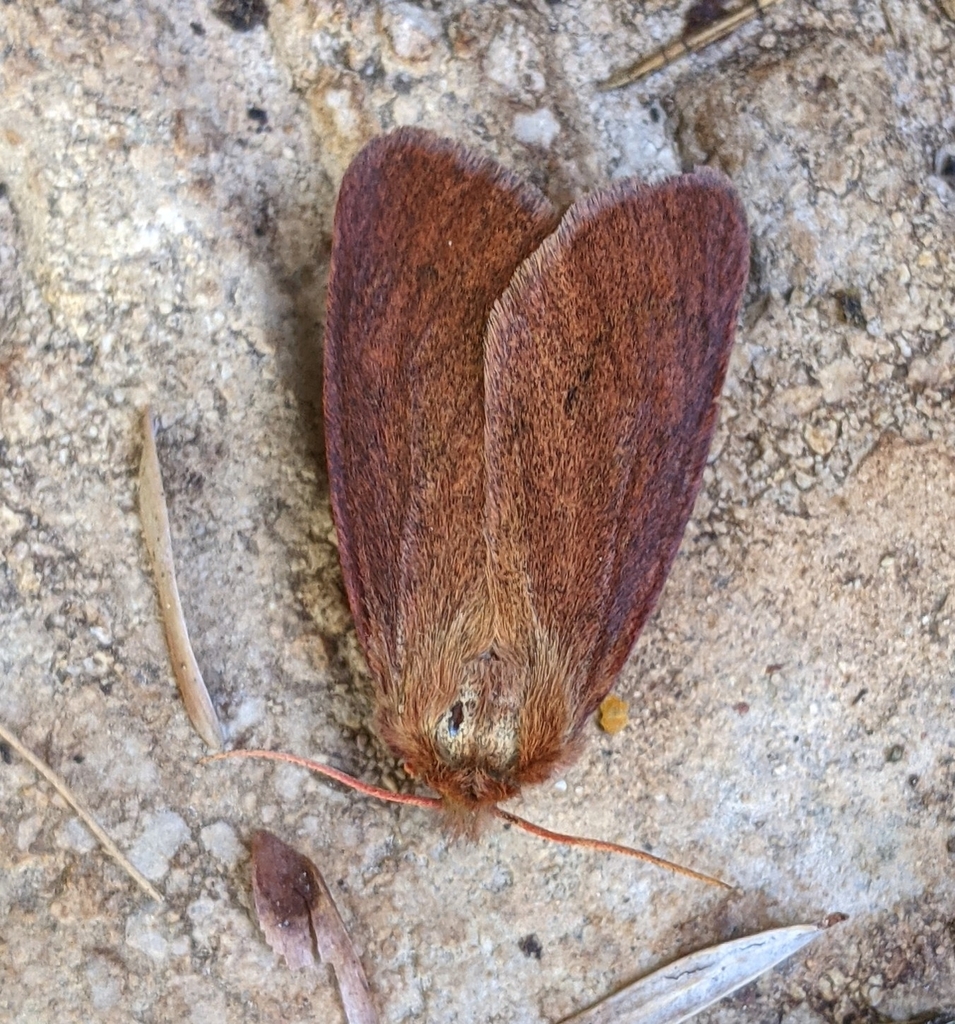
(c) David Anderson, some rights reserved (CC BY) · licence
Family: Erebidae · Class: Insecta · Order: Lepidoptera
Spilosoma pteridis is a California animal in the Erebidae family.
Spilosoma pteridis is a moth species in the family Erebidae, subfamily Arctiinae. This species belongs to the tiger moth group, characterized by their typically fuzzy, densely-haired bodies and often colorful wing patterns. Adult moths display the characteristic features of the genus Spilosoma, with forewings that are generally white or pale-colored with scattered dark spots or markings. The hindwings are typically lighter than the forewings, and the body is covered with dense, woolly setae that give it a fuzzy appearance. Wing span measurements and specific morphological details require verification from specimens, as detailed descriptions of this particular species are limited in readily accessible literature. The range and distribution of Spilosoma pteridis appears to be poorly documented in current databases. The genus Spilosoma includes numerous species distributed across North America, with several species recorded from California. However, the specific geographic range, county-level distribution, and habitat requirements of S. pteridis require further verification from authoritative entomological sources. Many Spilosoma species are associated with specific plant communities and elevation ranges, but these details are not currently available for this particular species. Habitat preferences for Spilosoma pteridis remain undocumented in accessible sources. Related species in the genus typically inhabit areas where their larval host plants occur, ranging from coastal scrub to montane environments. The larvae of Spilosoma species are generally polyphagous, feeding on a variety of herbaceous plants and low shrubs. Adult moths are typically active at night and are attracted to artificial lights, following the general pattern of most Arctiinae moths. The life cycle and behavioral ecology of S. pteridis follow the typical lepidopteran pattern of complete metamorphosis, though specific details regarding flight periods, number of generations per year, and reproductive behavior are not well-documented. Larvae of Spilosoma species are commonly known as woolly bears due to their dense covering of setae, and they typically overwinter as larvae or pupae depending on the species and local climate conditions. Adults likely emerge in spring or early summer, as is common for many California Arctiinae species. The conservation status of Spilosoma pteridis is not established in major databases or federal listings as of December 2025. The species does not appear on the U.S. Fish and Wildlife Service Endangered Species List, nor does it have a designated conservation rank from NatureServe. The apparent lack of recent records or taxonomic clarification suggests that this species may be either very rare, restricted to limited habitats, or possibly represents a taxonomic synonym or misidentification. Further research by lepidopterist specialists would be needed to clarify the current status, distribution, and ecological requirements of this species. Without confirmed recent observations or collection records, assessing population trends or conservation needs remains impossible.
Classification
Class: Insecta · Order: Lepidoptera · Family: Erebidae
Frequently asked questions
How is Spilosoma pteridis classified?
Spilosoma pteridis belongs to class Insecta, order Lepidoptera, family Erebidae.
What family does Spilosoma pteridis belong to?
Spilosoma pteridis is in the Erebidae family.
What is Spilosoma pteridis?
Spilosoma pteridis is a moth species in the family Erebidae, subfamily Arctiinae.
Is Spilosoma pteridis found in California?
Yes. Spilosoma pteridis is recorded in California in The California Species Project's catalogue.
Related species
Other California species in the same genus, family, or bioregion.
Data from The California Species Project — 14,000+ California species with verified data from CNPS, CDFW, USFWS, and more.