Spilosoma vagans
Wandering Tiger Moth
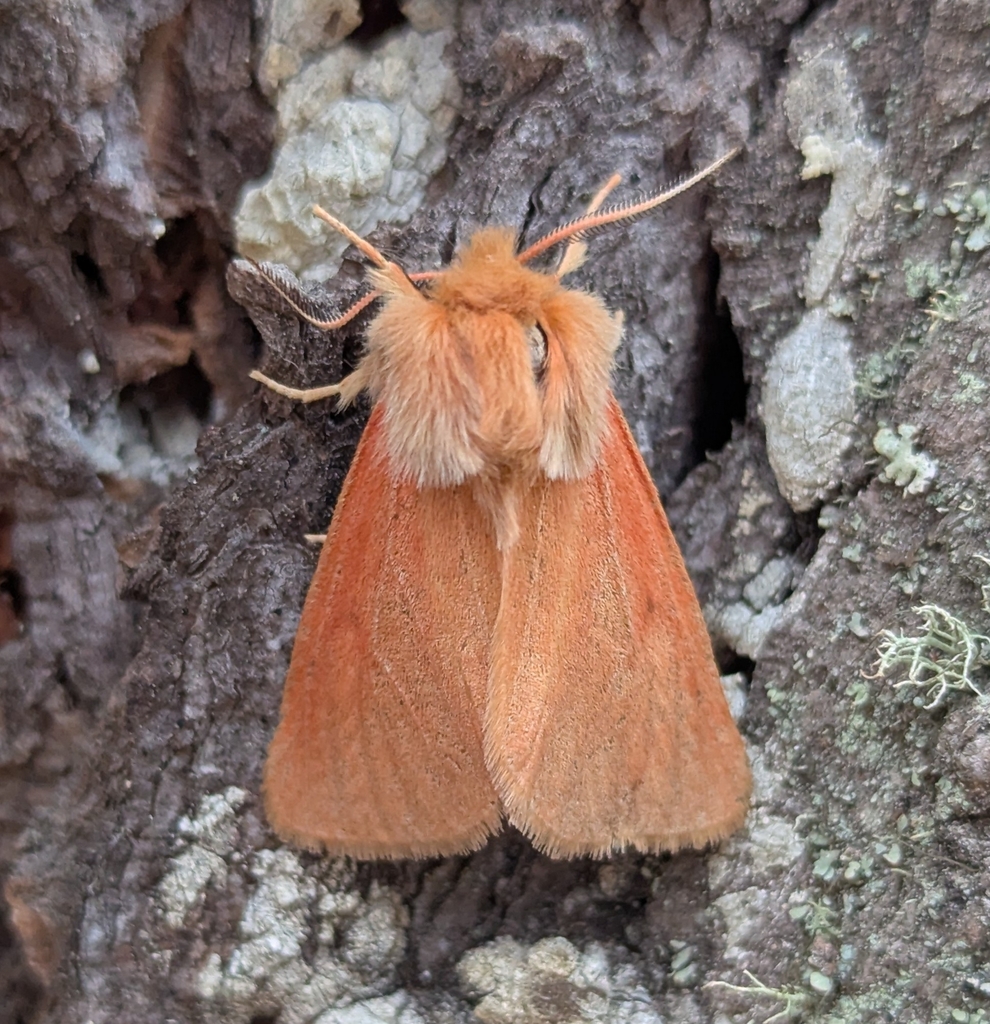
no rights reserved · CC0
Family: Erebidae · Class: Insecta · Order: Lepidoptera
Spilosoma vagans (Wandering Tiger Moth) is a California animal in the Erebidae family.
The Wandering Tiger Moth (Spilosoma vagans) is a medium-sized moth in the family Erebidae, subfamily Arctiinae. Adults typically measure 25-35 mm (1.0-1.4 inches) in wingspan. The forewings are white to cream-colored with scattered black spots of varying sizes, giving the species its common name. The hindwings are similarly colored but typically have fewer spots. The thorax is white with black spotting, while the abdomen displays alternating black and white or yellow bands. Sexual dimorphism is present, with males generally having more feathery antennae and slightly smaller wingspans compared to females. Spilosoma vagans occurs across much of North America, from southern Canada to northern Mexico. In California, the species is found throughout most of the state, from coastal regions to inland valleys and foothills. The moth has been documented in diverse habitats from sea level to approximately 2,000 meters (6,560 feet) elevation. Records exist from the Central Valley, San Francisco Bay Area, coastal ranges, and Sierra Nevada foothills. This species inhabits a wide range of environments including grasslands, agricultural areas, suburban gardens, riparian zones, and open woodlands. Adults are attracted to artificial lights and can be commonly found around porch lights and street lamps during flight periods. The species shows considerable habitat flexibility, adapting to both natural and human-modified landscapes. Wandering Tiger Moths are polyphagous, with larvae feeding on numerous plant families. Caterpillars consume various herbaceous plants, including dandelions (Taraxacum), plantains (Plantago), clover (Trifolium), and numerous weedy species. The larvae are densely covered with setae (bristles) and are commonly known as woolly bears. In California, the species typically produces two generations per year, with adults flying from March through October, peaking in late spring and early fall. Females lay eggs in clusters on host plant leaves. The species overwinters as larvae in protected locations such as leaf litter or under bark. Adult moths are primarily nocturnal and are strong fliers capable of long-distance movement, contributing to their wide distribution. Males locate females through pheromone detection, and mating typically occurs during nighttime hours. The species exhibits considerable variation in spot patterns and overall coloration across its range. Currently, Spilosoma vagans has no federal or state conservation listing in California. The species appears to maintain stable populations throughout its range and benefits from its broad host plant preferences and habitat adaptability. Urban development and agricultural intensification may locally impact populations, but the species' generalist nature and ability to utilize disturbed habitats suggest it remains relatively secure. No specific conservation measures are currently in place for this species, and it is considered a common component of California's lepidopteran fauna.
Classification
Class: Insecta · Order: Lepidoptera · Family: Erebidae
Frequently asked questions
How is Spilosoma vagans classified?
Spilosoma vagans belongs to class Insecta, order Lepidoptera, family Erebidae.
What family does Spilosoma vagans belong to?
Spilosoma vagans is in the Erebidae family.
What is Spilosoma vagans?
The Wandering Tiger Moth (Spilosoma vagans) is a medium-sized moth in the family Erebidae, subfamily Arctiinae.
Is Spilosoma vagans found in California?
Yes. Spilosoma vagans is recorded in California in The California Species Project's catalogue.
Related species
Other California species in the same genus, family, or bioregion.
Data from The California Species Project — 14,000+ California species with verified data from CNPS, CDFW, USFWS, and more.