Spilosoma vestalis
Vestal Tiger Moth
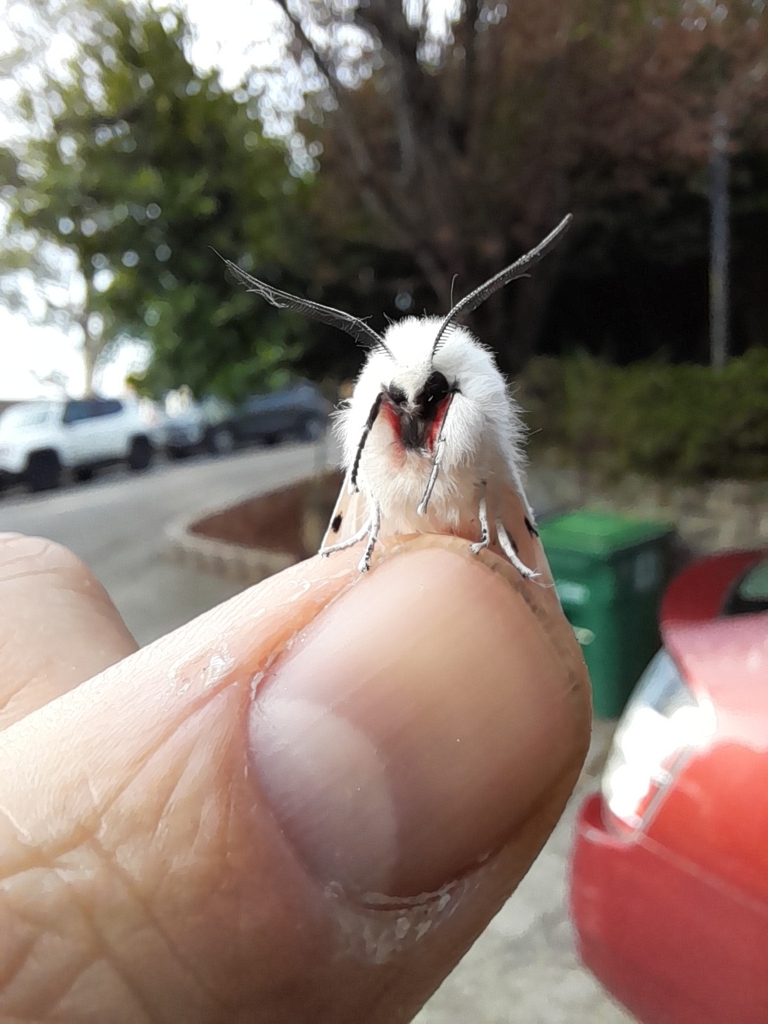
(c) Isaac Krone, some rights reserved (CC BY) · licence
Family: Erebidae · Class: Insecta · Order: Lepidoptera
Spilosoma vestalis (Vestal Tiger Moth) is a California animal in the Erebidae family.
The Vestal Tiger Moth (Spilosoma vestalis) is a medium-sized moth in the family Erebidae, subfamily Arctiinae. Adults typically have a wingspan of 35 to 50 mm (1.4 to 2.0 inches). The forewings are predominantly white to cream-colored with scattered black spots of varying sizes, giving the species its characteristic tiger-like appearance. The hindwings are typically white with fewer markings. Males can be distinguished from females by their more heavily pectinated (feathered) antennae and slightly smaller size. The thorax is white with black spotting, while the abdomen displays alternating bands of white and black. The Vestal Tiger Moth is distributed across much of North America, ranging from southern Canada to northern Mexico. In California, the species occurs throughout most of the state, from coastal regions to inland valleys and mountainous areas. Records indicate presence in the Central Valley, Coast Ranges, Sierra Nevada foothills, and Southern California regions, typically at elevations from sea level to approximately 2,000 meters (6,500 feet). This species inhabits diverse habitats including grasslands, oak woodlands, chaparral, riparian areas, and disturbed sites such as agricultural margins and suburban gardens. Adults are attracted to artificial lights and are commonly encountered at porch lights and moth sheets during surveys. The species shows preference for areas with abundant herbaceous vegetation and appears tolerant of human-modified landscapes. Vestal Tiger Moths are polyphagous, with larvae feeding on a wide variety of herbaceous plants including plantains (Plantago species), dandelions (Taraxacum species), clovers (Trifolium species), and various grasses. The caterpillars are densely covered with bristly hairs and are often called "woolly bears" or "fuzzy bears." They overwinter as larvae, pupating in spring within cocoons constructed among leaf litter or low vegetation. Adults typically fly from late spring through early fall, with peak activity occurring during summer months. The species is multivoltine in warmer regions, producing two to three generations per year. Males are active fliers and use pheromones to locate females for mating. The Vestal Tiger Moth does not currently hold any special conservation status at federal or state levels and is not listed under the California Endangered Species Act. Populations appear stable across most of the species' range, likely due to the moth's adaptability to various habitats and its polyphagous larval diet. The species may actually benefit from some human activities that create edge habitats and disturbed areas where weedy host plants thrive. However, like many native moths, populations may face localized pressures from habitat conversion, pesticide use, and light pollution, which can disrupt natural behavior patterns and navigation.
Classification
Class: Insecta · Order: Lepidoptera · Family: Erebidae
Frequently asked questions
How is Spilosoma vestalis classified?
Spilosoma vestalis belongs to class Insecta, order Lepidoptera, family Erebidae.
What family does Spilosoma vestalis belong to?
Spilosoma vestalis is in the Erebidae family.
What is Spilosoma vestalis?
The Vestal Tiger Moth (Spilosoma vestalis) is a medium-sized moth in the family Erebidae, subfamily Arctiinae.
Is Spilosoma vestalis found in California?
Yes. Spilosoma vestalis is recorded in California in The California Species Project's catalogue.
Related species
Other California species in the same genus, family, or bioregion.
Data from The California Species Project — 14,000+ California species with verified data from CNPS, CDFW, USFWS, and more.