Spissistilus festinus
Three-cornered Alfalfa Hopper
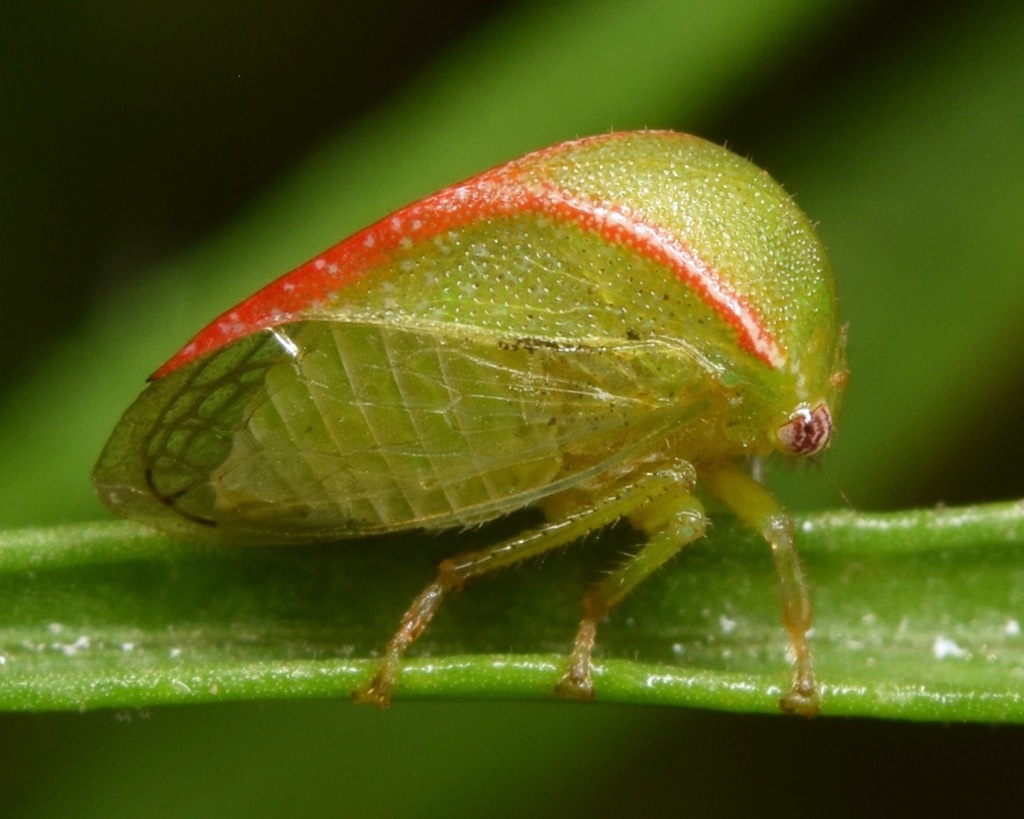
(c) skitterbug, some rights reserved (CC BY) · licence
Family: Membracidae · Class: Insecta · Order: Hemiptera
Spissistilus festinus (Three-cornered Alfalfa Hopper) is a California animal in the Membracidae family.
The three-cornered alfalfa hopper (Spissistilus festinus) is a small treehopper in the family Membracidae, characterized by its distinctive triangular profile when viewed from the side. Adults typically measure 6-8 mm in length and display a greenish to brownish coloration that provides camouflage among vegetation. The species derives its common name from the prominent horn-like projection on the pronotum that extends backward over the abdomen, creating the characteristic three-cornered appearance. The forewings are membranous and held tent-like over the body when at rest. Spissistilus festinus occurs throughout much of North America, with its range extending from southern Canada through the United States into Mexico. In California, the species is found in agricultural areas and natural habitats from sea level to moderate elevations. The distribution includes the Central Valley, coastal regions, and inland valleys where suitable host plants are present. Records indicate presence in both northern and southern California counties. This species inhabits agricultural landscapes, grasslands, and disturbed areas where leguminous plants are abundant. The three-cornered alfalfa hopper shows a strong preference for alfalfa fields, which provide both feeding and breeding habitat. Adults and nymphs are commonly found on alfalfa (Medicago sativa) and other legumes including clovers (Trifolium species) and sweet clover (Melilotus species). The species also utilizes various weedy plants in the Fabaceae family and can be found along field margins and in areas with mixed vegetation. Adults are active from late spring through early fall, with peak populations typically occurring during summer months. Females insert eggs into plant stems, particularly alfalfa and clover, where they overwinter. The species completes one to two generations per year depending on climate conditions. Both adults and nymphs feed by piercing plant tissues and extracting sap, using their needle-like mouthparts typical of hemipterans. The three-cornered alfalfa hopper exhibits limited mobility, typically moving by short hops when disturbed, though adults are capable of flight for dispersal to new host plants. As an agricultural pest, the three-cornered alfalfa hopper can cause economic damage to alfalfa crops through direct feeding and by creating wounds that serve as entry points for plant pathogens. Heavy infestations may result in reduced plant vigor, yellowing of foliage, and decreased hay quality. The species' feeding activity can girdle stems, leading to weakening and breakage. Population levels fluctuate based on weather conditions, with warm, dry summers typically favoring population growth. Currently, Spissistilus festinus has no special conservation status and is not listed under federal or state endangered species acts. As an agricultural pest species, management focuses on population control rather than conservation. Integrated pest management approaches in alfalfa production include biological control agents, cultural practices such as early cutting to disrupt life cycles, and selective use of insecticides when economic thresholds are exceeded. The species serves as prey for various natural enemies including spiders, predaceous bugs, and parasitoid wasps that help regulate populations in agricultural systems.
Classification
Class: Insecta · Order: Hemiptera · Family: Membracidae
Frequently asked questions
How is Spissistilus festinus classified?
Spissistilus festinus belongs to class Insecta, order Hemiptera, family Membracidae.
What family does Spissistilus festinus belong to?
Spissistilus festinus is in the Membracidae family.
What is Spissistilus festinus?
The three-cornered alfalfa hopper (Spissistilus festinus) is a small treehopper in the family Membracidae, characterized by its distinctive triangular profile when viewed from the side.
Is Spissistilus festinus found in California?
Yes. Spissistilus festinus is recorded in California in The California Species Project's catalogue.
More California species
This species has no close relatives in our California data — here are other species to explore.
Data from The California Species Project — 14,000+ California species with verified data from CNPS, CDFW, USFWS, and more.