Spizella atrogularis
Black-chinned Sparrow
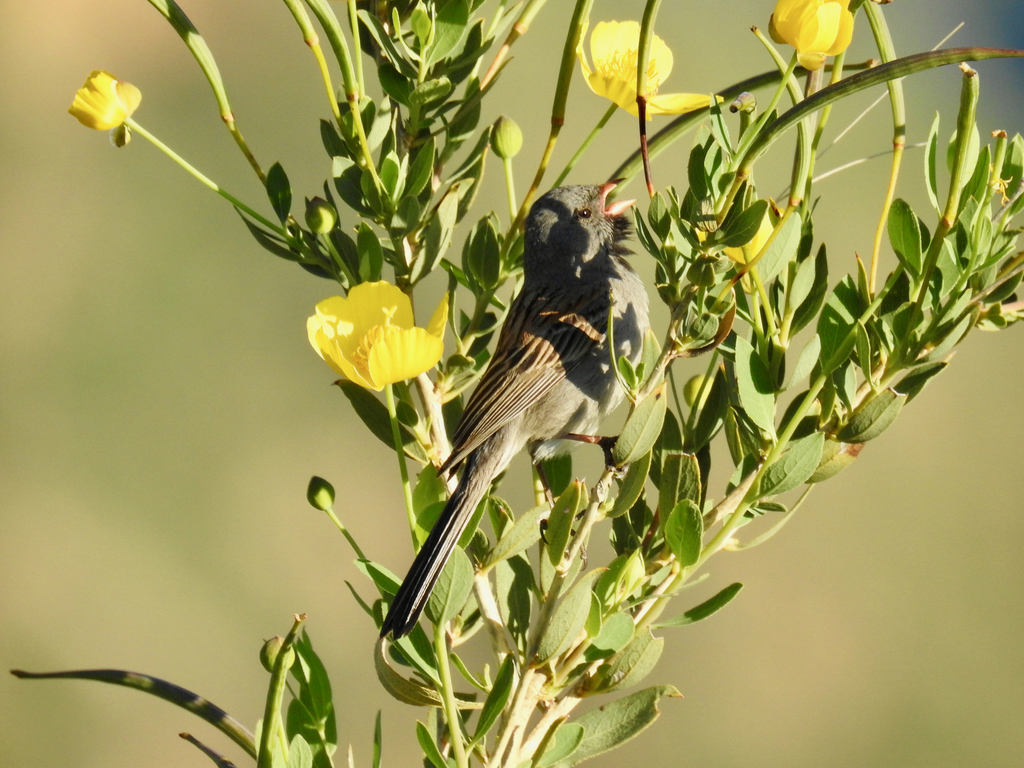
(c) James M. Maley, some rights reserved (CC BY) · licence
Family: Passerellidae · Class: Aves · Order: Passeriformes
Spizella atrogularis (Black-chinned Sparrow) is a California animal in the Passerellidae family.
The Black-chinned Sparrow is a small passerine bird measuring 13 to 15 cm (5.1 to 5.9 inches) in length with a wingspan of approximately 19 cm (7.5 inches). Adult males in breeding plumage display a distinctive black chin and throat that contrasts sharply with their gray head and underparts. The back and wings are rusty brown with darker streaking, while the rump is gray. Females and non-breeding males lack the black throat patch, showing pale gray throats instead. Both sexes have a slender, pointed bill typical of seed-eating birds and display subtle white wing bars. The species ranges across the southwestern United States and northwestern Mexico. In California, Black-chinned Sparrows breed primarily in the mountainous regions of the southern two-thirds of the state, including the Sierra Nevada, Transverse Ranges, Peninsular Ranges, and scattered locations in the Coast Ranges. They occur from Kern County south to the Mexican border, with the highest breeding densities found in the mountains of Los Angeles, Riverside, San Bernardino, and San Diego counties. The species is largely absent from the Central Valley, coastal lowlands, and northern California. Black-chinned Sparrows inhabit chaparral and pinyon-juniper woodland between 1,200 and 2,800 meters (3,900 to 9,200 feet) elevation. They show a strong preference for dense, shrubby vegetation including manzanita, ceanothus, scrub oak, and chamise. In higher elevations, they occupy areas dominated by pinyon pine, juniper, and mountain mahogany. The species requires a mosaic of dense shrub cover for nesting and more open areas for foraging. During the breeding season, males establish territories and sing from prominent perches within their shrubland habitat. The song consists of a series of clear, accelerating notes that begin slowly and increase in tempo. Nesting occurs from April through July, with females constructing cup-shaped nests 0.3 to 2 meters above ground in dense shrubs. Clutches typically contain 3 to 4 pale blue eggs with fine dark speckling. Black-chinned Sparrows are primarily granivorous, feeding on small seeds from shrubs and forbs, though they also consume insects during the breeding season to meet protein requirements for reproduction. The species is migratory, departing California breeding areas by September and returning in March or April. Winter habitat includes desert scrub and thornscrub in Baja California and northwestern Mexico. According to the North American Breeding Bird Survey, Black-chinned Sparrow populations have declined significantly across their range since the 1960s, with California populations showing particularly steep declines. Primary threats include habitat loss from urban development, altered fire regimes that reduce suitable chaparral habitat, and climate change effects on montane ecosystems. The species is not federally or state listed but is considered a bird of conservation concern by the U.S. Fish and Wildlife Service.
Classification
Class: Aves · Order: Passeriformes · Family: Passerellidae
Frequently asked questions
How is Spizella atrogularis classified?
Spizella atrogularis belongs to class Aves, order Passeriformes, family Passerellidae.
What family does Spizella atrogularis belong to?
Spizella atrogularis is in the Passerellidae family.
What is Spizella atrogularis?
The Black-chinned Sparrow is a small passerine bird measuring 13 to 15 cm (5.1 to 5.9 inches) in length with a wingspan of approximately 19 cm (7.5 inches).
Is Spizella atrogularis found in California?
Yes. Spizella atrogularis is recorded in California in The California Species Project's catalogue.
Related species
Other California species in the same genus, family, or bioregion.
Data from The California Species Project — 14,000+ California species with verified data from CNPS, CDFW, USFWS, and more.