Spodoptera exigua
Beet Armyworm Moth
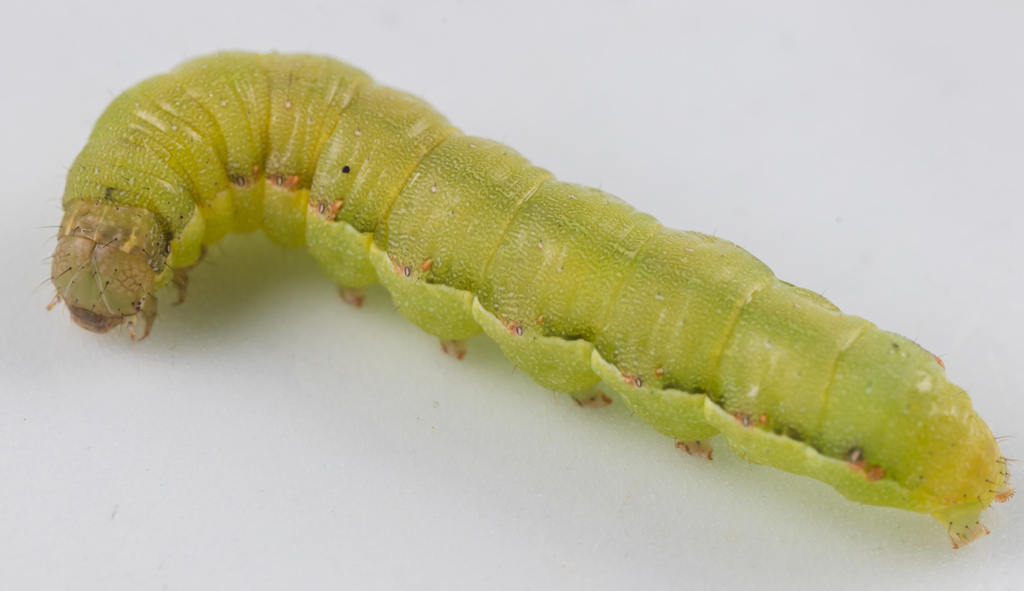
(c) portioid, some rights reserved (CC BY) · licence
Family: Noctuidae · Class: Insecta · Order: Lepidoptera
Spodoptera exigua (Beet Armyworm Moth) is a California animal in the Noctuidae family.
The beet armyworm moth (Spodoptera exigua) is a medium-sized noctuid moth with forewings measuring 12 to 15 mm in length. Adult moths display brown to grayish-brown forewings marked with distinctive pale yellow kidney-shaped spots and darker brown lines. The hindwings are translucent white with dark veins and narrow brown borders. Males can be distinguished from females by their more feathered antennae and slightly smaller size. The larvae, which cause the primary agricultural damage, are pale green to dark green caterpillars with light-colored stripes running longitudinally along the body and can reach 25 to 30 mm in length when fully grown. The beet armyworm moth has an extensive range across North America, occurring from Maine to Florida and extending westward to Nebraska and Texas. This distribution encompasses much of the continental United States, with the species particularly abundant in southern and western agricultural regions where host plants are cultivated year-round. In warmer climates, populations can persist throughout the year, while northern populations may experience seasonal migrations or local extinctions followed by recolonization. This species inhabits agricultural areas, gardens, and disturbed habitats where host plants are present. The moth shows strong preference for cultivated crops and can be found in vegetable fields, orchards, and greenhouse environments. Adults are attracted to areas with abundant nectar sources and suitable egg-laying sites on host vegetation. The species thrives in warm, humid conditions and can exploit both outdoor and protected growing environments. Beet armyworm moths are polyphagous insects with larvae feeding on a wide variety of host plants including apple, beans, beets, corn, lettuce, peas, potato, and tomato. Adults are nocturnal and feed on flower nectar. Females deposit clusters of 50 to 150 eggs covered with pale scales on the undersides of host plant leaves. The species completes multiple generations per year, with development time varying from 24 to 35 days depending on temperature. In warm climates, six to eight generations may occur annually. Larvae initially feed gregariously before dispersing to feed individually, creating characteristic holes in leaves and may consume entire seedlings. The beet armyworm moth is not listed under federal or state endangered species legislation and is not considered a conservation concern. Instead, this species is recognized as a significant agricultural pest causing substantial economic damage to vegetable and field crops. The moth's ability to develop resistance to insecticides and its high reproductive rate make it a persistent management challenge for farmers. Integrated pest management strategies combining biological control agents, pheromone traps, and targeted insecticide applications are employed to manage populations. Climate change may expand the species' range northward and increase generation numbers in currently occupied areas, potentially intensifying agricultural impacts.
Classification
Class: Insecta · Order: Lepidoptera · Family: Noctuidae
Frequently asked questions
How is Spodoptera exigua classified?
Spodoptera exigua belongs to class Insecta, order Lepidoptera, family Noctuidae.
What family does Spodoptera exigua belong to?
Spodoptera exigua is in the Noctuidae family.
What is Spodoptera exigua?
The beet armyworm moth (Spodoptera exigua) is a medium-sized noctuid moth with forewings measuring 12 to 15 mm in length.
Is Spodoptera exigua found in California?
Yes. Spodoptera exigua is recorded in California in The California Species Project's catalogue.
Related species
Other California species in the same genus, family, or bioregion.
Data from The California Species Project — 14,000+ California species with verified data from CNPS, CDFW, USFWS, and more.