Spodoptera ornithogalli
Yellow-striped Armyworm Moth
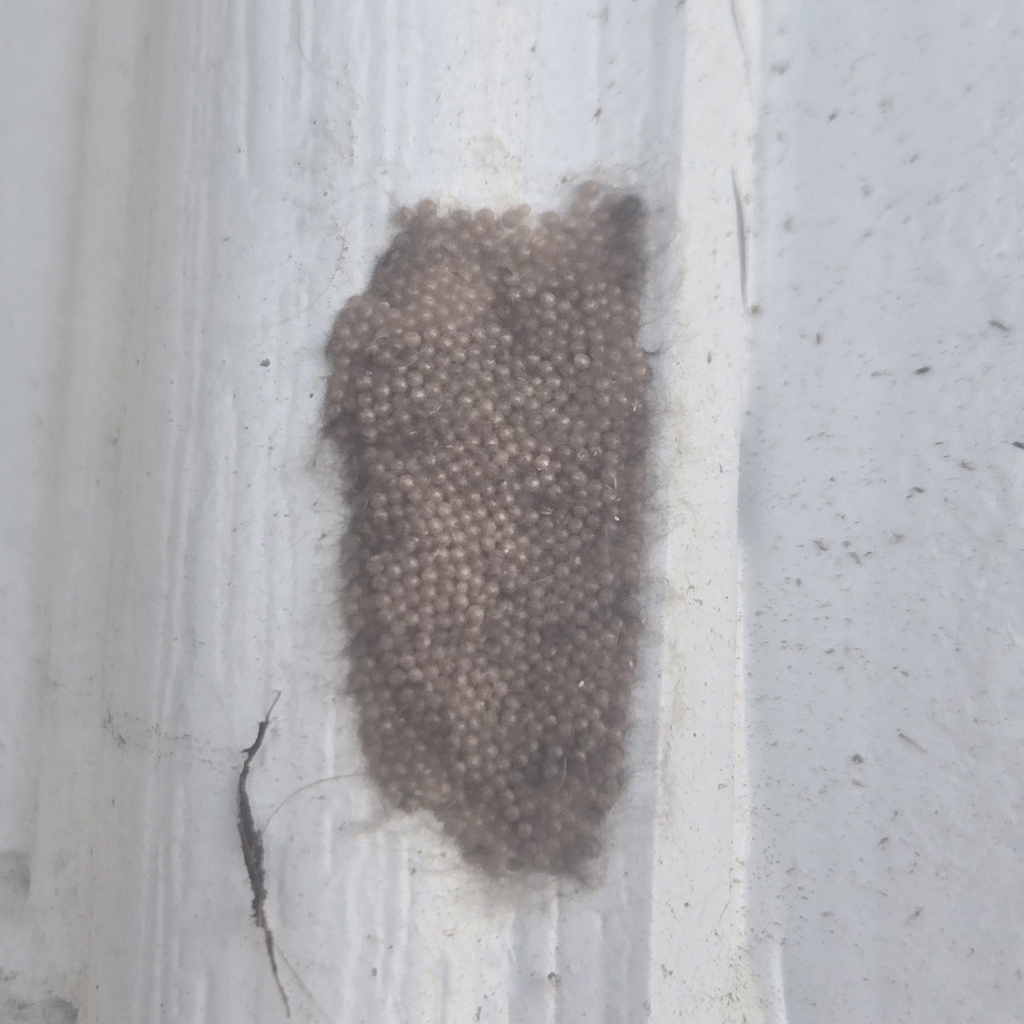
no rights reserved · CC0
Family: Noctuidae · Class: Insecta · Order: Lepidoptera
Spodoptera ornithogalli (Yellow-striped Armyworm Moth) is a California animal in the Noctuidae family.
The yellow-striped armyworm moth (Spodoptera ornithogalli) is a moderate-sized moth in the family Noctuidae with forewings measuring 16 to 20 mm in length and a wingspan of 32 to 42 mm. Adults display brown to grayish-brown forewings with distinctive yellowish or pale stripes running longitudinally along the wing surface. The hindwings are pale gray to white with darker veining. At rest, the moth holds its wings in a tent-like position over the body. The species is sexually dimorphic, with males typically smaller and more slender than females. This species ranges throughout eastern North America but does not overwinter north of Long Island, New York. The distribution extends from southern Canada southward to Florida and westward to the Great Plains. In warmer regions, the species maintains year-round breeding populations, while northern populations represent seasonal migrants that arrive each spring and summer. The moth's inability to survive freezing temperatures limits its permanent establishment in northern latitudes. Yellow-striped armyworm moths inhabit a wide variety of open habitats including agricultural areas, grasslands, meadows, and disturbed sites. Adults are attracted to artificial lights and can be found in suburban and urban environments. The species shows a preference for areas with abundant low-growing vegetation that serves as larval food sources. Elevation range extends from sea level to approximately 1,500 meters in suitable habitat. Adults are nocturnal and most active during warm evenings. Females deposit eggs in clusters of 50 to 300 on host plant foliage, typically on the undersides of leaves. The spherical eggs are initially pale green, darkening before hatching after 3 to 5 days. Larvae develop through six instars over 2 to 4 weeks, depending on temperature. Young caterpillars are pale green with dark stripes, becoming darker with age and developing the characteristic yellow lateral stripe that gives the species its common name. Pupation occurs in earthen cells 2 to 5 cm below ground surface. The species completes multiple generations per year in favorable climates, with up to four generations possible in southern regions. Larvae feed on many low plants and crops including cotton, clover, grasses, potato, and tobacco. Additional documented host plants include alfalfa, beans, cabbage, corn, lettuce, peas, and various weeds. The polyphagous feeding habits make this species an agricultural pest in some areas, though economic damage is typically localized. Yellow-striped armyworm moths face no significant conservation concerns and are not listed under federal or state endangered species legislation. Population levels appear stable across the species' range, with natural fluctuations related to weather patterns and food availability. The moth's broad host plant range and high reproductive potential contribute to population resilience. Climate change may potentially expand the northern limits of overwintering populations as winter temperatures moderate in previously unsuitable areas.
Classification
Class: Insecta · Order: Lepidoptera · Family: Noctuidae
Frequently asked questions
How is Spodoptera ornithogalli classified?
Spodoptera ornithogalli belongs to class Insecta, order Lepidoptera, family Noctuidae.
What family does Spodoptera ornithogalli belong to?
Spodoptera ornithogalli is in the Noctuidae family.
What is Spodoptera ornithogalli?
The yellow-striped armyworm moth (Spodoptera ornithogalli) is a moderate-sized moth in the family Noctuidae with forewings measuring 16 to 20 mm in length and a wingspan of 32 to 42 mm.
Is Spodoptera ornithogalli found in California?
Yes. Spodoptera ornithogalli is recorded in California in The California Species Project's catalogue.
Related species
Other California species in the same genus, family, or bioregion.
Data from The California Species Project — 14,000+ California species with verified data from CNPS, CDFW, USFWS, and more.