Squatina californica
Pacific Angelshark
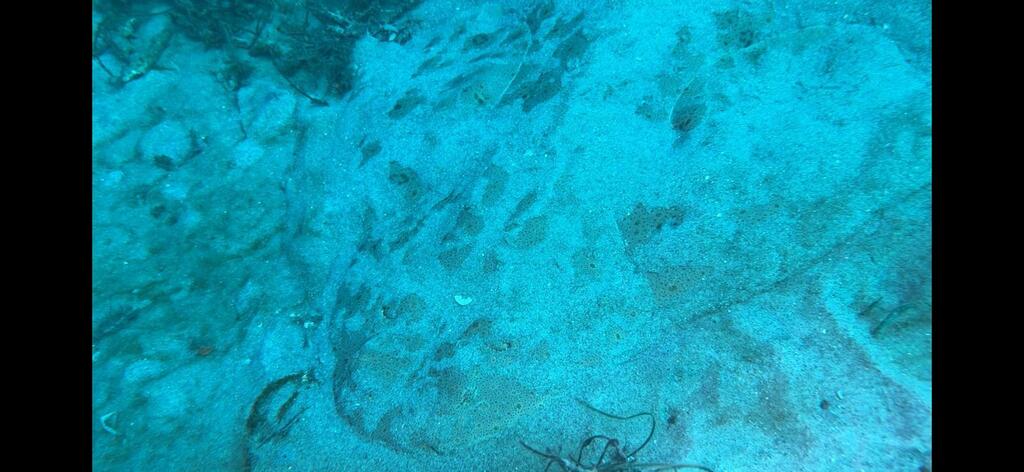
no rights reserved · CC0
Family: Squatinidae · Class: Chondrichthyes · Order: Squatiniformes
Squatina californica (Pacific Angelshark) is a California animal in the Squatinidae family.
The Pacific angelshark is a large, flattened shark species endemic to the eastern Pacific Ocean. Adults typically measure 91 to 152 cm (36 to 60 inches) in total length, with females growing larger than males. The body is dorsoventrally compressed with greatly enlarged pectoral fins that extend laterally, giving the shark a ray-like appearance. The dorsal surface is grayish-brown with darker spots and blotches, while the ventral surface is white. Two small dorsal fins are positioned far back on the body, and the tail fin is asymmetrical with a longer upper lobe. Pacific angelsharks range from southeastern Alaska to the Gulf of California, with the core population centered along the California coast. They are most abundant in waters off southern and central California, particularly around the Channel Islands. Historical records indicate the species once occurred regularly in San Francisco Bay and other northern California estuaries, though northern populations have experienced significant decline. This species inhabits sandy and muddy bottoms on the continental shelf and upper slope, typically at depths of 3 to 183 meters (10 to 600 feet). Pacific angelsharks prefer areas with soft sediment where they can bury themselves, often near rocky reefs or kelp forests that provide adjacent foraging habitat. Juveniles are commonly found in shallow bays and estuaries, while adults occur in deeper offshore waters. Water temperatures in occupied habitats range from 8 to 25°C (46 to 77°F). Pacific angelsharks are ambush predators that remain buried in sand or mud with only their eyes and spiracles exposed, waiting for prey to approach. Their diet consists primarily of bottom-dwelling fishes including flatfish, croakers, and sardines, as well as squid, octopus, and crustaceans. Reproduction is ovoviviparous, with females giving birth to live young after an estimated 10-month gestation period. Litter sizes range from 1 to 13 pups, typically averaging 6 to 8 offspring. Pups measure approximately 25 cm (10 inches) at birth. Sexual maturity occurs at 8 to 13 years of age, and the species has a relatively slow growth rate. The Pacific angelshark is not federally listed under the Endangered Species Act as of December 2025, though it has experienced substantial population decline throughout its range. Commercial fishing pressure, particularly from bottom trawl and gill net fisheries, has significantly reduced populations since the 1980s. The species was designated as Near Threatened by the International Union for Conservation of Nature due to declining trends and fishing pressure. California implemented fishing restrictions including gear modifications and area closures to reduce incidental catch. Habitat degradation from coastal development and water pollution poses additional threats. Recovery efforts focus on bycatch reduction, habitat protection, and population monitoring through fishery-independent surveys.
Classification
Class: Chondrichthyes · Order: Squatiniformes · Family: Squatinidae
Frequently asked questions
How is Squatina californica classified?
Squatina californica belongs to class Chondrichthyes, order Squatiniformes, family Squatinidae.
What family does Squatina californica belong to?
Squatina californica is in the Squatinidae family.
What is Squatina californica?
The Pacific angelshark is a large, flattened shark species endemic to the eastern Pacific Ocean.
Is Squatina californica found in California?
Yes. Squatina californica is recorded in California in The California Species Project's catalogue.
More California species
This species has no close relatives in our California data — here are other species to explore.
Data from The California Species Project — 14,000+ California species with verified data from CNPS, CDFW, USFWS, and more.