Stagmomantis limbata
Arizona Mantis
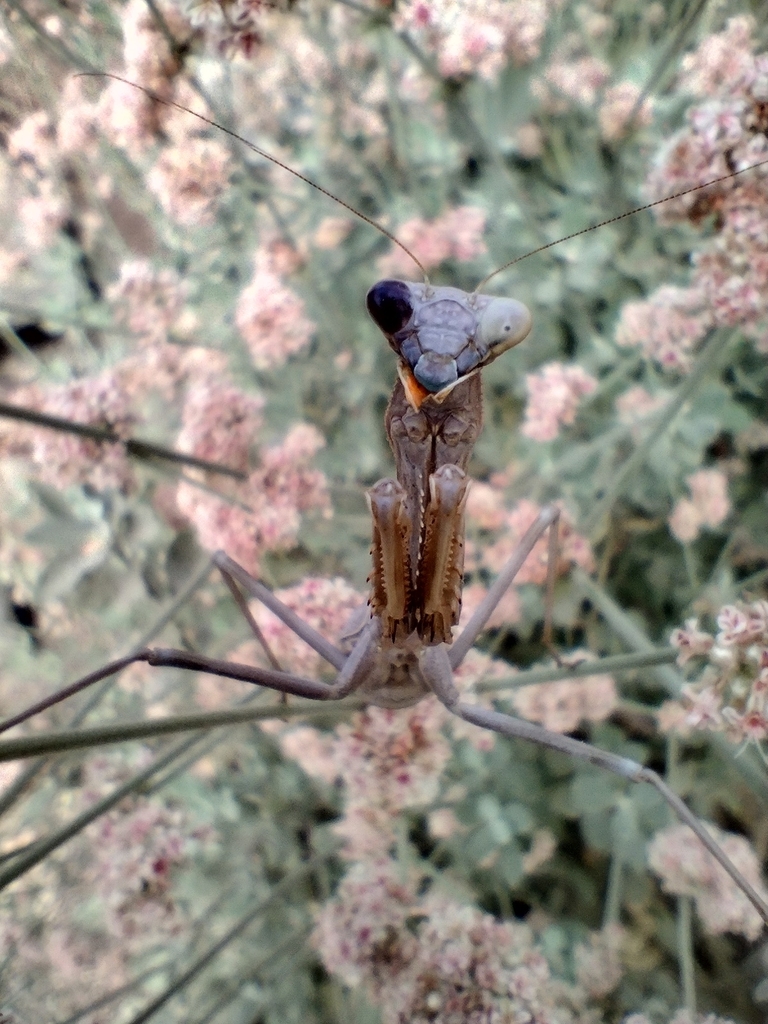
no rights reserved · CC0
Family: Mantidae · Class: Insecta · Order: Mantodea
Stagmomantis limbata (Arizona Mantis) is a California animal in the Mantidae family.
The Arizona mantis is a medium-sized praying mantis native to the western United States. Adults typically measure 40 to 60 mm (1.6 to 2.4 inches) in length, with females being noticeably larger than males. The species exhibits variable coloration, appearing in green or tan morphs that provide camouflage against vegetation. The body is elongated with the characteristic raptorial front legs adapted for grasping prey. The species is distinguished by its bordered appearance, with darker markings along the edges of the forewings and body segments. Stagmomantis limbata occurs across much of the western United States, with populations documented in Arizona, California, Nevada, Utah, Colorado, New Mexico, and extending into parts of Texas and northern Mexico. In California, the species is found primarily in the southern and central regions, including desert and chaparral environments. The range extends from sea level to moderate elevations in mountainous areas. This mantis inhabits diverse environments including desert scrublands, chaparral, grasslands, and riparian areas. The species shows particular affinity for areas with mixed vegetation that provides both hunting perches and camouflage opportunities. Arizona mantises are commonly found on shrubs, flowering plants, and among grasses where they can effectively ambush prey. They adapt well to human-modified landscapes and are often observed in gardens and agricultural areas. As ambush predators, Arizona mantises employ a sit-and-wait hunting strategy, remaining motionless on vegetation until prey approaches within striking distance. Their diet consists primarily of flying insects including flies, moths, beetles, and other small arthropods. The species exhibits sexual cannibalism, where females may consume males during or after mating. Reproduction occurs in late summer and fall, with females producing foam-like ootheca (egg cases) that contain 20 to 40 eggs. These egg cases overwinter attached to plant stems or other substrates, with nymphs emerging the following spring after temperatures warm. The species undergoes incomplete metamorphosis, with juveniles resembling miniature adults and molting several times before reaching maturity. The Arizona mantis is not listed under state or federal endangered species legislation and maintains stable populations across its range. The species appears to be adaptable to habitat modification and may even benefit from certain human activities that create edge habitats. Climate change and habitat fragmentation represent potential long-term concerns, particularly in desert regions where water availability may become increasingly limited. However, the species' broad diet, habitat flexibility, and widespread distribution suggest it faces no immediate conservation threats. Urban development and intensive agriculture may impact local populations, but the overall species status remains secure as of December 2025.
Classification
Class: Insecta · Order: Mantodea · Family: Mantidae
Frequently asked questions
How is Stagmomantis limbata classified?
Stagmomantis limbata belongs to class Insecta, order Mantodea, family Mantidae.
What family does Stagmomantis limbata belong to?
Stagmomantis limbata is in the Mantidae family.
What is Stagmomantis limbata?
The Arizona mantis is a medium-sized praying mantis native to the western United States.
Is Stagmomantis limbata found in California?
Yes. Stagmomantis limbata is recorded in California in The California Species Project's catalogue.
Related species
Other California species in the same genus, family, or bioregion.
Data from The California Species Project — 14,000+ California species with verified data from CNPS, CDFW, USFWS, and more.