Stamnodes annellata
Annellate Stamnodes
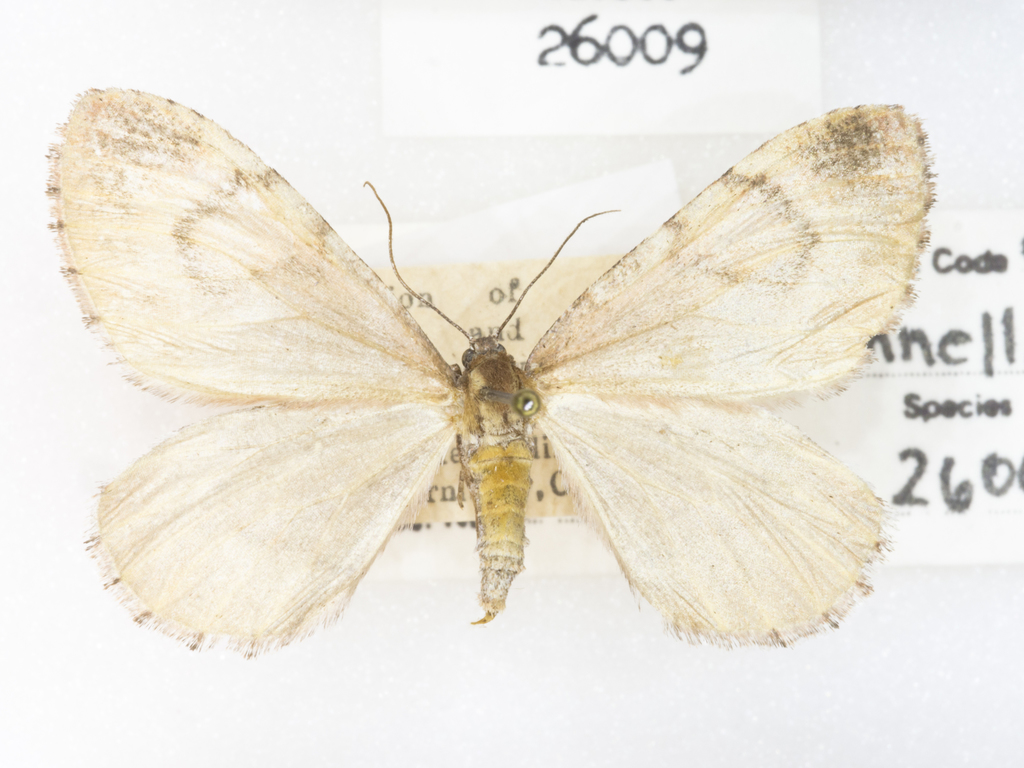
no rights reserved · CC0
Family: Geometridae · Class: Insecta · Order: Lepidoptera
Stamnodes annellata (Annellate Stamnodes) is a California animal in the Geometridae family.
Stamnodes annellata is a moth species belonging to the family Geometridae, subfamily Larentiinae, tribe Stamnodini. This species represents one of 34 species within the Stamnodini tribe and is classified within the superfamily Geometroidea of the order Lepidoptera. As a member of the Geometridae family, commonly known as geometer moths or inchworm moths, S. annellata likely exhibits the characteristic looping locomotion of geometrid larvae and the typical wing patterns associated with this diverse moth family. The physical characteristics of S. annellata have not been extensively documented in available scientific literature. Like other members of the Geometridae family, adults likely possess relatively broad wings with intricate patterns that may serve as camouflage. The specific coloration, wingspan measurements, and distinguishing morphological features of this species require further documentation through systematic study. Stamnodes annellata has been recorded in California, with documented collections from Calaveras County. A specimen was collected at Mountain Ranch in Calaveras County on March 2, 2008, providing evidence of the species' presence in the Sierra Nevada foothills region (News of the Lepidopterists' Society 2009). The broader distribution range of this species within California and potentially adjacent states remains inadequately documented, highlighting the need for comprehensive surveys to determine its full geographic extent. Habitat requirements for S. annellata have not been well characterized. The collection locality at Mountain Ranch suggests the species may inhabit foothill environments of the Sierra Nevada range, which typically feature oak woodlands, chaparral, and mixed coniferous-deciduous forests. The elevation preferences, microhabitat requirements, and specific vegetation associations of this species require systematic field studies to establish clear habitat parameters. The life history and ecological requirements of S. annellata remain largely undocumented. Host plant associations, larval development patterns, seasonal flight periods, and reproductive behavior have not been reported in available literature. The March collection date suggests possible early spring adult activity, though this represents limited temporal data. As with many geometrid moths, larvae likely feed on woody plants, but specific host plant relationships have not been identified. Adult feeding behavior, mating systems, and overwintering strategies require investigation. No formal conservation assessment has been conducted for S. annellata. The species lacks federal or state listing status, and its population trends remain unknown. The limited collection records suggest either restricted distribution, low detection probability, or insufficient survey effort. Climate change, habitat loss, and land use modifications in California's foothill regions may pose potential threats to this species, though specific vulnerabilities cannot be assessed without baseline population data. Scientific documentation for this species remains extremely limited. The information presented here is based on available taxonomic records and sparse collection data from lepidopterological literature. Detailed studies of S. annellata's morphology, distribution, ecology, and conservation status are needed to develop a comprehensive understanding of this California moth species.
Classification
Class: Insecta · Order: Lepidoptera · Family: Geometridae
Frequently asked questions
How is Stamnodes annellata classified?
Stamnodes annellata belongs to class Insecta, order Lepidoptera, family Geometridae.
What family does Stamnodes annellata belong to?
Stamnodes annellata is in the Geometridae family.
What is Stamnodes annellata?
Stamnodes annellata is a moth species belonging to the family Geometridae, subfamily Larentiinae, tribe Stamnodini.
Is Stamnodes annellata found in California?
Yes. Stamnodes annellata is recorded in California in The California Species Project's catalogue.
Related species
Other California species in the same genus, family, or bioregion.
Data from The California Species Project — 14,000+ California species with verified data from CNPS, CDFW, USFWS, and more.