Stamnodes marmorata
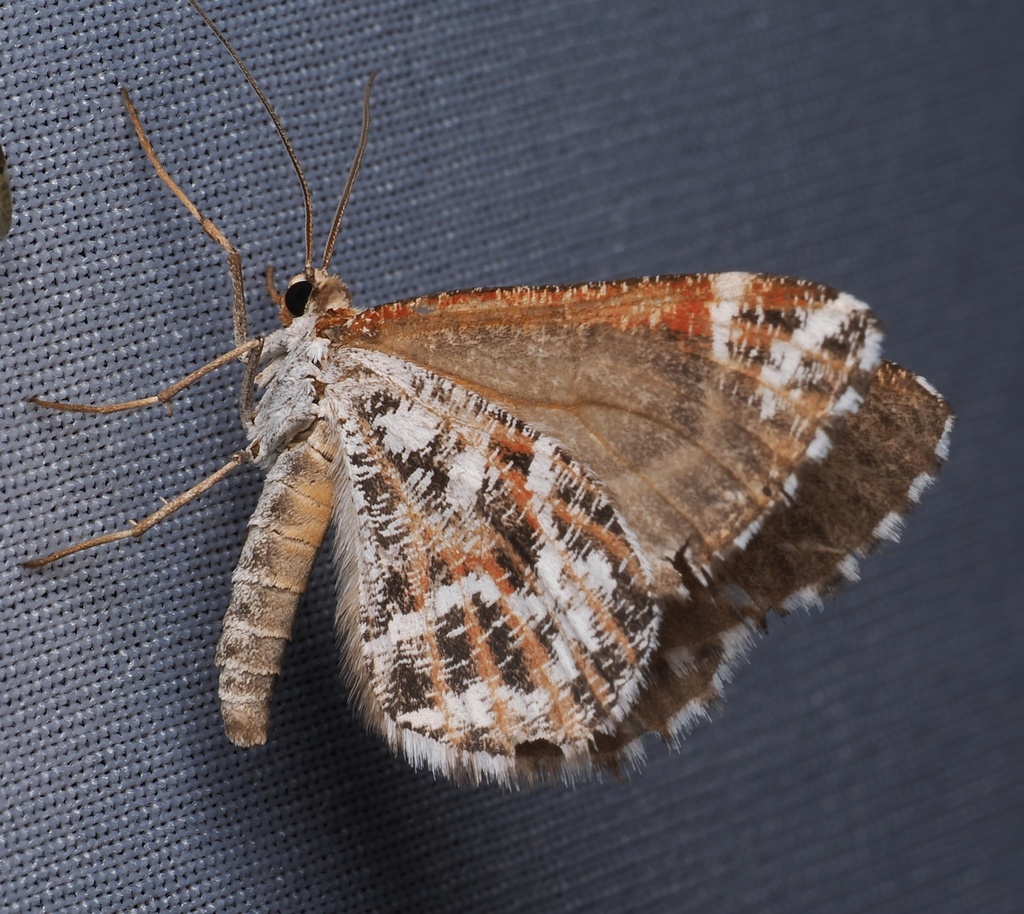
(c) Alan Rockefeller, some rights reserved (CC BY) · licence
Family: Geometridae · Class: Insecta · Order: Lepidoptera
Stamnodes marmorata is a California animal in the Geometridae family.
Stamnodes marmorata is a geometrid moth in the family Geometridae, commonly known as inchworm moths or loopers. This species belongs to a diverse family of moths characterized by their distinctive caterpillars that move in a characteristic looping motion. Adult moths in the genus Stamnodes typically display cryptic coloration patterns that provide camouflage against tree bark and other natural surfaces. The distribution and range of Stamnodes marmorata within California remains poorly documented in available scientific literature. Limited taxonomic and ecological information exists for this species, reflecting the broader challenge of documenting the state's extensive moth fauna. California supports over 3,000 documented moth species, with many geometrids occupying specialized ecological niches throughout the state's diverse ecosystems. Habitat requirements for Stamnodes marmorata are not well established in current literature. Geometridae moths generally occupy a wide range of habitats, from coastal scrub and chaparral to montane forests and desert environments. Many species in this family show strong associations with specific plant communities, with larvae often feeding on particular host plant species or genera. The habitat preferences of this species likely reflect the distribution of its larval host plants, though these associations have not been definitively documented. Like other geometrids, Stamnodes marmorata likely follows a complete metamorphosis lifecycle with egg, larval, pupal, and adult stages. Geometridae larvae are typically herbivorous, feeding on leaves of woody plants, shrubs, or trees. The characteristic looping locomotion of geometrid caterpillars results from having fewer prolegs than other moth families, causing them to arch their bodies while moving. Adult moths are generally nocturnal, with males often attracted to artificial lights. Mating typically involves chemical communication through pheromones released by females. The conservation status of Stamnodes marmorata has not been formally assessed by state or federal agencies. This species lacks federal or state listing status, and no specific conservation concerns have been documented. However, the absence of detailed ecological and distributional data limits the ability to evaluate potential threats or population trends. Many California moth species face pressures from habitat loss, urban development, pesticide use, and climate change, though the specific impacts on this species remain unknown. The limited available information on Stamnodes marmorata reflects broader gaps in knowledge of California's moth fauna. Comprehensive surveys and taxonomic studies are needed to better understand the distribution, ecology, and conservation needs of this and many other geometrid species. Such research is essential for effective conservation planning and management of California's invertebrate biodiversity. Further field studies and taxonomic work would help clarify the species' habitat requirements, host plant associations, and potential conservation status.
Classification
Class: Insecta · Order: Lepidoptera · Family: Geometridae
Frequently asked questions
How is Stamnodes marmorata classified?
Stamnodes marmorata belongs to class Insecta, order Lepidoptera, family Geometridae.
What family does Stamnodes marmorata belong to?
Stamnodes marmorata is in the Geometridae family.
What is Stamnodes marmorata?
Stamnodes marmorata is a geometrid moth in the family Geometridae, commonly known as inchworm moths or loopers.
Is Stamnodes marmorata found in California?
Yes. Stamnodes marmorata is recorded in California in The California Species Project's catalogue.
Related species
Other California species in the same genus, family, or bioregion.
Data from The California Species Project — 14,000+ California species with verified data from CNPS, CDFW, USFWS, and more.