Stelgidopteryx serripennis
Northern Rough-winged Swallow
no rights reserved · CC0
Family: Hirundinidae · Class: Aves · Order: Passeriformes
Stelgidopteryx serripennis (Northern Rough-winged Swallow) is a California animal in the Hirundinidae family.
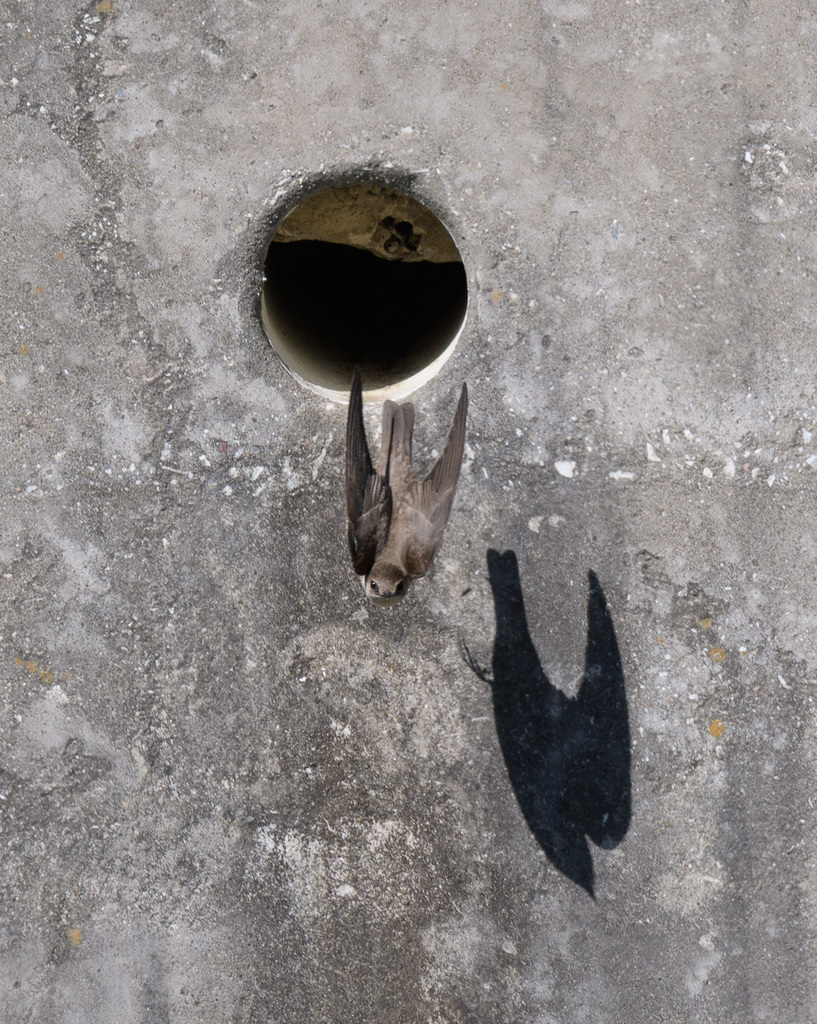
The Northern Rough-winged Swallow (Stelgidopteryx serripennis) is a medium-sized passerine bird measuring 13 to 15 cm (5.1 to 5.9 inches) in length with a wingspan of 27 to 30 cm (10.6 to 11.8 inches). Adults weigh 10 to 18 grams. The species exhibits brown upperparts with a dusky throat and breast that gradually lightens to white on the belly. The wings appear dark brown to blackish, and the slightly notched tail is shorter than in other swallow species. Males possess distinctive serrated edges on the outer primary feathers, giving the species its common name, though this feature is difficult to observe in the field. Juveniles display rusty edges on their wing coverts and tertials. The Northern Rough-winged Swallow breeds across most of North America, from southern Canada to Central America. In California, the species occurs throughout the state during breeding season, from sea level to elevations of approximately 2,400 meters (7,900 feet). The breeding range extends from the Pacific Coast inland through the Central Valley, Sierra Nevada foothills, and desert regions. Northern populations migrate south for winter, while California residents may remain year-round in milder coastal and valley areas. This species inhabits open areas near water sources, including rivers, streams, lakes, and reservoirs. Nesting sites are typically located in vertical banks, road cuts, gravel pits, and similar excavated areas. The species also utilizes artificial structures such as bridges, culverts, and buildings. Unlike Bank Swallows, Northern Rough-winged Swallows rarely nest colonially, typically excavating solitary burrows 30 to 91 cm (12 to 36 inches) deep in sandy or clay banks. Northern Rough-winged Swallows are aerial insectivores, capturing flying insects including flies, beetles, flying ants, mayflies, and small moths. Foraging typically occurs within 6 meters (20 feet) of the ground over water or open areas. The breeding season extends from April through July, with females laying 4 to 8 white eggs in a nest constructed of grass, leaves, and feathers at the end of the excavated burrow. Incubation lasts 12 to 16 days, performed solely by the female. Young fledge after 18 to 21 days and may remain with parents for several additional weeks. The species typically produces one brood per year, though two broods may occur in favorable conditions. The Northern Rough-winged Swallow is not federally or state-listed and maintains stable populations across its range. According to the North American Breeding Bird Survey, populations have remained relatively stable since 1966, with slight increases noted in some western regions. The species benefits from human activities that create suitable nesting sites, such as road construction and quarrying operations. Primary threats include habitat loss from streambank stabilization, reduction in suitable nesting sites, and pesticide use that reduces insect prey availability. Climate change may affect migration timing and breeding success, though the species' adaptability to human-modified environments provides some resilience.
Classification
Class: Aves · Order: Passeriformes · Family: Hirundinidae
Frequently asked questions
How is Stelgidopteryx serripennis classified?
Stelgidopteryx serripennis belongs to class Aves, order Passeriformes, family Hirundinidae.
What family does Stelgidopteryx serripennis belong to?
Stelgidopteryx serripennis is in the Hirundinidae family.
What is Stelgidopteryx serripennis?
The Northern Rough-winged Swallow (Stelgidopteryx serripennis) is a medium-sized passerine bird measuring 13 to 15 cm (5.1 to 5.9 inches) in length with a wingspan of 27 to 30 cm (10.6 to 11.8 inches).
Is Stelgidopteryx serripennis found in California?
Yes. Stelgidopteryx serripennis is recorded in California in The California Species Project's catalogue.
Related species
Other California species in the same genus, family, or bioregion.
Data from The California Species Project — 14,000+ California species with verified data from CNPS, CDFW, USFWS, and more.