Stenella attenuata
Pantropical Spotted Dolphin
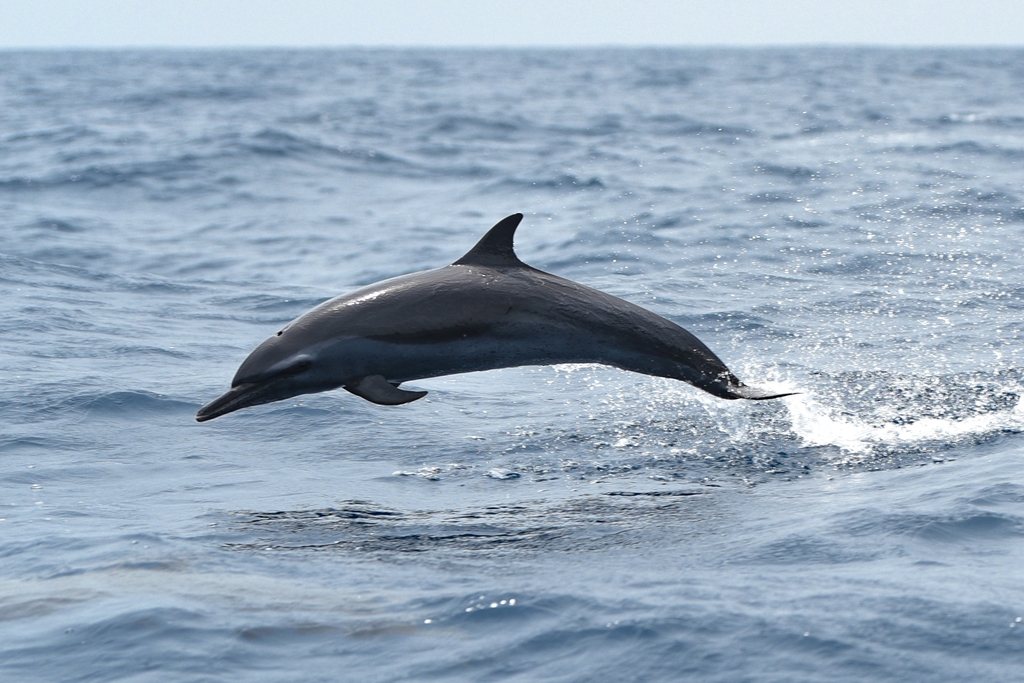
no rights reserved · CC0
Family: Delphinidae · Class: Mammalia · Order: Artiodactyla
Stenella attenuata (Pantropical Spotted Dolphin) is a California animal in the Delphinidae family.
The pantropical spotted dolphin is a medium-sized cetacean measuring 1.6 to 2.6 meters (5.2 to 8.5 feet) in length and weighing 90 to 115 kilograms (200 to 254 pounds). Adults display a distinctive three-part coloration pattern with a dark gray dorsal cape, lighter gray sides, and white or pale gray ventral surface. The species is characterized by variable spotting patterns that develop with age, with juveniles showing few or no spots while adults exhibit extensive white spots on the dark dorsal region and dark spots on the lighter ventral areas. The rostrum is long and slender, and the dorsal fin is tall and falcate. Pantropical spotted dolphins have one of the most extensive distributions of any dolphin species, occurring in tropical and subtropical waters worldwide between approximately 40°N and 40°S latitude. Along the California coast, they are found primarily in offshore waters beyond the continental shelf, typically in depths exceeding 1,000 meters (3,280 feet). The eastern North Pacific population ranges from southern California to the equator and west to approximately 145°W longitude. This species inhabits warm oceanic waters with surface temperatures typically above 25°C (77°F). They prefer deep, offshore environments and are rarely observed in coastal waters or over continental shelves. Pantropical spotted dolphins are most commonly found in areas of high productivity where upwelling or convergence zones create favorable feeding conditions. Pantropical spotted dolphins are highly social animals that form large aggregations, sometimes numbering in the thousands. Group sizes typically range from 50 to 200 individuals, though smaller subgroups of 5 to 30 animals are common during foraging. They are active throughout the day and night, feeding primarily on small pelagic fish, squid, and crustaceans. Prey species include flying fish, anchovies, sardines, and various cephalopods. Breeding occurs year-round in tropical waters with a gestation period of approximately 11.5 months. Females reach sexual maturity at 9 to 11 years of age and typically give birth to a single calf every 2 to 3 years. The species is not currently listed under the Endangered Species Act, and populations appear stable in most regions. However, the eastern tropical Pacific population experienced significant mortality during the 1960s through 1990s due to incidental capture in tuna purse-seine fisheries. According to NOAA Fisheries, implementation of dolphin-safe fishing practices and international agreements have substantially reduced this mortality. Current threats include entanglement in fishing gear, ship strikes, pollution, and climate change effects on prey distribution. The eastern tropical Pacific stock is estimated at approximately 737,000 individuals as of recent assessments, while the California/Oregon/Washington stock contains an estimated 21,000 individuals.
Classification
Class: Mammalia · Order: Artiodactyla · Family: Delphinidae
Frequently asked questions
How is Stenella attenuata classified?
Stenella attenuata belongs to class Mammalia, order Artiodactyla, family Delphinidae.
What family does Stenella attenuata belong to?
Stenella attenuata is in the Delphinidae family.
What is Stenella attenuata?
The pantropical spotted dolphin is a medium-sized cetacean measuring 1.6 to 2.6 meters (5.2 to 8.5 feet) in length and weighing 90 to 115 kilograms (200 to 254 pounds).
Is Stenella attenuata found in California?
Yes. Stenella attenuata is recorded in California in The California Species Project's catalogue.
Related species
Other California species in the same genus, family, or bioregion.
Data from The California Species Project — 14,000+ California species with verified data from CNPS, CDFW, USFWS, and more.