Stenella coeruleoalba
Striped Dolphin
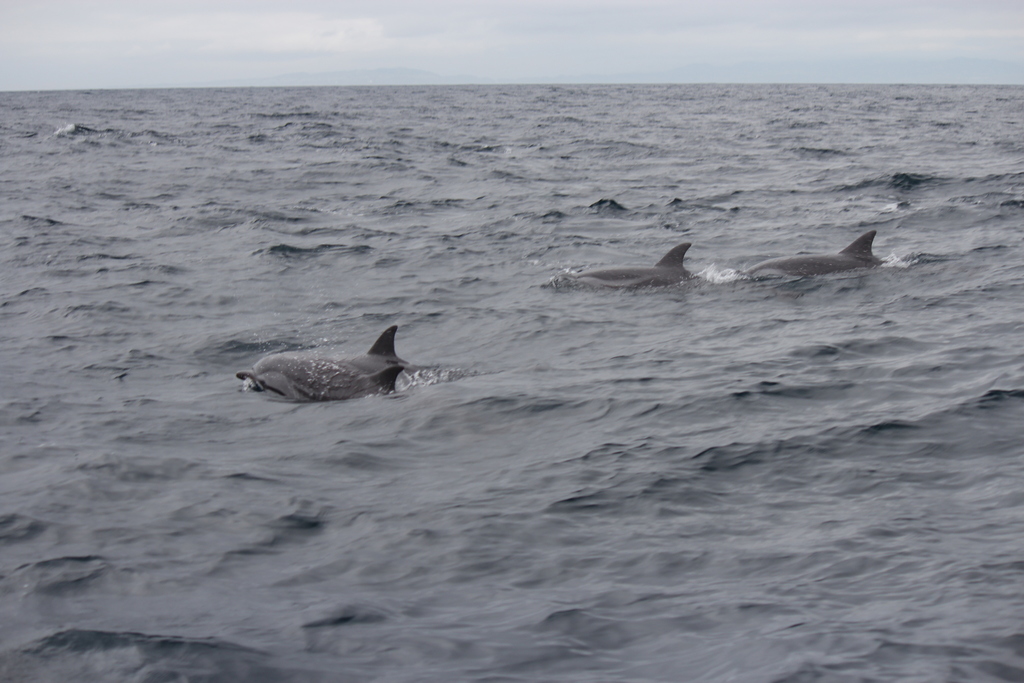
(c) harum.koh, some rights reserved (CC BY-SA) · licence
Family: Delphinidae · Class: Mammalia · Order: Artiodactyla
Stenella coeruleoalba (Striped Dolphin) is a California animal in the Delphinidae family.
The striped dolphin is a medium-sized oceanic cetacean measuring 1.8 to 2.6 meters (5.9 to 8.5 feet) in length and weighing 90 to 156 kilograms (200 to 344 pounds). Adults display distinctive coloration featuring a dark gray to black dorsal surface and white or light gray ventral surface. The species is characterized by prominent dark stripes extending from the eye to the flipper and from the eye to the vent, creating a distinctive pattern that gives the species its common name. The dorsal fin is tall and falcate, positioned at the body's midpoint, while the rostrum is relatively short with 40 to 55 small, sharp teeth in each jaw half. Striped dolphins inhabit temperate and tropical waters worldwide, occurring in the eastern North Pacific from British Columbia to Baja California. Off California, the species is found primarily in offshore waters beyond the continental shelf, typically in depths exceeding 1,000 meters (3,280 feet). According to NOAA Fisheries, striped dolphins are among the most abundant cetaceans in California's offshore waters, with populations concentrated in areas of high productivity such as upwelling zones. This pelagic species prefers deep oceanic waters with steep temperature gradients and high prey density. Striped dolphins typically inhabit waters with surface temperatures between 10 and 26 degrees Celsius (50 to 79 degrees Fahrenheit). The species follows seasonal movements related to prey availability and oceanographic conditions, moving closer to shore during periods of increased upwelling activity. Striped dolphins are highly social, forming groups ranging from 10 to 500 individuals, with megapods occasionally exceeding 1,000 animals. The species exhibits complex social structures with age- and sex-segregated groups. Primary prey includes mesopelagic fish, squid, and crustaceans, with feeding occurring primarily at night when prey species migrate toward the surface. Gestation lasts approximately 12 months, with females giving birth to single calves every 3 to 4 years. Sexual maturity is reached at 7 to 15 years of age, and maximum lifespan approaches 60 years. Striped dolphins are not federally listed under the Endangered Species Act, and current population trends appear stable according to NOAA Fisheries stock assessments. The California/Oregon/Washington stock is estimated at approximately 21,000 individuals as of the most recent assessment. Primary threats include entanglement in fishing gear, ship strikes, pollution including persistent organic pollutants and marine debris, and acoustic disturbance from vessel traffic and sonar operations. Climate change may affect prey distribution and abundance, potentially altering foraging patterns. The species is protected under the Marine Mammal Protection Act, which prohibits harassment, hunting, capture, or killing in U.S. waters.
Classification
Class: Mammalia · Order: Artiodactyla · Family: Delphinidae
Frequently asked questions
How is Stenella coeruleoalba classified?
Stenella coeruleoalba belongs to class Mammalia, order Artiodactyla, family Delphinidae.
What family does Stenella coeruleoalba belong to?
Stenella coeruleoalba is in the Delphinidae family.
What is Stenella coeruleoalba?
The striped dolphin is a medium-sized oceanic cetacean measuring 1.8 to 2.6 meters (5.9 to 8.5 feet) in length and weighing 90 to 156 kilograms (200 to 344 pounds).
Is Stenella coeruleoalba found in California?
Yes. Stenella coeruleoalba is recorded in California in The California Species Project's catalogue.
Related species
Other California species in the same genus, family, or bioregion.
Data from The California Species Project — 14,000+ California species with verified data from CNPS, CDFW, USFWS, and more.