Steno bredanensis
Rough-toothed Dolphin
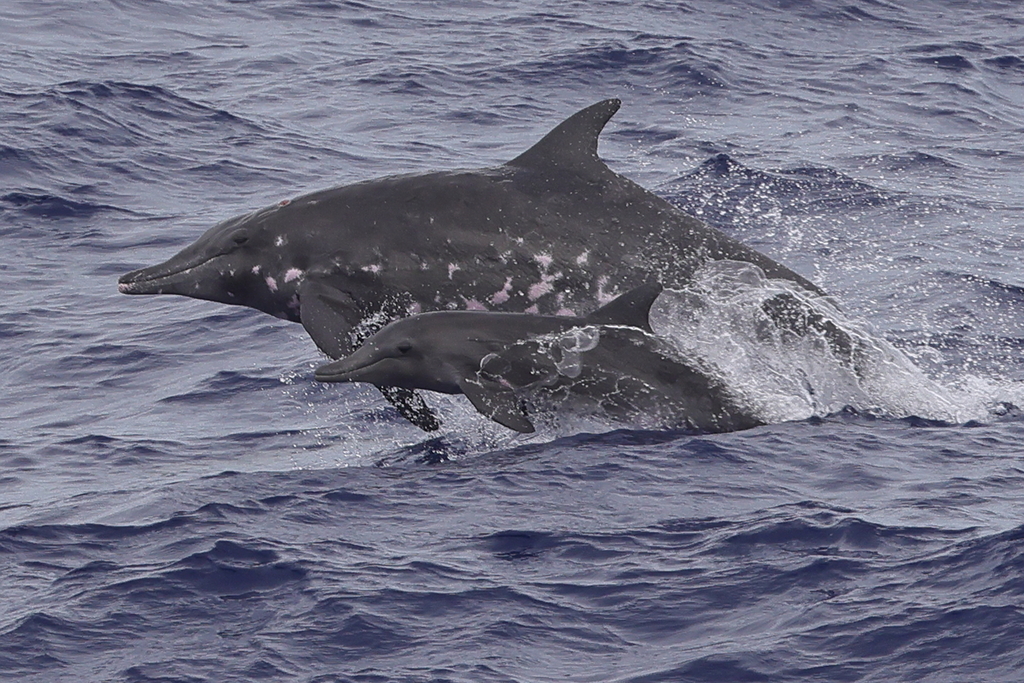
(c) Fábio Olmos, some rights reserved (CC BY) · licence
Family: Delphinidae · Class: Mammalia · Order: Artiodactyla
Steno bredanensis (Rough-toothed Dolphin) is a California animal in the Delphinidae family.
The rough-toothed dolphin (Steno bredanensis) is a medium-sized oceanic cetacean distinguished by its elongated, conical rostrum that lacks a distinct crease separating the melon from the beak. Adults measure 2.1 to 2.8 meters (6.9 to 9.2 feet) in length and weigh 90 to 155 kilograms (198 to 342 pounds). The dorsal surface is dark gray to black, fading to lighter gray on the sides and white or pale pink on the ventral surface. The dorsal fin is tall, falcate, and positioned at mid-body. Each jaw contains 20 to 27 pairs of robust, conical teeth with distinctive vertical ridges that give the species its common name. Rough-toothed dolphins have a pantropical distribution, occurring in warm temperate and tropical waters worldwide. In California waters, the species is found primarily offshore in the Southern California Bight and occasionally along the central coast. They typically occur in waters deeper than 500 meters but may venture into shallower areas when following prey. The species is considered uncommon in California waters compared to more frequently sighted coastal dolphins. This species inhabits deep oceanic waters, typically beyond the continental shelf edge. Rough-toothed dolphins prefer warm waters with temperatures above 18°C (64°F) and are often associated with steep underwater topography, seamounts, and areas of upwelling. They demonstrate a strong preference for clear, blue water environments with low productivity compared to the turbid, productive coastal waters preferred by many other dolphin species. Rough-toothed dolphins are highly social animals that form stable groups of 10 to 30 individuals, though aggregations of several hundred have been observed. They exhibit slow, deliberate swimming patterns and often remain motionless at the surface for extended periods. The species demonstrates cooperative feeding behaviors, working together to herd schools of fish and squid. Their diet consists primarily of mesopelagic fish, cephalopods, and occasionally crustaceans. Females reach sexual maturity at approximately 10 to 14 years, with a gestation period of about 12 months. Calving intervals range from 2 to 3 years. The rough-toothed dolphin is not federally listed under the Endangered Species Act, nor does it have special status in California. The species is classified as Least Concern by the International Union for Conservation of Nature, though population data remain limited due to their offshore distribution. Potential threats include entanglement in fishing gear, ship strikes, pollution, and climate change effects on prey distribution. The species' preference for deep oceanic waters provides some protection from coastal anthropogenic impacts, but their small group sizes and low reproductive rate may make populations vulnerable to localized threats. Population estimates for California waters are not well established, reflecting the challenges of surveying deep-water cetaceans.
Classification
Class: Mammalia · Order: Artiodactyla · Family: Delphinidae
Frequently asked questions
How is Steno bredanensis classified?
Steno bredanensis belongs to class Mammalia, order Artiodactyla, family Delphinidae.
What family does Steno bredanensis belong to?
Steno bredanensis is in the Delphinidae family.
What is Steno bredanensis?
The rough-toothed dolphin (Steno bredanensis) is a medium-sized oceanic cetacean distinguished by its elongated, conical rostrum that lacks a distinct crease separating the melon from the beak.
Is Steno bredanensis found in California?
Yes. Steno bredanensis is recorded in California in The California Species Project's catalogue.
Related species
Other California species in the same genus, family, or bioregion.
Data from The California Species Project — 14,000+ California species with verified data from CNPS, CDFW, USFWS, and more.