Stenomorpha muricatula
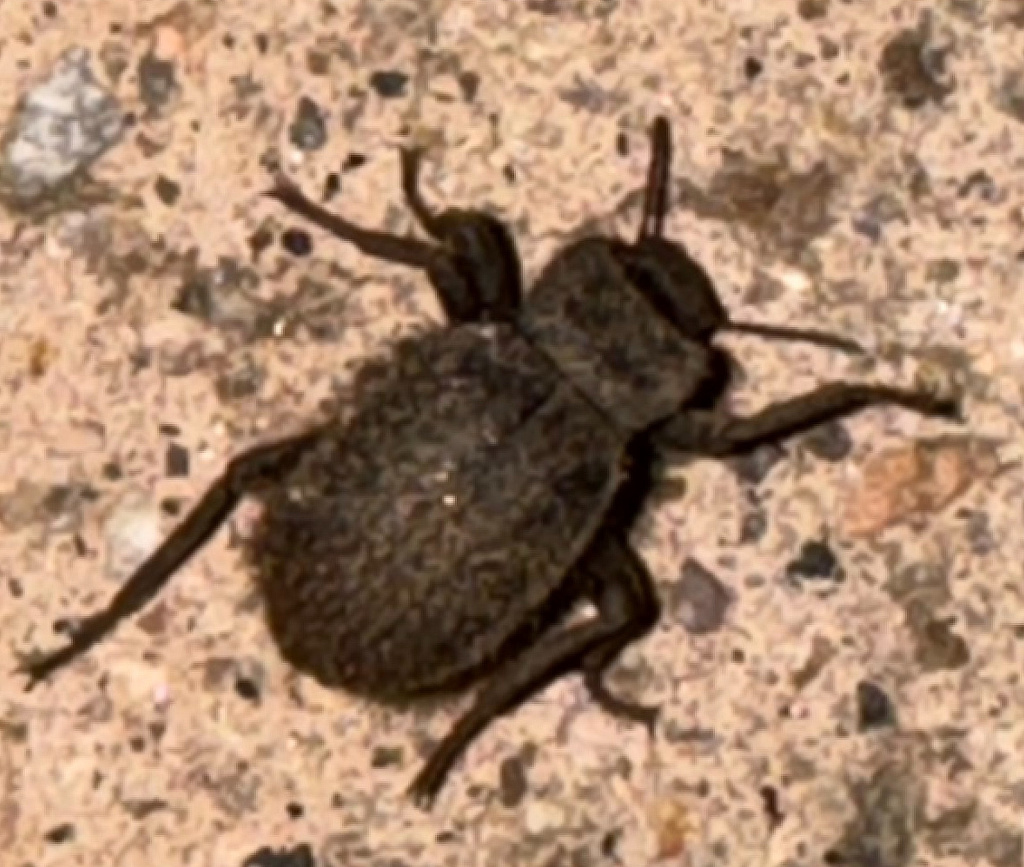
(c) Tyler, some rights reserved (CC BY) · licence
Family: Tenebrionidae · Class: Insecta · Order: Coleoptera
Stenomorpha muricatula is a California animal in the Tenebrionidae family.
Stenomorpha muricatula is a darkling beetle in the family Tenebrionidae, characterized by its robust, heavily sclerotized body typical of desert-dwelling tenebrionids. Like other members of the genus Stenomorpha, this species exhibits the characteristic fused elytra and reduced hindwings that prevent flight, adaptations common in arid-land beetles. The body surface is typically black or dark brown with a tuberculate or granular texture, giving the species its specific epithet 'muricatula,' meaning 'roughened with small points.' The distribution and range of S. muricatula remain poorly documented in current scientific literature. Members of the genus Stenomorpha are primarily found in arid regions of western North America, typically inhabiting desert and semi-desert environments from the southwestern United States into Mexico. However, specific locality records and the extent of this species' California distribution have not been comprehensively surveyed or published in accessible databases. Like other Stenomorpha species, S. muricatula likely inhabits desert scrub communities, occupying areas with sandy or gravelly substrates where it can burrow and find shelter. Darkling beetles in this genus typically prefer open areas with sparse vegetation, including creosote bush scrub, desert pavement, and bajadas. They are often associated with desert washes and alluvial fans where organic matter accumulates. Elevation preferences for this particular species have not been well documented. Stenomorpha species are primarily nocturnal, emerging at night to forage for organic matter including plant debris, fungal material, and occasionally small arthropods. During daylight hours, they typically shelter under rocks, in soil crevices, or buried in sandy substrates. Reproduction in tenebrionids generally involves egg-laying in soil or under debris, with larvae developing in the substrate over several months. Adult beetles can live for multiple years, an adaptation to the unpredictable resource availability in desert environments. Their flightless condition means populations are likely to be relatively sedentary and potentially vulnerable to habitat fragmentation. The conservation status of S. muricatula has not been formally assessed by federal or state wildlife agencies. No listing status appears in the U.S. Fish and Wildlife Service's Environmental Conservation Online System or California Department of Fish and Wildlife databases as of December 2025. The species' conservation needs remain unclear due to limited distributional data and ecological studies. Like many desert invertebrates, potential threats may include habitat loss from development, off-road vehicle use, solar energy installations, and climate change impacts on desert ecosystems. Scientific documentation for this species remains extremely limited. The information presented here synthesizes available taxonomic references and general knowledge of the genus Stenomorpha. Detailed field surveys, ecological studies, and systematic collection efforts would be valuable for better understanding this species' distribution, habitat requirements, and conservation status in California.
Classification
Class: Insecta · Order: Coleoptera · Family: Tenebrionidae
Frequently asked questions
How is Stenomorpha muricatula classified?
Stenomorpha muricatula belongs to class Insecta, order Coleoptera, family Tenebrionidae.
What family does Stenomorpha muricatula belong to?
Stenomorpha muricatula is in the Tenebrionidae family.
What is Stenomorpha muricatula?
Stenomorpha muricatula is a darkling beetle in the family Tenebrionidae, characterized by its robust, heavily sclerotized body typical of desert-dwelling tenebrionids.
Is Stenomorpha muricatula found in California?
Yes. Stenomorpha muricatula is recorded in California in The California Species Project's catalogue.
Related species
Other California species in the same genus, family, or bioregion.
Data from The California Species Project — 14,000+ California species with verified data from CNPS, CDFW, USFWS, and more.