Stenopelmatus cahuilaensis
Coachella Valley Jerusalem Cricket
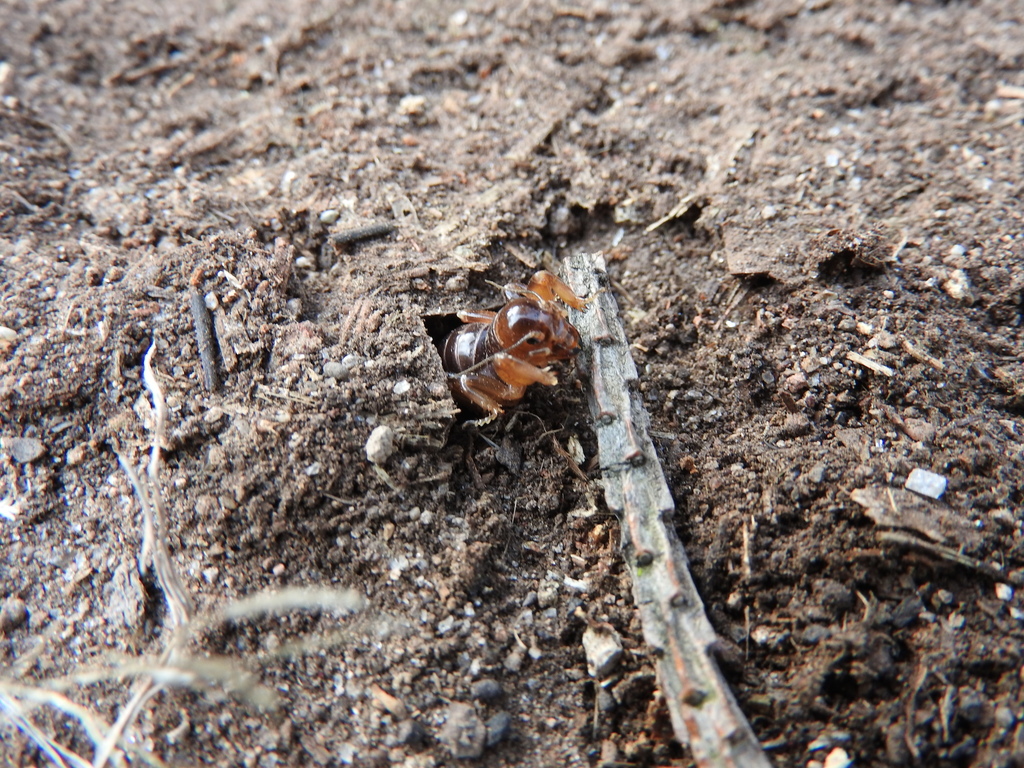
(c) Oscar Alejandro Morales Juárez, some rights reserved (CC BY-SA) · licence
Family: Stenopelmatidae · Class: Insecta · Order: Orthoptera
Conservation status: G1G2 S2
Stenopelmatus cahuilaensis (Coachella Valley Jerusalem Cricket) is a California animal in the Stenopelmatidae family.
The Coachella Valley Jerusalem cricket is a large, flightless orthopteran endemic to the Coachella Valley region of Riverside County, California. Jerusalem crickets are robust insects characterized by their large heads, powerful mandibles, and amber-colored bodies. Members of the genus Stenopelmatus typically measure 30-50 mm in length and possess spiny hind legs adapted for burrowing. The Coachella Valley Jerusalem cricket can be distinguished from other Jerusalem cricket species by subtle morphological differences in head shape and leg structure, though detailed taxonomic descriptions remain limited in published literature. This species is restricted to the Coachella Valley of Riverside County, California, representing one of several endemic arthropods adapted to this unique desert ecosystem. The Coachella Valley encompasses approximately 400 square miles of desert floor bounded by the San Bernardino Mountains to the north and the Santa Rosa Mountains to the south. The species' range overlaps with other endemic taxa including the Coachella Valley fringe-toed lizard and Coachella giant sand-treader cricket. Coachella Valley Jerusalem crickets inhabit specialized sandy desert habitats, particularly areas with fine, wind-blown sand deposits known as "blowsand" habitat. This substrate type forms when prevailing winds transport sand particles through mountain passes and deposit them in low-lying areas of the valley floor. The species appears to prefer areas with sparse vegetation where sandy soils facilitate their fossorial lifestyle. Specific microhabitat requirements and soil depth preferences have not been thoroughly documented. Like other Jerusalem crickets, this species is primarily nocturnal and fossorial, spending daylight hours buried in sandy soils. Jerusalem crickets are omnivorous, feeding on plant material, small insects, and organic matter in the soil. They use their powerful mandibles to process food and their spiny legs to excavate burrows. Reproductive biology remains poorly studied, though related species typically mate in fall and winter, with females depositing eggs in soil chambers. The species likely exhibits low reproductive rates typical of large-bodied desert arthropods. The U.S. Fish and Wildlife Service currently designates the Coachella Valley Jerusalem cricket as a Species of Concern, indicating it faces potential threats but lacks sufficient data for formal listing under the Endangered Species Act. The species receives consideration in regional habitat conservation planning, including the Coachella Valley Multi-Species Habitat Conservation Plan and tribal conservation initiatives. Primary threats include habitat loss from urban development, agricultural conversion, and recreational activities that degrade sandy desert habitats. Wind energy development and off-road vehicle use may fragment remaining habitat patches. The Global Heritage Rank of G1G2 indicates the species is critically imperiled to imperiled globally, while the State Rank of S2 reflects its imperiled status within California. Conservation efforts focus on protecting remaining blowsand habitats and managing human activities within the species' limited range. Detailed population surveys and ecological studies are needed to better assess conservation status and habitat requirements.
Classification
Class: Insecta · Order: Orthoptera · Family: Stenopelmatidae
Conservation status
G1G2 S2
Frequently asked questions
How is Stenopelmatus cahuilaensis classified?
Stenopelmatus cahuilaensis belongs to class Insecta, order Orthoptera, family Stenopelmatidae.
What family does Stenopelmatus cahuilaensis belong to?
Stenopelmatus cahuilaensis is in the Stenopelmatidae family.
Is Stenopelmatus cahuilaensis protected or of conservation concern?
Stenopelmatus cahuilaensis carries the following status: G1G2 S2.
What is Stenopelmatus cahuilaensis?
The Coachella Valley Jerusalem cricket is a large, flightless orthopteran endemic to the Coachella Valley region of Riverside County, California.
Is Stenopelmatus cahuilaensis found in California?
Yes. Stenopelmatus cahuilaensis is recorded in California in The California Species Project's catalogue.
Related species
Other California species in the same genus, family, or bioregion.
Data from The California Species Project — 14,000+ California species with verified data from CNPS, CDFW, USFWS, and more.