Stenoptilodes brevipennis
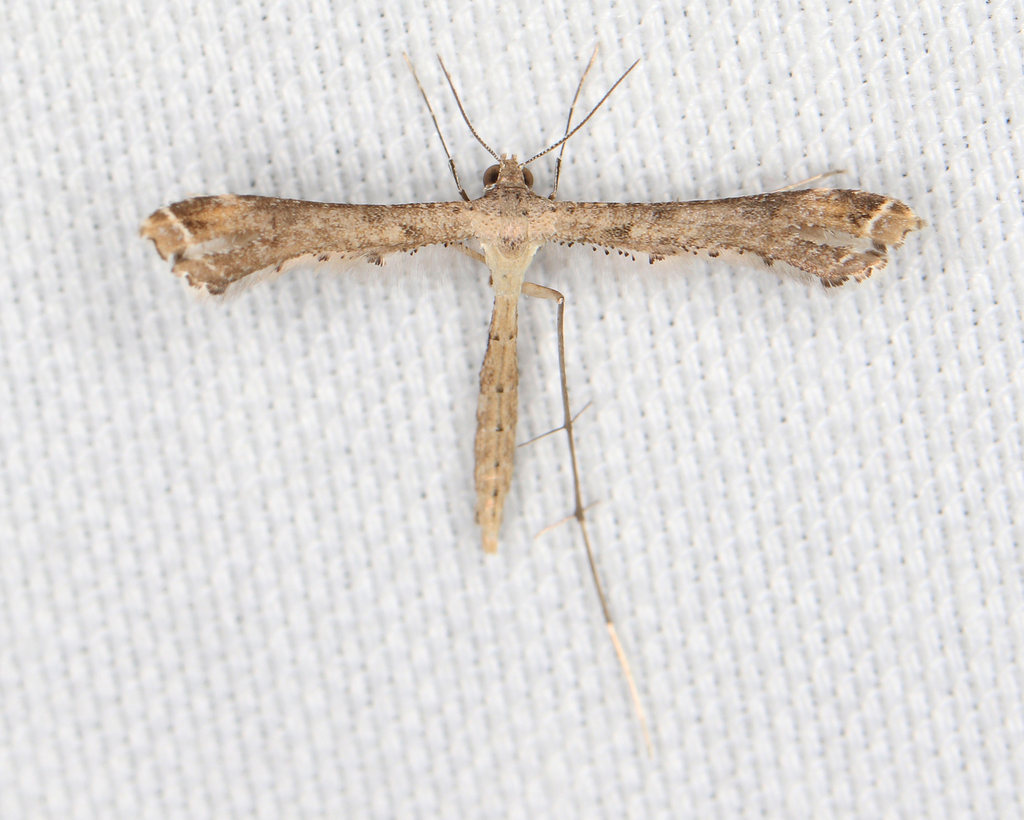
(c) Steven Whitebread, some rights reserved (CC BY) · licence
Family: Pterophoridae · Class: Insecta · Order: Lepidoptera
Stenoptilodes brevipennis is a California animal in the Pterophoridae family.
Stenoptilodes brevipennis is a small moth in the plume moth family Pterophoridae. Like other members of this family, it is characterized by deeply divided wings that create a distinctive feathered appearance when at rest. The forewings are split into two plumes, while the hindwings are divided into three plumes, creating the characteristic T-shaped profile typical of pterophorid moths. Adults typically measure 12 to 18 mm in wingspan, with narrow, elongated wing segments fringed with scales that give them their plume-like appearance. The range and distribution of S. brevipennis remains poorly documented in the scientific literature. Members of the genus Stenoptilodes are generally associated with western North America, but specific locality records for this species are limited. The species appears to have a restricted distribution, though comprehensive surveys have not been conducted to determine its full geographic extent. Habitat requirements for S. brevipennis are not well established in published literature. Other Stenoptilodes species typically inhabit areas where their host plants occur, often in coastal scrub, chaparral, or grassland environments. The elevation range and specific microhabitat preferences for this species remain undocumented, representing a significant knowledge gap for understanding its ecological requirements. The life history and ecology of S. brevipennis are largely unknown. Like other pterophorid moths, adults likely have a relatively short flight period and are primarily active during evening and nighttime hours. The larvae presumably feed internally within plant tissues as leaf miners or stem borers, following the typical development pattern of plume moths. Host plant associations have not been definitively established for this species, though other members of the genus are known to utilize various herbaceous plants. Reproductive behavior, including mating systems, oviposition preferences, and seasonal timing, remains undocumented. The conservation status of S. brevipennis is not currently assessed by federal or state agencies. The species does not appear on the U.S. Fish and Wildlife Service's list of federally protected species, nor is it included in California's list of species of special concern. This lack of formal conservation status likely reflects the limited knowledge about the species' distribution, population size, and ecological requirements rather than a confirmed stable population status. The absence of recent collection records in major museum databases suggests either extreme rarity, highly localized distribution, or potential taxonomic confusion with closely related species. Primary threats to S. brevipennis cannot be accurately assessed without better understanding of its habitat requirements and distribution. However, if the species has a restricted range in California, it would potentially face the same pressures affecting other endemic insects, including habitat loss from urban development, agricultural conversion, altered fire regimes, and climate change impacts on plant communities. The lack of basic biological and ecological data represents the most significant barrier to effective conservation planning for this species.
Classification
Class: Insecta · Order: Lepidoptera · Family: Pterophoridae
Frequently asked questions
How is Stenoptilodes brevipennis classified?
Stenoptilodes brevipennis belongs to class Insecta, order Lepidoptera, family Pterophoridae.
What family does Stenoptilodes brevipennis belong to?
Stenoptilodes brevipennis is in the Pterophoridae family.
What is Stenoptilodes brevipennis?
Stenoptilodes brevipennis is a small moth in the plume moth family Pterophoridae.
Is Stenoptilodes brevipennis found in California?
Yes. Stenoptilodes brevipennis is recorded in California in The California Species Project's catalogue.
Related species
Other California species in the same genus, family, or bioregion.
Data from The California Species Project — 14,000+ California species with verified data from CNPS, CDFW, USFWS, and more.