Stenotus binotatus
Two-spotted Grass Bug
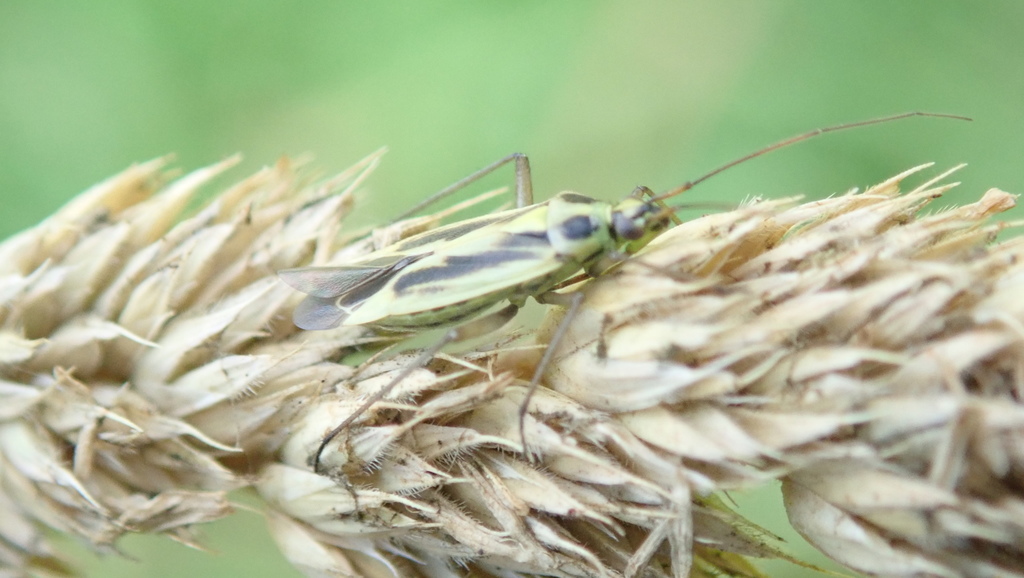
no rights reserved · CC0
Family: Miridae · Class: Insecta · Order: Hemiptera
Stenotus binotatus (Two-spotted Grass Bug) is a California animal in the Miridae family.
The two-spotted grass bug is a small to medium-sized plant bug in the family Miridae, measuring approximately 4-6 mm in length. Adults display a distinctive coloration pattern with a pale green to yellowish-green body and two prominent dark spots on the forewings, giving the species its common name. The head is relatively narrow with well-developed compound eyes, and the antennae are typically longer than half the body length. The pronotum shows a characteristic trapezoidal shape, and the forewings extend beyond the abdomen when at rest. Stenotus binotatus occurs throughout much of North America, with populations documented across the western United States including California. The species has been recorded in various California habitats, from coastal regions to inland valleys and foothill areas. Distribution extends from sea level to moderate elevations, though specific elevation ranges have not been comprehensively documented for California populations. This species inhabits grasslands, meadows, agricultural areas, and disturbed sites where its host plants occur. According to BugGuide, the two-spotted grass bug feeds on various grasses and herbaceous plants, making it a generalist herbivore within its preferred habitat types. The species shows particular association with both native and introduced grass species, adapting well to human-modified landscapes including agricultural fields and urban margins. Adults are active during the growing season, typically from late spring through early fall. Like other mirids, Stenotus binotatus undergoes incomplete metamorphosis with five nymphal instars before reaching adulthood. The species feeds by inserting its piercing-sucking mouthparts into plant tissues to extract fluids. Reproduction occurs through egg-laying, with females depositing eggs in plant stems or soil. The species may produce multiple generations per year depending on local climate conditions and resource availability. Stenotus binotatus is not currently listed under federal or state endangered species legislation and appears to maintain stable populations across its range. The species demonstrates considerable adaptability to habitat modification and may actually benefit from certain types of disturbance that create open grassland conditions. However, like many native insects, populations may face localized impacts from intensive agricultural practices, herbicide applications, and habitat conversion. The species' ability to utilize both native and introduced plant species suggests some resilience to ecosystem changes, though long-term population trends have not been systematically monitored. While not considered a significant agricultural pest, the two-spotted grass bug occasionally feeds on crop plants and may be found in association with various agricultural systems throughout California. Its ecological role as an herbivore contributes to nutrient cycling in grassland ecosystems, and it likely serves as prey for various predatory arthropods and small vertebrates. Further research is needed to fully document the species' host plant relationships, population dynamics, and ecological interactions within California's diverse grassland communities.
Classification
Class: Insecta · Order: Hemiptera · Family: Miridae
Frequently asked questions
How is Stenotus binotatus classified?
Stenotus binotatus belongs to class Insecta, order Hemiptera, family Miridae.
What family does Stenotus binotatus belong to?
Stenotus binotatus is in the Miridae family.
What is Stenotus binotatus?
The two-spotted grass bug is a small to medium-sized plant bug in the family Miridae, measuring approximately 4-6 mm in length.
Is Stenotus binotatus found in California?
Yes. Stenotus binotatus is recorded in California in The California Species Project's catalogue.
Related species
Other California species in the same genus, family, or bioregion.
Data from The California Species Project — 14,000+ California species with verified data from CNPS, CDFW, USFWS, and more.