Sterna hirundo
Common Tern
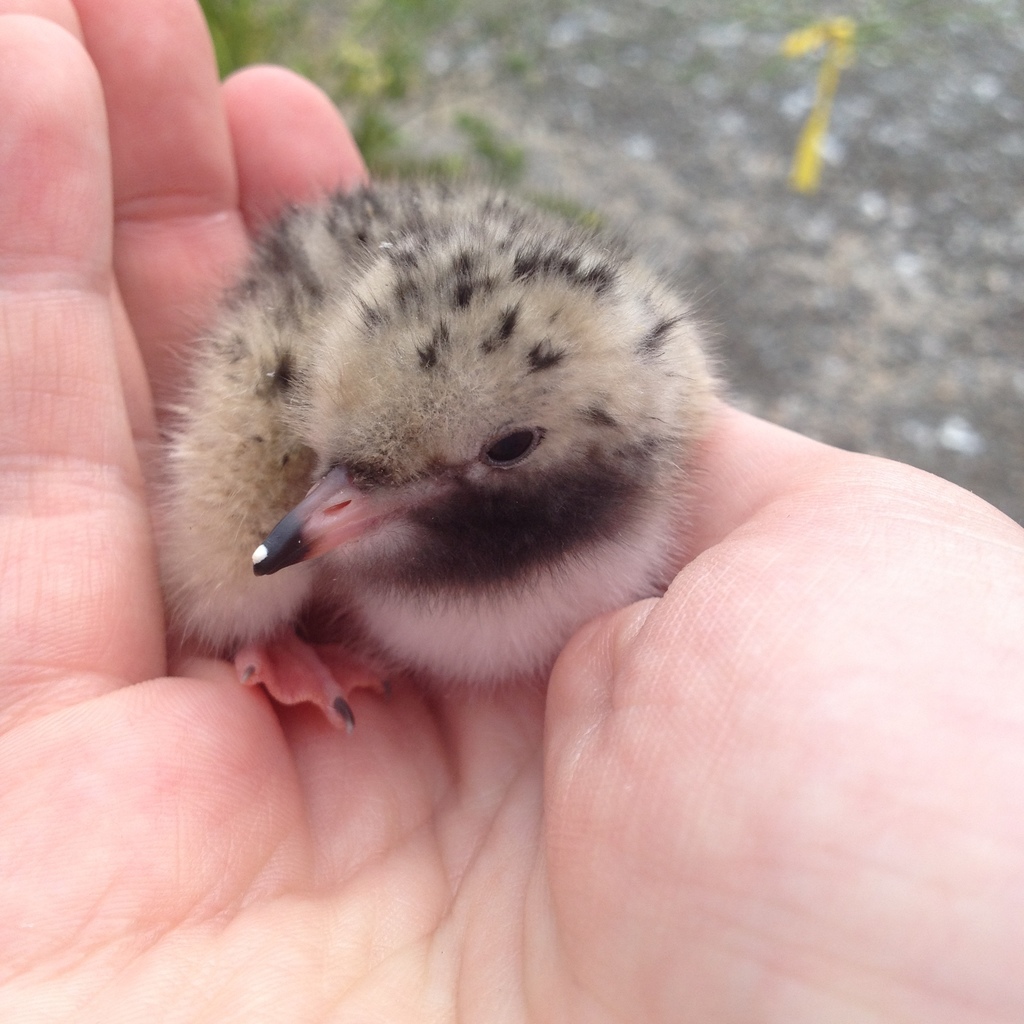
(c) Jonathan Layman, some rights reserved (CC BY) · licence
Family: Laridae · Class: Aves · Order: Charadriiformes
Sterna hirundo (Common Tern) is a California animal in the Laridae family.
The Common Tern is a medium-sized seabird measuring 31 to 35 cm (12 to 14 inches) in length with a wingspan of 82 to 95 cm (32 to 37 inches). Adults weigh 90 to 150 grams. During breeding season, adults display a black cap extending from the forehead to the nape, white underparts, and pale gray upperparts. The bill is orange-red with a black tip, and the legs are orange-red. In winter plumage, the black cap is reduced to a partial cap behind the eye, and the bill becomes darker. Juveniles show a scaled pattern on the back and wings with a dark carpal bar. In California, Common Terns occur primarily as migrants and winter visitors along the coast and at interior water bodies. The species breeds locally in very small numbers at scattered locations including San Francisco Bay, the Salton Sea, and occasionally at coastal sites and inland lakes. Historically, breeding occurred more regularly at sites such as the Farallon Islands, but nesting has become increasingly sporadic. During migration and winter, Common Terns can be found throughout suitable habitat from the Oregon border south to Mexico. Common Terns inhabit coastal waters, estuaries, large lakes, reservoirs, and rivers. Breeding sites typically consist of sandy or rocky islands, beaches, salt pond levees, and dredge spoil islands that provide protection from mammalian predators. Foraging occurs in both saltwater and freshwater environments, including nearshore marine waters, bays, lagoons, and inland water bodies. The species shows preference for areas with clear water that facilitates visual hunting for fish. Common Terns are piscivorous, feeding primarily on small fish 5 to 15 cm in length, including anchovies, sardines, smelt, and silversides. They employ a characteristic plunge-diving hunting technique, hovering 3 to 10 meters above the water surface before diving to capture prey just below the surface. Breeding occurs in colonies ranging from a few pairs to several hundred. In California, nesting typically occurs from April through July. Females lay 1 to 4 eggs, usually 2 to 3, in shallow scrapes lined with vegetation, shells, or pebbles. Incubation lasts 21 to 26 days, and young fledge at 22 to 28 days of age. The Common Tern is not federally or state listed in California, though it is considered a California Bird Species of Special Concern due to limited breeding distribution and small population size. According to the North American Bird Conservation Initiative, the species has experienced population declines in western North America. In California, breeding populations are estimated at fewer than 100 pairs annually. Primary threats include habitat loss from coastal development, human disturbance at nesting colonies, predation by introduced mammals, pollution, and climate change impacts on prey availability. Sea level rise poses long-term threats to low-lying nesting sites.
Classification
Class: Aves · Order: Charadriiformes · Family: Laridae
Frequently asked questions
How is Sterna hirundo classified?
Sterna hirundo belongs to class Aves, order Charadriiformes, family Laridae.
What family does Sterna hirundo belong to?
Sterna hirundo is in the Laridae family.
What is Sterna hirundo?
The Common Tern is a medium-sized seabird measuring 31 to 35 cm (12 to 14 inches) in length with a wingspan of 82 to 95 cm (32 to 37 inches).
Is Sterna hirundo found in California?
Yes. Sterna hirundo is recorded in California in The California Species Project's catalogue.
Related species
Other California species in the same genus, family, or bioregion.
Data from The California Species Project — 14,000+ California species with verified data from CNPS, CDFW, USFWS, and more.