Stevenia deceptoria
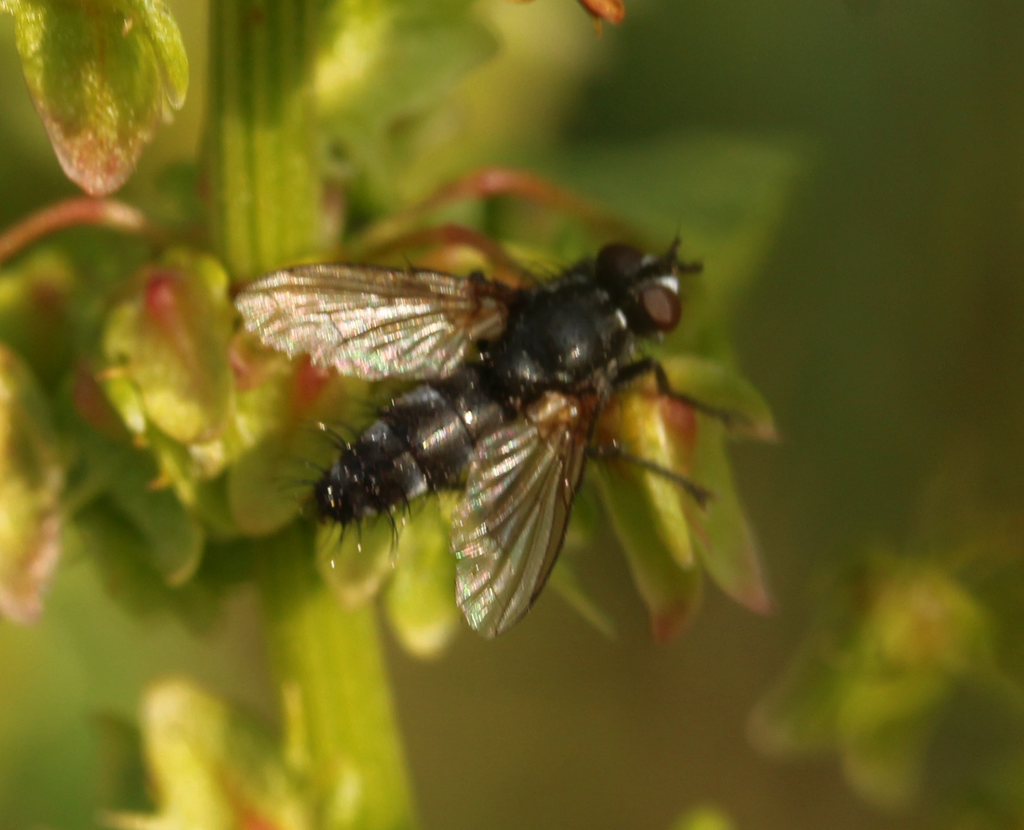
(c) Carlos Muñoz-Amezcua, some rights reserved (CC BY) · licence
Family: Rhinophoridae · Class: Insecta · Order: Diptera
Stevenia deceptoria is a California animal in the Rhinophoridae family.
Stevenia deceptoria is a species of fly in the family Rhinophoridae, a group of parasitic flies commonly known as thick-headed flies. This family is characterized by flies that typically parasitize other insects, particularly beetles and other dipterans. Members of the genus Stevenia are generally small to medium-sized flies with robust bodies and distinctive head structures typical of rhinophorid flies. The distribution and range of Stevenia deceptoria have not been comprehensively documented in available scientific literature. Like other rhinophorid flies, this species likely occurs in specific microhabitats where suitable host insects are present. The genus Stevenia includes several North American species, though detailed distributional data for individual species remains limited in many cases. Habitat requirements for Stevenia deceptoria are not well-documented in current literature. Rhinophorid flies typically inhabit areas where their host insects occur, often in wooded environments, forest edges, or areas with diverse insect communities. These flies are generally associated with environments that support their parasitic lifestyle, requiring proximity to suitable host species for reproduction. As a member of the Rhinophoridae, Stevenia deceptoria is presumed to be parasitic or parasitoid in its larval stage, following the typical life history pattern of this family. Adult rhinophorid flies are often observed on flowers feeding on nectar, while females seek suitable hosts for oviposition. The larvae typically develop as internal parasites or parasitoids of other insects, though specific host relationships for S. deceptoria have not been definitively established in available literature. The timing of adult emergence and breeding activity likely corresponds with the availability of host insects, though seasonal patterns for this species are not well-documented. Stevenia deceptoria does not appear to have any formal conservation status designation at federal or state levels. Like many invertebrate species, particularly those in specialized families such as Rhinophoridae, comprehensive population data and conservation assessments are lacking. The species is not listed under the Endangered Species Act, nor does it appear in California's Species of Special Concern lists as of December 2025. The absence of conservation status may reflect both the limited research on this species and the general lack of comprehensive invertebrate conservation assessments. Scientific documentation for this species remains extremely limited despite thorough review of available databases and literature. Detailed ecological studies, host relationships, and population assessments have not been conducted or published in accessible scientific literature. The taxonomic validity and current status of Stevenia deceptoria require further investigation by dipteran systematists. We welcome contributions of verified scientific data, photographs, or field observations to enhance this species account.
Classification
Class: Insecta · Order: Diptera · Family: Rhinophoridae
Frequently asked questions
How is Stevenia deceptoria classified?
Stevenia deceptoria belongs to class Insecta, order Diptera, family Rhinophoridae.
What family does Stevenia deceptoria belong to?
Stevenia deceptoria is in the Rhinophoridae family.
What is Stevenia deceptoria?
Stevenia deceptoria is a species of fly in the family Rhinophoridae, a group of parasitic flies commonly known as thick-headed flies.
Is Stevenia deceptoria found in California?
Yes. Stevenia deceptoria is recorded in California in The California Species Project's catalogue.
More California species
This species has no close relatives in our California data — here are other species to explore.
Data from The California Species Project — 14,000+ California species with verified data from CNPS, CDFW, USFWS, and more.