Stictiella villegasi
Algodones Sand Wasp
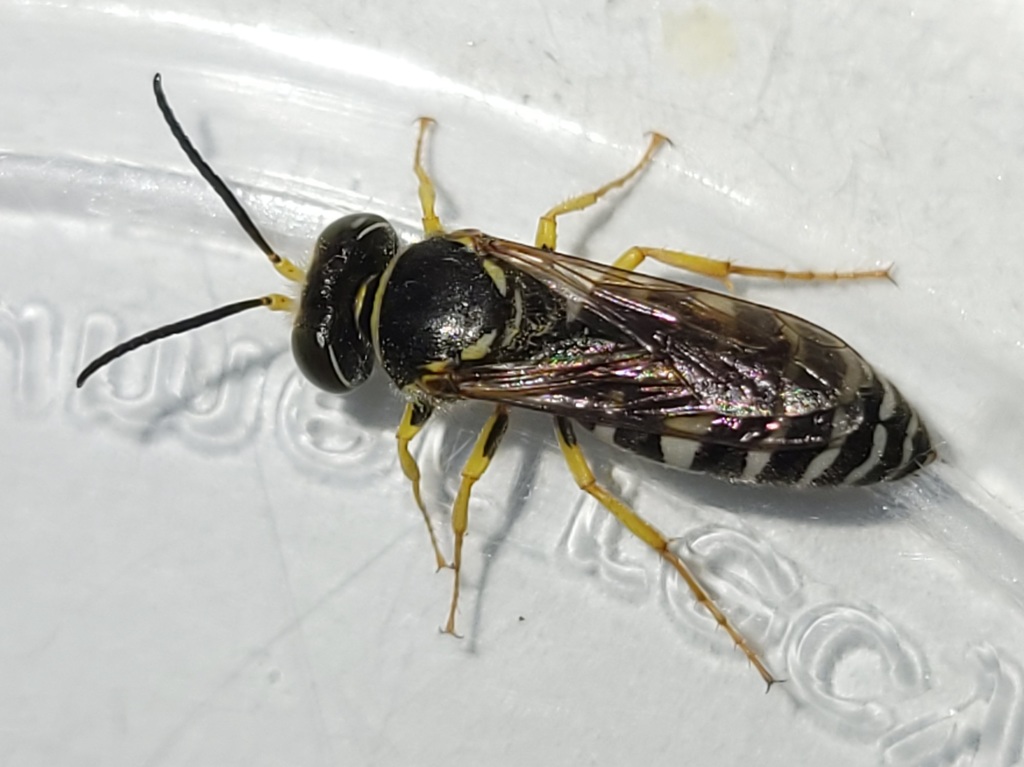
(c) Arturo Santos, some rights reserved (CC BY) · licence
Family: Crabronidae · Class: Insecta · Order: Hymenoptera
Conservation status: G1 S1
Stictiella villegasi (Algodones Sand Wasp) is a California animal in the Crabronidae family.
Stictiella villegasi is a small sand wasp in the family Crabronidae, first described by Bohart in 1982. The species is distinguished by its almost entirely yellow appearance, a characteristic that sets it apart from other sand wasps in the region (Bohart 1982). Like other members of the genus Stictiella, this wasp exhibits the typical sphecid body plan with a constricted waist between the thorax and abdomen, though specific morphometric data for this species remains limited in the scientific literature. The Algodones Sand Wasp is endemic to the Algodones Dunes system in Imperial County, California (NatureServe 2025). This represents one of the most geographically restricted distributions of any North American wasp species, with the species' entire range confined to this single dune complex near the California-Arizona border. The Algodones Dunes cover approximately 40 square miles and represent the largest mass of sand dunes in California. The species inhabits active sand dune environments within the Sonoran Desert ecosystem. The Algodones Dunes system consists of dynamic sand formations that shift with wind patterns, creating a challenging environment for resident arthropod species. Temperatures in this habitat can exceed 120°F (49°C) in summer, while winter temperatures may drop below freezing. The dunes support sparse vegetation including desert shrubs and ephemeral plants that emerge after rainfall events. As a member of the family Crabronidae, S. villegasi is presumed to be a predatory wasp that provisions underground nests with paralyzed prey for its developing larvae, following the typical sphecid life cycle pattern. However, specific ecological data regarding prey preferences, nesting behavior, seasonal activity patterns, and reproductive biology remain undocumented in the scientific literature. The species likely exhibits adaptations for life in shifting sand environments, though these have not been formally studied. Stictiella villegasi holds a conservation ranking of G1 S1, indicating it is critically imperiled both globally and within California due to its extremely limited range and small population size. The U.S. Fish and Wildlife Service received a formal petition in 2004 from conservation organizations requesting federal listing of this species along with several other Algodones Dunes endemic arthropods (Federal Register 2006). However, the species has not received federal protection status as of December 2025. The Algodones Dunes face ongoing threats from off-road vehicle recreation, which represents one of the most extensively used recreational dune areas in the region (NatureServe 2025). The constant disturbance from vehicular traffic may impact both the physical habitat structure and the invertebrate communities that endemic species like S. villegasi depend upon. Climate change may pose additional threats through altered precipitation patterns that affect the desert ecosystem's resource availability. Scientific documentation for this species remains extremely limited despite its critical conservation status. This species is included on the California Department of Fish and Wildlife's Special Animals List. Additional research is urgently needed to understand the basic biology, population size, and specific habitat requirements of this endemic wasp to inform effective conservation strategies.
Classification
Class: Insecta · Order: Hymenoptera · Family: Crabronidae
Conservation status
G1 S1
Frequently asked questions
How is Stictiella villegasi classified?
Stictiella villegasi belongs to class Insecta, order Hymenoptera, family Crabronidae.
What family does Stictiella villegasi belong to?
Stictiella villegasi is in the Crabronidae family.
Is Stictiella villegasi protected or of conservation concern?
Stictiella villegasi carries the following status: G1 S1.
What is Stictiella villegasi?
Stictiella villegasi is a small sand wasp in the family Crabronidae, first described by Bohart in 1982.
Is Stictiella villegasi found in California?
Yes. Stictiella villegasi is recorded in California in The California Species Project's catalogue.
Related species
Other California species in the same genus, family, or bioregion.
Data from The California Species Project — 14,000+ California species with verified data from CNPS, CDFW, USFWS, and more.