Stigmella heteromelis
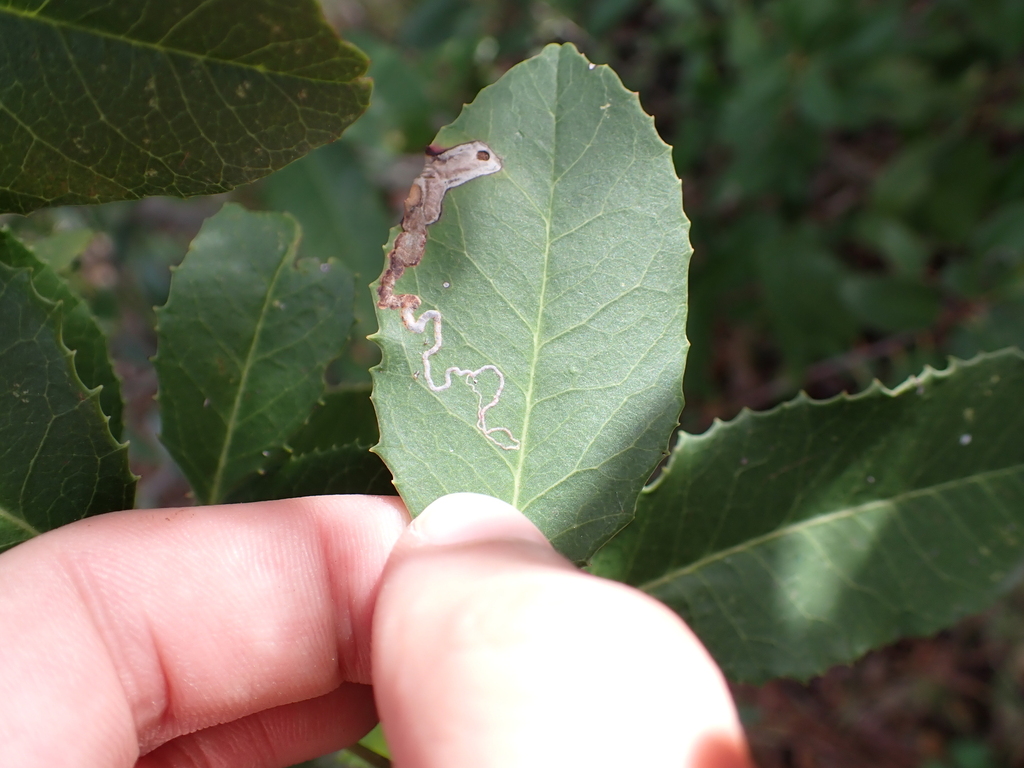
(c) Neal Kelso, some rights reserved (CC BY) · licence
Family: Nepticulidae · Class: Insecta · Order: Lepidoptera
Stigmella heteromelis is a California animal in the Nepticulidae family.
Stigmella heteromelis is a small moth in the family Nepticulidae, commonly known as pygmy leafmining moths. This microlepidopteran species represents one of the smallest moths in North America, with adults typically measuring less than 5 mm in wingspan. The forewings are narrow and elongated, characteristic of the nepticulid family, though specific coloration patterns for this species have not been well documented in the scientific literature. Stigmella heteromelis is endemic to California, where it has been recorded from multiple counties across the state. According to BugGuide records, the species has been documented with peak activity from January through May, with additional specimens collected in June and September. The distribution appears to encompass both coastal and inland regions of California, though comprehensive range mapping remains incomplete. As a member of the Nepticulidae, S. heteromelis larvae are leaf miners, creating characteristic serpentine or blotch mines within host plant leaves. The specific host plant relationships for this species require further documentation, though related Stigmella species typically specialize on particular plant families. Adult moths are likely active during daylight hours, as is typical for many nepticulid species, though detailed behavioral observations are lacking. The life cycle follows the typical nepticulid pattern, with eggs laid on host plant leaves and larvae developing as internal leaf miners. Mining activity creates distinctive patterns visible on leaf surfaces, often beginning as narrow serpentine tracks that may widen into blotch mines as larvae grow. Pupation likely occurs within the mine or in leaf litter, though specific details for S. heteromelis have not been documented. The species appears to have multiple generations per year based on the extended collection period from January through September (BugGuide). Like many microlepidopteran species, Stigmella heteromelis faces potential conservation challenges from habitat loss and fragmentation throughout California. The species' conservation status has not been formally assessed, and it currently holds no federal or state listing designation. Climate change may pose additional risks through altered host plant phenology and habitat modification. The limited scientific documentation of this species highlights the broader challenge of conserving California's diverse but poorly studied microlepidopteran fauna. Detailed ecological studies of S. heteromelis remain limited, and much of its basic biology, including specific host plant relationships, habitat preferences, and population dynamics, requires further investigation. The species exemplifies the many small, specialized insects that contribute significantly to California's biodiversity but remain understudied. Enhanced taxonomic and ecological research would benefit both scientific understanding and conservation planning for this and related nepticulid species.
Classification
Class: Insecta · Order: Lepidoptera · Family: Nepticulidae
Frequently asked questions
How is Stigmella heteromelis classified?
Stigmella heteromelis belongs to class Insecta, order Lepidoptera, family Nepticulidae.
What family does Stigmella heteromelis belong to?
Stigmella heteromelis is in the Nepticulidae family.
What is Stigmella heteromelis?
Stigmella heteromelis is a small moth in the family Nepticulidae, commonly known as pygmy leafmining moths.
Is Stigmella heteromelis found in California?
Yes. Stigmella heteromelis is recorded in California in The California Species Project's catalogue.
Related species
Other California species in the same genus, family, or bioregion.
Data from The California Species Project — 14,000+ California species with verified data from CNPS, CDFW, USFWS, and more.