Stratiomys maculosa
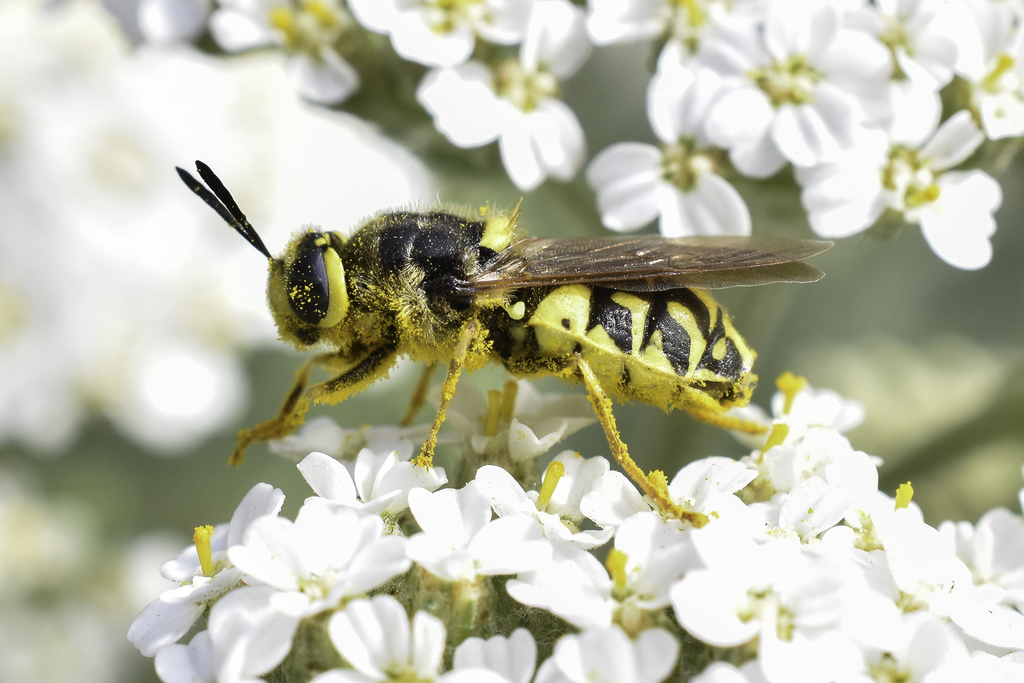
(c) Kyle Elshoff, some rights reserved (CC BY) · licence
Family: Stratiomyidae · Class: Insecta · Order: Diptera
Stratiomys maculosa is a California animal in the Stratiomyidae family.
Stratiomys maculosa is a soldier fly in the family Stratiomyidae, subfamily Stratiomyinae. Adults are small flies measuring approximately 1 cm (0.4 inches) in length, characterized by typical soldier fly morphology with a robust body and distinctive wing venation patterns common to the genus Stratiomys (BugGuide). The species exhibits the characteristic metallic sheen often associated with stratiomyids, though specific coloration details for this species require further documentation. Stratiomys maculosa has been documented in California, with confirmed records from Santa Barbara County where specimens were collected in coastal dune habitats (BugGuide). The species appears to have a broader North American distribution, as referenced in studies of arthropod communities in Texas, though the full extent of its range remains incompletely documented. Within California, the species' distribution likely extends beyond Santa Barbara County, but comprehensive surveys are needed to establish precise geographic boundaries. This soldier fly inhabits sandy back dune environments along the California coast, suggesting an association with coastal strand and dune ecosystems. The Santa Barbara County specimen was collected in July, indicating adult activity during summer months in coastal areas. Like other Stratiomyidae, this species likely requires specific moisture conditions for larval development, though the exact larval habitat preferences and host requirements for S. maculosa have not been well documented in the scientific literature. As with other soldier flies, Stratiomys maculosa likely undergoes complete metamorphosis with aquatic or semi-aquatic larval stages. Adult soldier flies are generally considered beneficial insects, with adults often visiting flowers for nectar feeding, while larvae typically function as detritivores in aquatic or semi-aquatic environments. The specific reproductive biology, seasonal activity patterns, and ecological role of S. maculosa remain poorly studied, representing significant gaps in our understanding of this species' life history. Stratiomys maculosa does not appear on federal or California state endangered species lists, and its conservation status has not been formally assessed. The species' apparent association with coastal dune habitats may make it vulnerable to coastal development pressures, sea level rise, and habitat fragmentation affecting California's coastal ecosystems. However, without comprehensive population data or distribution surveys, it is difficult to assess current population trends or conservation needs. The limited scientific documentation available for this species highlights the need for systematic surveys of California's dipteran fauna, particularly in specialized habitats like coastal dunes where endemic or range-restricted species may occur. Further research is needed to establish this species' true distribution, habitat requirements, and conservation status within California's diverse insect communities.
Classification
Class: Insecta · Order: Diptera · Family: Stratiomyidae
Frequently asked questions
How is Stratiomys maculosa classified?
Stratiomys maculosa belongs to class Insecta, order Diptera, family Stratiomyidae.
What family does Stratiomys maculosa belong to?
Stratiomys maculosa is in the Stratiomyidae family.
What is Stratiomys maculosa?
Stratiomys maculosa is a soldier fly in the family Stratiomyidae, subfamily Stratiomyinae.
Is Stratiomys maculosa found in California?
Yes. Stratiomys maculosa is recorded in California in The California Species Project's catalogue.
Related species
Other California species in the same genus, family, or bioregion.
Data from The California Species Project — 14,000+ California species with verified data from CNPS, CDFW, USFWS, and more.